
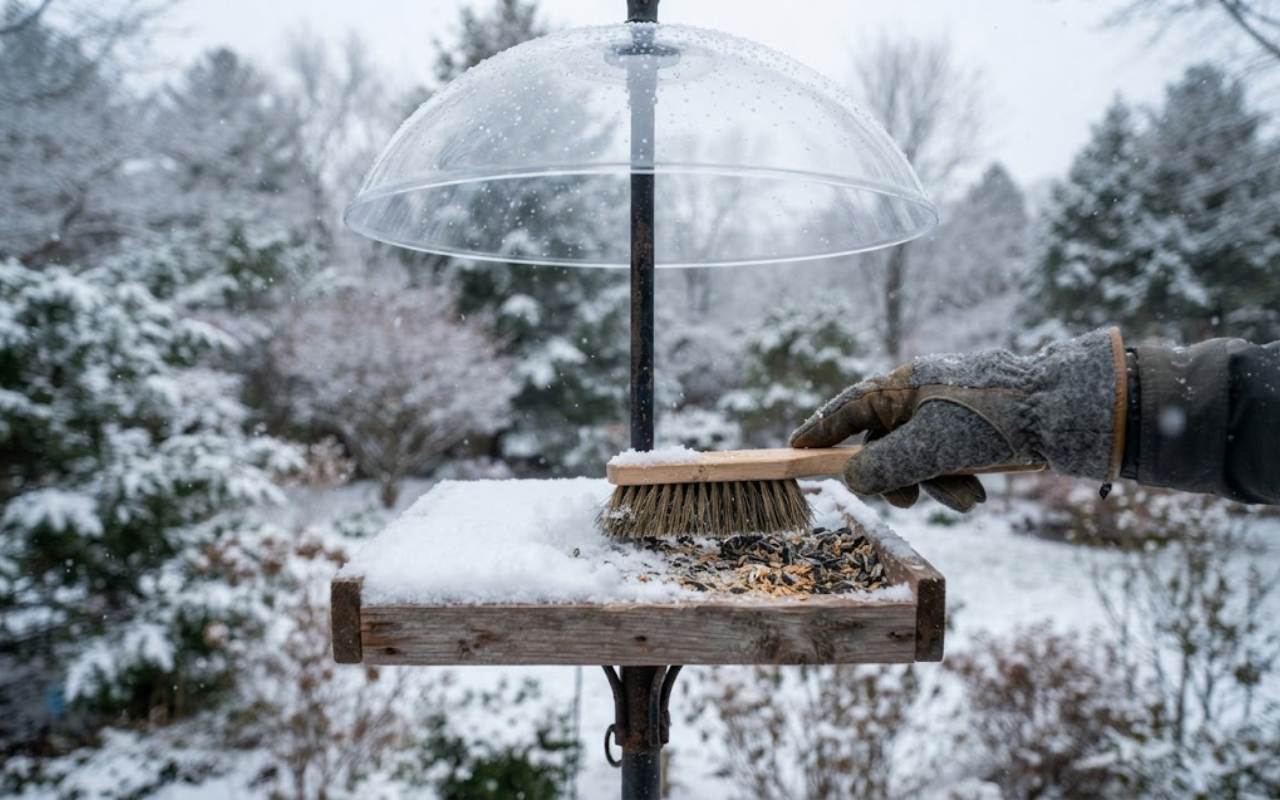
Discovering the fastest way to clear snow off tray feeders without losing seed keeps your winter birds fed while stopping expensive food waste. Experienced backyard birders have abandoned heavy scrapers in favor of targeted air movement and soft surface brushes that separate cold flakes from dry grains.
Mastering the routine of clearing snow off tray feeders ensures your winter food supply remains bone-dry and fully accessible before daytime sunlight thaws the white drifts and forces liquid moisture deep into the grain layers.
Quick-Glance Field Summary
Clear light snow instantly using focused bursts of air from a compact, battery-powered workshop blower or an inverted keyboard duster held at a shallow angle. For heavier wet drifts, use a soft silicone pastry brush across the surface to peel away frozen crusts without scooping up the underlying seed layer.
- Air clearing tool angle: 15 to 25 degrees relative to tray floor
- Safe air blast distance: 12 to 18 inches from seed bed
- Silicone brush bristle gap: 0.125 inches for fine particle separation
- Tray mesh aperture: 0.125-inch to 0.25-inch stainless steel wire cloth
- Overhead dome diameter: 18-inch minimum span for open platforms
- Feeder safe placement zone: Within 3 feet or beyond 30 feet from windows
Why Shoveling or Brushing Dumps Your Expensive Bird Food
Standard kitchen brooms and plastic snow shovels apply wide, blunt force across the entire surface of an open feeder. When you shove a flat blade across a wooden platform, the dense snow pushes against the lighter seeds, plowing both over the edges into the yard. Reddit backyard birders in cold northern zones often complain about losing half a hopper of premium sunflower chips after a single hasty morning sweep.
Traditional bristle brushes present a different mechanical problem by tangling seeds directly within stiff nylon fibers. As the bristles drag through mixed grains, their rigidity acts like a rake, flicking nyjer and safflower outward onto the ground. The seed that remains gets compacted into the bottom drainage screen, creating an icy paste once the sun hits the feeder.
Seed buried under deep snow drifts quickly absorbs ambient moisture, which sparks dangerous fungal activity. When damp grains sit in temperatures above freezing, molds such as Aspergillus flavus multiply rapidly and produce lethal aflatoxins. Clearing drifts gently without disturbing the seed bed ensures dry grains remain edible, saving money and safeguarding bird health.
| Snow Accumulation Class | Moisture Threat to Seed Trays | Drainage Port & Screen Status | Fastest Clearing Action |
|---|---|---|---|
| Fresh Powdery Snow | Minimal initial damage; seeds stay dry underneath if cleared away before daytime temperatures rise. | Open but covered; mesh screens remain functional without core ice crystallization blocks. | Use a stiff hand brush or a portable cordless leaf blower to blast flakes off the tray in five seconds. |
| Heavy Wet Snow / Slush | Extreme; water logs the hulls instantly, triggering rapid seed rot, fermentation, and dangerous mold loops. | Completely plugged; heavy slush seals floor perimeters and stops all natural fluid escape paths. | Dump the spoiled wet core completely; scrape the platform with a putty knife and refill with dry oil seeds. |
The Best Handheld Tools for Blowing Away Fresh Snow
Air displacement removes powdery snow without applying any physical friction to the seeds beneath it. A popular technique shared on r/backyardbirds involves using a cordless jobsite blower or an electric leaf blower dialed down to its lowest throttle setting. Approaching the tray from a low, horizontal angle allows the moving air stream to lift low-density snowflakes off the top without disturbing dense, oil-rich sunflower seeds.
- Cordless mini workshop blower with variable speed trigger
- Compressed gas duster canister held upright to prevent liquid discharge
- Hand-cranked fireplace bellows for quiet, non-electric spot clearing
- Soft-bristled silicone pastry brush for wet, sticky slush
For elevated pole trays where power tools feel awkward, a can of compressed electronics duster works surprisingly well. Backyard hobbyists on local birding forums recommend tapping the trigger in short, two-second pulses while holding the nozzle roughly a foot above the snow crust. Keep the canister perfectly upright during every burst.
Tilting the can sprays freezing liquid propellants and leaves behind a persistent, highly concentrated bitterant residue on the feeding surface. This non-volatile chemical layer remains on the hulls long after the liquid evaporates, making the seed unpalatable to visiting birds.
When heavy, wet snow resists air clearing, switch immediately to a wide silicone kitchen basting brush. Silicone bristles glide over rigid sunflower hulls rather than digging into them, sweeping away wet slush while leaving dry seed intact. Clean the brush head between strokes to avoid pressing moisture down into the bottom layers of the food.
Keeping Wet Snow from Freezing into the Drainage Mesh
Platform feeders rely on perforated metal screens to drain rainwater and allow air to circulate around seeds. During mid-winter thaws followed by sudden evening freezes, wet snow melts slightly and refreezes solid inside these tiny openings. Once the drainage holes clog with ice, standing water pools across the tray floor, ruining the food supply.
Avoid picking at frozen mesh screens with metal screwdrivers, pocket knives, or sharp ice picks. Steel blades easily puncture the thin wire cloth, creating ragged holes that allow small seeds to fall freely to the ground. Instead, press the base of a hot water bottle against the underside of the exterior screen to melt stubborn ice plugs safely.
Never pour boiling water directly over a frozen polycarbonate tray or thin wooden frame to clear the mesh. Boiling water thermal shocks acrylic plastics, causing immediate spiderweb cracks and cloudiness that ruin the equipment. Wood frames also absorb hot liquid instantly, expanding rapidly before splitting open along exterior glue seams as the moisture freezes again.
Simple Overhead Baffles and Covers That Block Drifts
Preventing snow from landing on your platform reduces morning clearing tasks down to zero. A heavy-duty, clear polycarbonate weather dome measuring at least 18 inches in diameter provides ideal shielding for standard open trays. Mounting the dome directly on the central hanging rod blocks vertical precipitation while maintaining full peripheral visibility for wary songbirds.
- Clear acrylic hanging baffle with a minimum diameter of 18 inches
- Adjustable thumb-screw collar to alter cover height with shifting seasons
- Wrap-around steel squirrel baffle mounted four feet up the support pole
- Removable quarter-inch plywood night shield for heavy winter blizzard warnings
Community forum users frequently share an affordable hack using upside-down plastic plant saucers or lightweight cafeteria trays suspended above the station. Drilling a central hole through a durable plastic serving tray allows it to slide down the hanging wire directly over the feeder. Suspend the homemade guard four to six inches above the food surface to allow birds easy entry while deflecting horizontal gusts.
Keep your winter feeding setup within three feet of your home windows, or position it beyond thirty feet into the yard. Audubon collision safety guidelines note that this specific spacing prevents birds from building fatal flight speeds if a winter hawk flushes them off the platform. Placing covered feeders close to building eaves also provides natural shelter from windward snow drifts.
How to Dry and Sanitize Trays After Heavy Winter Storms
Winter feeding platforms need regular drying sessions to keep remaining seed clean and free of rot. If moisture seeps into the bottom layer during a blizzard, discard the damp grain immediately rather than mixing new food on top. Wet seed clumps together into a dense mat that quickly turns rancid and spreads bacterial infections among flocking winter birds.
Never apply chemical additives, salt, or glycerin to outdoor feeding gear to prevent ice accumulation. Glycerin sticks to avian plumage, destroying the microscopic barbules that lock feathers together to trap body heat. A bird with grease-matted feathers cannot maintain its core body temperature during frigid winter nights, resulting in rapid hypothermia and death.
- Mild dish soap mixed with warm water for scrubbing off seed crusts
- Nine-to-one water and household bleach solution for complete fungal disinfection
- Absorbent microfiber towels for hand-drying metal mesh surfaces
- Handheld hair dryer on cool setting to evaporate hidden moisture pockets
Sanitize the empty tray every few weeks using a solution of nine parts water to one part household unscented bleach. Scrub the perimeter corners and underside screen thoroughly to strip away mold spores, bird droppings, and caked food debris.
Rinse the entire structure with clean water, dry the mesh with clean towels, and ensure the wood or plastic is bone-dry before refilling it with fresh winter seed.