
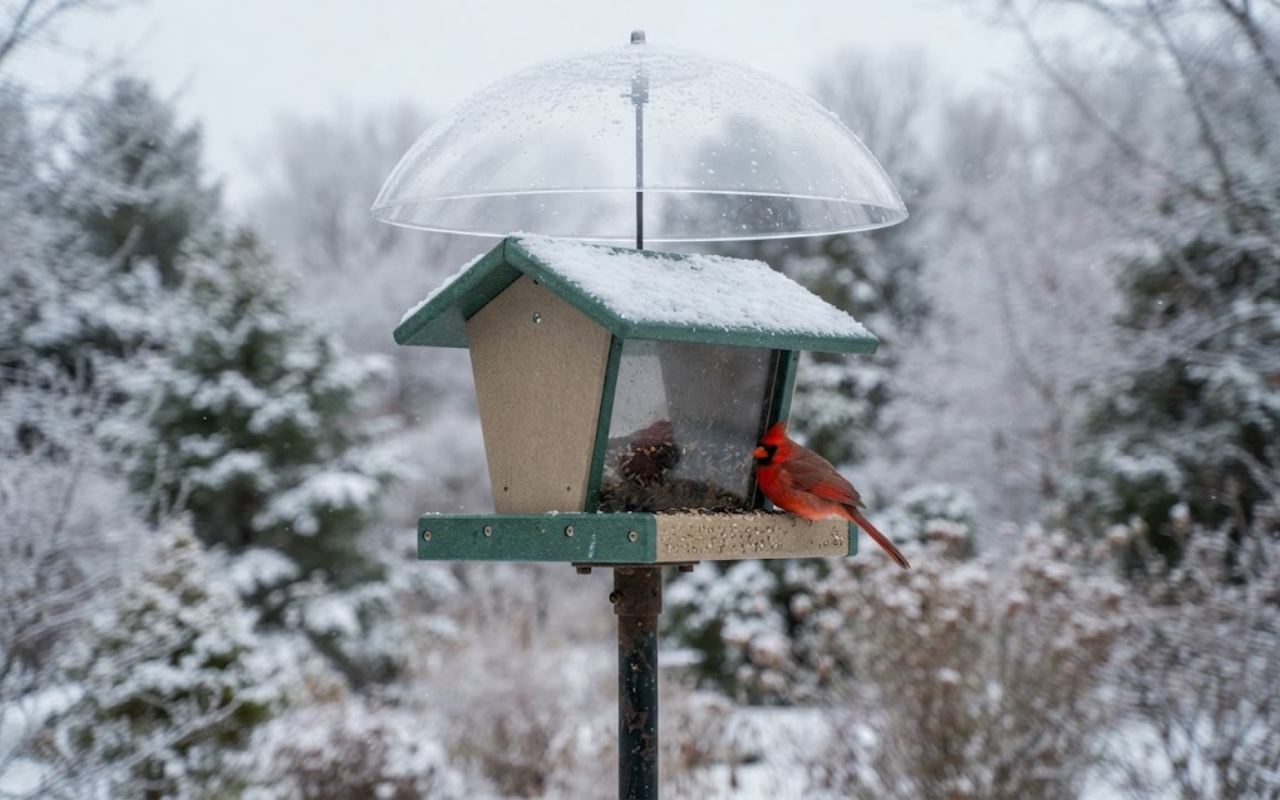
Backyard birders know how fast winter weather packs seed troughs into solid ice, but mastering the art of preventing frozen hopper feeders and learning how to stop snow from freezing hopper feeders keeps food flowing during sub-zero storms.
Heavy, wet snow routinely bridges the gap between the hopper reservoir and the feeding ledge, locking sunflower seeds under an impenetrable frozen crust.
When daytime flurries melt under direct sun and refreeze as twilight temperatures plummet, standard gravity-fed feeders fail completely. Keeping ice from sticking requires mechanical barriers and hydrophobic food-safe surfaces rather than chemical deicers or risky grease hacks.
Quick-Glance Field Summary
Preventing frozen hopper blockage requires eliminating moisture points where melting snow contacts dry seed troughs and roof edges. Combining hydrophobic physical surfaces with overhead precipitation deflection stops ice dams before freezing temperatures cement your feeder shut.
- Target Roof Pitch: 45 degrees or steeper to encourage natural snow shedding
- Weather Shield Span: 14-inch to 18-inch diameter polycarbonate overhead dome
- Hardware Screen Mesh: 0.25-inch galvanized wire mesh cut to trough base dimensions
- Freezing Threshold: Wet snow bonds firmly to untreated wood and standard plastic at 32°F (0°C)
- Prohibited Substances: Never use cooking spray, petroleum jelly, glycerin, or motor lubricants
Using Natural Wax to Prevent Snow from Sticking to Wood Feeders
On forums like r/backyardbirds, keepers frequently report wet snow sticking to cedar hopper roofs, creating massive snowbanks that melt directly into the seed channels below. A direct and safe solution is rubbing a hard, pure carnauba paste wax or natural beeswax onto dry exterior surfaces.
This application creates a hydrophobic barrier with low surface energy, forcing melting slush to bead up and slide off before freezing into sheet ice.
Avoid automotive waxes that contain petroleum distillates, added dyes, or synthetic ceramic polishes. You only want pure, food-safe carnauba or unbleached beeswax buffed to a clear sheen along the roof slopes and exterior gables. Apply the wax on a warm, dry afternoon before storm systems move in so the wax cures without trapping underlying wood moisture.
Never apply wax to the feeding perches, inner hoppers, or seed discharge slots. Birds need solid footing on perches to balance during winter squalls, and seed must flow freely without sticky residues. Buffing the roof twice per season maintains surface slickness and prevents water from penetrating grain boundaries in raw wooden feeders.
Stick Slick Polyethylene Tape on Steep Gables to Slide Drifts Off
Tinkering hobbyists on northern wildlife forums frequently highlight ultra-high-molecular-weight polyethylene tape, commonly called UHMW slick tape, as an outstanding anti-ice modification. This industrial tape features an exceptionally low coefficient of friction, closely mimicking the slick properties of fluoropolymer coatings without hazardous flaking.
When applied along steep hopper rooflines, heavy wet snow cannot anchor to the surface and slides away under its own weight.
- Measure the length of each roof pitch and cut strips to match the slope precisely.
- Clean the mounting surface thoroughly with rubbing alcohol to remove tree pitch and dirt.
- Press the tape down firmly with a wooden seam roller to eliminate air bubbles where moisture could freeze and lift the edges.
This tape remains flexible and bonded well below -20°F, resisting brittle cracking during extreme cold snaps. By eliminating surface grip, snow slides off before it can absorb daytime radiant warmth and freeze into an adhesive ice sheet. If your hopper feeder has wide wooden eaves, run parallel strips across the entire pitch to turn sticky cedar into an ice-shedding ramp.
Hang Wide Clear Domes Low to Block Drifting Sleet and Flurries
Many backyard birders assume their hopper roof is wide enough, but driving sleet strikes sideways and packs the narrow seed trough. A 14-inch to 18-inch clear polycarbonate baffle hung closely above the feeder provides the overhead deflection required during blizzards.
By intercepting falling snow several inches before it reaches the feeder structure, the hopper itself stays dry and free from freeze-thaw cycles.
Community members in windy zones like Minnesota recommend suspending the dome no more than two to three inches above the hopper ridge. Mounting the dome too high lets crosswinds blow wet snow directly under the cover and into the feeding tray. Keeping it low blocks driving sleet while still allowing finches, chickadees, and nuthatches unobstructed access to the perches.
Polycarbonate stands up to freezing impacts without cracking, unlike cheap polystyrene plastics that shatter in sub-zero wind. Avoid pouring boiling water on these domes during cleanouts, as extreme thermal shock can craze and warp the plastic. Instead, use a mild vinegar solution or lukewarm water with a soft cloth to maintain maximum light transmission.
Drop Wire Mesh Screens into Feed Trays to Drain Melting Slush
The most common failure point highlighted by bird enthusiasts occurs when melted snow pools at the bottom of the seed trough and refreezes into a concrete-like block. Adding a false floor made from 0.25-inch galvanized hardware cloth elevates the seed supply above the base board.
Any blowing snow that lands in the trough melts, drains through the wire mesh, and escapes through existing weep holes instead of soaking the seed.
- Cut the galvanized hardware cloth using tin snips to match the exact interior dimensions of the trough.
- Fold the cut outer edges downward by one-eighth of an inch to elevate the screen floor slightly.
- Verify that the feeder drainage holes are completely open and free from compressed debris.
This elevation stops the bottom layer of seeds from wicking moisture and freezing into a solid barrier across the dispensing gap. Trapped dampness also encourages Aspergillus flavus, a soil-borne mold that produces lethal aflatoxins in wet grain caches. A dry, suspended seed bed protects avian health and keeps the gravity feed running without daily chipping or scraping.
Line Wooden Angles with Food Grade Silicone to Stop Ice from Gripping
In sub-zero climates, flexible food-grade silicone sheeting provides another durable, ice-phobic lining for hopper discharge angles and tray edges. While ice bonds firmly to rough wood and oxidized acrylic, it cannot easily form a mechanical bond with flexible silicone. As temperature fluctuations cause the feeder materials to contract, accumulated ice fractures and releases cleanly from the silicone lining.
Cut thin silicone baking sheets or craft mats to fit the angled internal ramps that funnel seeds into the feeding trough. Use stainless steel staples or marine-grade silicone adhesive to secure the edges flat against the feeder walls. This ensures seeds slide smoothly without catching on raised edges, preventing internal jams during sleet events.
Under no circumstances should you ever coat your feeders with cooking spray, petroleum jelly, vegetable oil, or motor additives. Canadian wildlife rehabilitators regularly treat songbirds with feathers ruined by these well-meaning grease hacks.
When birds contact cooking oils, the plumage loses its interlocking barb structure, destroying thermal insulation and causing fatal hypothermia within hours.