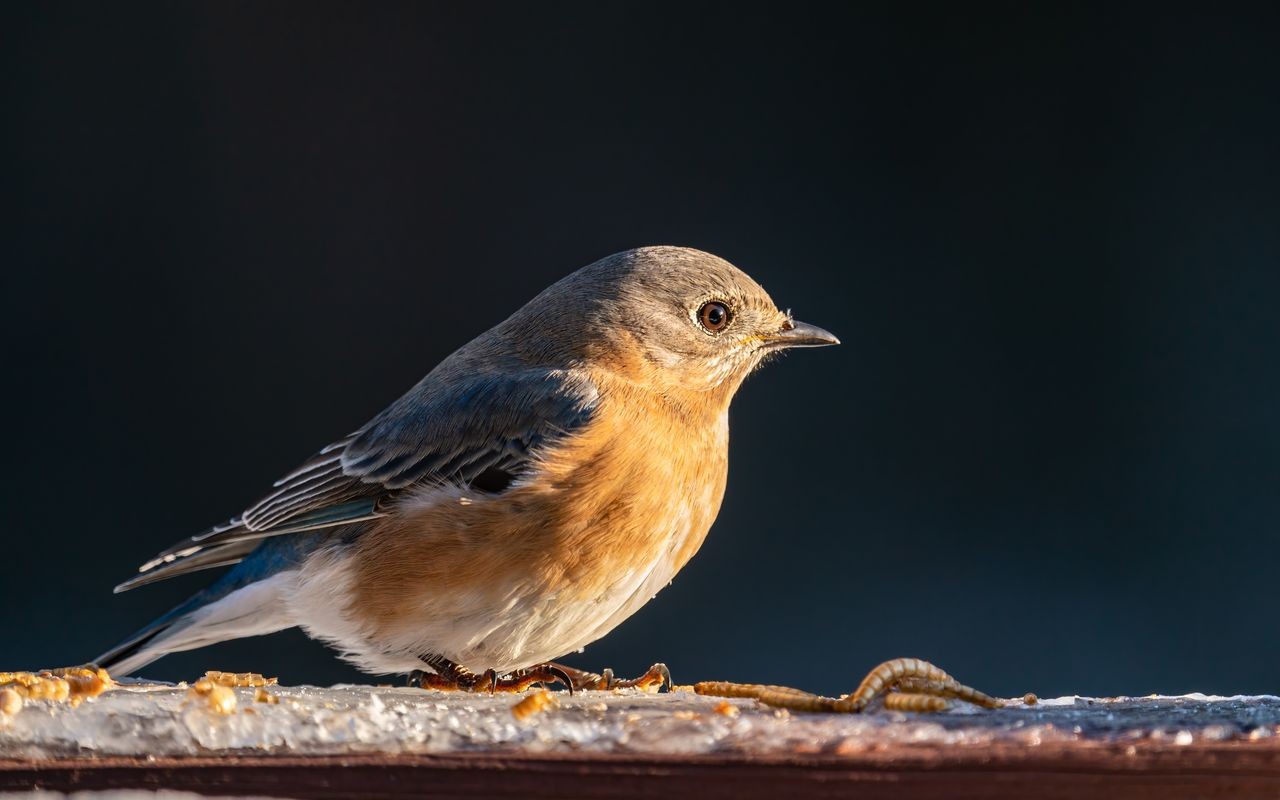
Deciding whether to feed live or dried mealworms to birds in winter depends on how fast your local temperatures drop and whether your yard offers accessible liquid water. Live larvae provide immediate moisture, but freeze into stiff blocks on an outdoor tray.
Dried mealworms stay stable on freezing days, but require birds to burn internal hydration to digest dry chitin. Adjusting your routine when feeding birds mealworms in winter keeps cold-stressed bluebirds, wrens, and chickadees safely fed down into sub-zero weather.
Quick-Glance Field Summary
Offer live mealworms in small, five-minute batches on freezing mornings only when birds are actively waiting at the feeder. Switch to dried mealworms soaked in warm water for fifteen minutes during prolonged sub-zero snaps, and always pair them with an open, heated water bath.
- Live worm freezing limit: Below 40°F (4°C) larvae turn dormant; below 32°F (0°C) they freeze solid
- Dried worm nutritional makeup: 50% to 53% crude protein, 28% to 32% crude fat, 5% to 8% moisture
- Live worm nutritional makeup: 20% crude protein, 13% crude fat, 60% to 65% moisture
- Warm water soak time for dried worms: 10 to 15 minutes before offering
- Weather dome clearance: 12-inch to 18-inch polycarbonate baffle set 2 inches above tray rim
- Feeder distance safely protocol: Within 3 feet of glass or beyond 30 feet from windows
Why Cold Weather Changes How Birds Digest Mealworms
Winter songbirds burn through their fat reserves every night just to maintain a core body temperature near 105°F. Foods high in fat and easily metabolized proteins keep them alive when overnight readings tumble.
Live mealworms consist of roughly sixty percent water, giving birds both metabolic energy and quick hydration. In contrast, dried mealworms concentrate protein and fat into a dry shell, carrying less than eight percent moisture.
Digesting bone-dry mealworms requires the avian gut to pull fluids from surrounding tissues to break down the tough insect exoskeleton. If songbirds lack an open source of liquid water in freezing weather, consuming large piles of dry mealworms can actually induce cellular dehydration.
| Mealworm Form Factor | Sub-Zero Temperature Defense | Hydration & Dietary Lipid Value | Winter Feeder Management Key |
|---|---|---|---|
| Live Mealworms | Poor; moisture content causes grubs to freeze solid and die below 32°F (0°C). | Elite; supplies vital cellular moisture alongside dense amino acids and fats. | Offer in small batches that birds can finish in under 15 minutes before freezing occurs. |
| Freeze-Dried Mealworms | Perfect; lacks internal moisture so grubs never turn to ice or change texture. | Low moisture; provides dense protein but requires an adjacent water source. | Soak in warm water or oil for 15 minutes before serving to boost hydration values. |
The Problem with Putting Live Worms Outside in Sub-Zero Temps
Live mealworms are the larval form of the darkling beetle, a cold-blooded insect that cannot tolerate freezing air. Once temperatures drop below 45°F, their movement slows dramatically; below 32°F, they stop moving entirely and freeze hard.
In discussions on r/backyardbirds, community members frequently note that Eastern Bluebirds will ignore live worms the moment the insects stop wriggling. When temperatures hit twenty degrees, live worms turn dark, freeze stiff within ten minutes, and stick firmly to cold feeding dishes.
Dumping a large cup of live larvae into an exposed feeder on a freezing morning results in wasted feed. The worms die quickly, lose their visual appeal to insect-hunting birds, and rot as soon as afternoon sun thaws the tray.
- Put out only 20 to 30 live worms at a time when birds are perched nearby.
- Avoid metal feeding trays that conduct cold and cause live larvae to freeze instantly.
- Store indoor feeder reserves at 45°F to 50°F in wheat bran so they remain plump without pupating.
Limiting the volume of live larvae prevents the worms from freezing before backyard birds can snap them up.
How to Feed Dried Mealworms Without Dehydrating Your Backyard Birds
Dried mealworms are shelf-stable, easy to store, and will not freeze into an unmanageable mush during a blizzard. However, their brittle texture makes them difficult for small species like kinglets or Carolina Wrens to swallow easily.
Backyard birders on regional wildlife forums often share a simple cold-weather hack: soaking dried mealworms in warm water for ten to fifteen minutes before putting them out. This plumps the dried insects, softens the crunchy outer shell, and provides birds with water alongside protein.
Another forum-tested technique involves tossing dried mealworms in melted, unseasoned beef tallow or bacon fat before placing them outdoors. The fat coats the dried insects, locking in calories while preventing the worms from absorbing ambient freezing slush.
- Soak dried mealworms in warm tap water until they feel soft and flexible.
- Drain excess water thoroughly so the worms do not freeze together in a single solid lump.
- Offer rehydrated worms alongside a heated bird bath to support smooth digestion.
Supplying liquid water nearby is non-negotiable when offering any form of dried insect food in winter.
Simple Tray and Dish Setups to Keep Feeders Clean and Dry
Winter moisture ruins insect foods faster than cold temperatures do. Snow, sleet, and freezing rain turn dried mealworms into a soggy paste and drown live larvae.
Mounting an 18-inch clear plastic weather dome directly over a shallow feeder keeps blowing sleet out of the feeding zone. Setting the dome roughly two inches above the tray lip prevents larger nuisance birds like starlings from monopolizing the worms.
Use smooth-sided glass or glazed ceramic dishes rather than rough plastic or raw wood. Glazed materials stop live larvae from crawling out while preventing fats and oils from seeping into porous surfaces.
- Choose ramekins with slick, vertical walls at least 2 inches deep.
- Avoid porous wooden trays that harbor bacteria from decaying moisture and insect waste.
- Clean feeding dishes twice weekly using a 1:9 bleach-to-water dilution to kill pathogens.
Wet, neglected mealworms foster dangerous mold growth, specifically Aspergillus flavus, which produces toxic aflatoxins that are lethal to wild songbirds.
Better High-Fat Food Choices to Mix In During Deep Freezes
While mealworms provide valuable protein, winter birds rely heavily on raw lipids to survive long, freezing nights. Insects alone may not supply enough dense fat when temperatures remain below zero for several days.
Mixing dried or live mealworms into high-fat staples creates a more balanced winter feeding station. Raw beef suet, rendered suet dough, and black oil sunflower chips provide the concentrated calories that insect-eating birds require in deep cold.
- Rendered beef tallow plugs mixed directly with mealworms
- Black oil sunflower chips, which eliminate the energy cost of cracking shells
- Shelled peanut pieces to provide sustained vegetable fats alongside insect protein
Combining rehydrated dried mealworms with rendered suet offers the ideal balance of moisture, crude protein, and dense winter fuel. This mixed approach ensures your backyard birds stay well-hydrated and heavily insulated through the harshest winter weather.
Field Checklist: Safe Winter Insect Feeding
Providing the right insect balance keeps your neighborhood songbirds healthy and hydrated through prolonged winter freezes. Keep this quick checklist in mind during the next deep freeze:
- Watch the thermometer: Switch to rehydrated dried worms or small, controlled portions of live worms when temperatures drop below freezing.
- Prioritize liquid water: Never offer completely dry mealworms unless you have a reliable, heated water source nearby.
- Keep it clean: Scrub feeding dishes twice a week to stop dangerous mold from developing in damp weather.
By taking these small steps, you turn your backyard into a safe, reliable sanctuary for birds when natural food supplies disappear.