
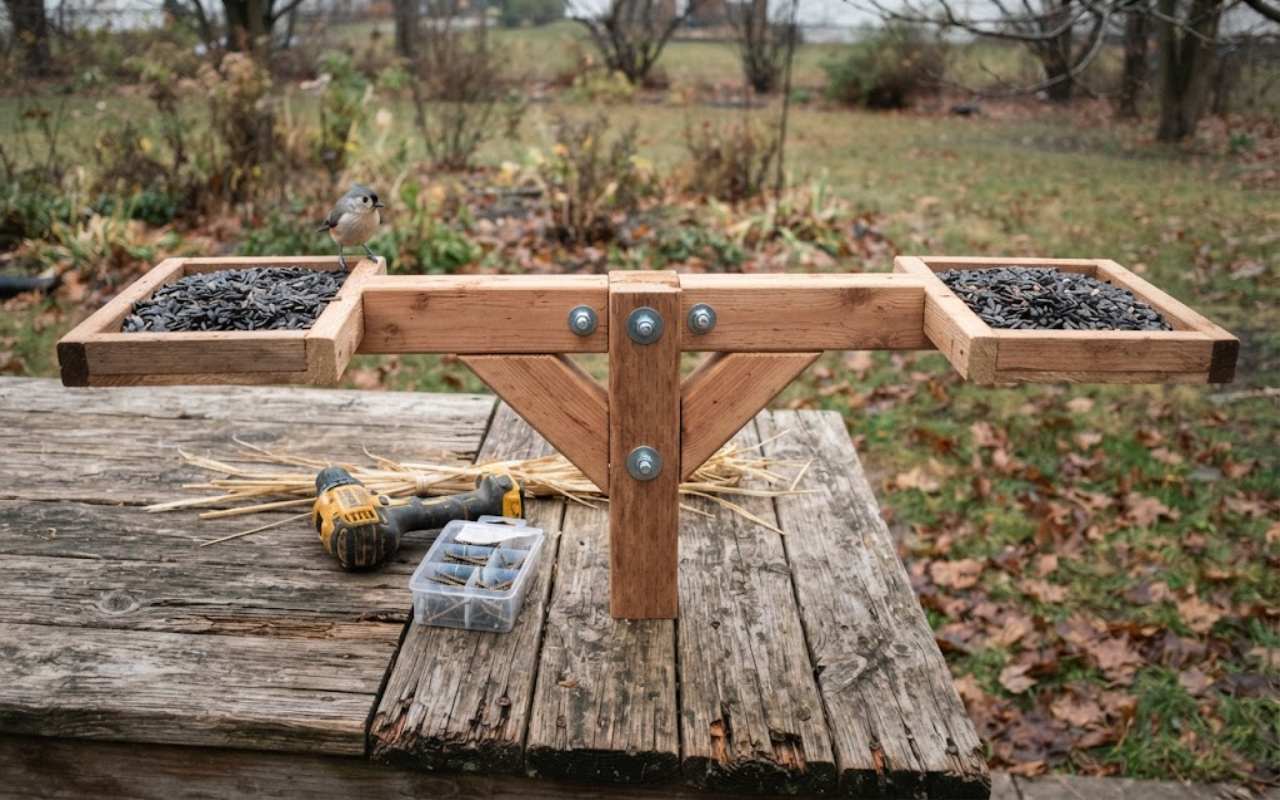
Building a scarecrow bird feeder diy station is an awesome way to turn basic fall decorations into a high-capacity backyard feeding hub. Flimsy, hot-glued dowels or thin craft wires will snap the first time a heavy bird tries to land, dumping your expensive seed straight onto the grass.
To keep your platforms steady during rough autumn winds, you need to lock thick cedar cross-arms together using galvanized deck screws. This simple, rugged frame easily handles the weight of heavy seed trays, giving your local songbirds a perfectly secure winter sanctuary.
Quick-Glance Field Summary
Converting a garden figure into an active feeding platform requires rigid mechanical framing and strict moisture control to avoid structural collapse and toxic mold development. Success depends on isolating the center mast with an effective rodent baffle, reinforcing the horizontal limb joints, and using perforated, food-safe platforms that drain standing water instantly.
- Mast core: 4×4-inch pressure-treated lumber sunk 24 inches into the ground or secured via ground spike
- Horizontal crossbeam: 2×4-inch cedar, Douglas fir, or heavy-gauge galvanized pipe secured with galvanized through-bolts
- Cantilever arm span: Maximum 24 inches of clear extension per side from the central mast
- Platform tray base: 0.25-inch galvanized wire mesh (hardware cloth) for continuous water drainage
- Fastener hardware: Grade 5 galvanized or stainless steel lag bolts with broad neoprene washers
- Baffle installation: 8-inch diameter by 24-inch long metal stovepipe baffle mounted 4.5 feet above grade
- Window clearance rule: Positioned under 3 feet or farther than 30 feet from glass panes to eliminate fatal collision zones
Cantilever Torque and Structural Arm Framing Loads
Community discussions on r/backyardbirds frequently highlight structural arm failure as the most common issue with handmade feeder stands. When a flock of heavy mourning doves or northern flickers lands simultaneously on an extended tray, the resulting downward leverage snaps lightweight dowels and strips basic wood screws. A single rainstorm can double the weight of tray-bound seed, creating severe rotational torque on the central crossbeam joint.
To counteract dynamic leverage, you must bypass lightweight craft store crossbars in favor of load-rated timber or metal piping. A solid two-by-four timber arm bolted directly through a four-by-four center mast distributes lateral and vertical force across the full width of the spine. Adding diagonal support gussets cut at forty-five-degree angles beneath each arm transfers downward weight back into the central vertical post.
- Secure the main crossbeam to the vertical mast using two 0.5-inch diameter, Grade 5 galvanized steel carriage bolts spaced 3 inches apart.
- Install diagonal 2×4-inch under-arm gussets measuring at least 10 inches along each joining edge to establish a 50 lbs maximum structural load rating per arm.
- Anchor the vertical mast at least 24 inches into the soil, packing the base with crushed gravel for drainage and rigidity.
- Limit total arm extension to 24 inches on either side of the body to minimize mechanical leverage.
Placing dual trays on opposing arms also balances total mass across the spine. An uneven load distribution strains the vertical post connection, causing the scarecrow to list over time. Fastening corrosion-resistant Grade 304 stainless steel eye bolts beneath the wooden limbs creates dependable hang points that eliminate point-load failure.ty steel eye bolts beneath the wooden limbs creates dependable hang points that eliminate point-load failure.
| Feeder Arm Joinery | Load-Bearing Mechanical Limit | Wind Shear & Leverage Defense | Optimal Seed Tray Parity |
|---|---|---|---|
| 2×4 Structural Cedar Cross-Lap | High; comfortably supports up to 25 lbs of static bulk seed mass. | Elite; interlocking wood notch channels downward landing impacts seamlessly. | Heavy wood rimmed platform trays filled with peanuts and safflower. |
| 1″ Round Hardwood Dowel Tee | Low; snaps or sags significantly under any load exceeding 5 lbs. | Poor; round surfaces twist violently when weight balances shift unevenly. | Lightweight hollowed-out gourds or small plastic suet baskets. |
Tray Basin Aeration and Aflatoxin Prevention Protocols
Solid wooden or plastic feeding trays trap standing moisture during moderate rainfall, creating lethal microclimates for wild birds. In humid backyard environments, damp grain generates ideal growing conditions for the fungus Aspergillus flavus. This pathogen produces potent aflatoxins that poison songbirds, causing respiratory failure, internal hemorrhaging, and death within days of ingestion.
Experienced wildlife rehabilitators consistently advise hobbyists to avoid solid-bottomed feeding bowls on outdoor structures. Replacing solid wooden planks with suspended wire screens allows precipitation to pass directly through the grain bed without pooling. This airflow dries moist seeds rapidly after storms and prevents the caking of fallen grain.
- Construct tray frames from untreated, rot-resistant western red cedar or white oak.
- Line tray floors with 0.25-inch galvanized hardware cloth to permit maximum vertical air movement.
- Secure the wire mesh beneath the perimeter frame using heavy-duty, 0.5-inch leg length Grade 316 stainless steel staples every 1.5 inches.
- Install removable wooden rim skirts that allow you to lift the screen out for thorough scrubbing.
For small songbirds, limit the tray wall height to roughly 1.5 inches above the wire floor. Walls deeper than two inches block sightlines, preventing foraging birds from spotting approaching aerial predators like Cooper’s hawks. Clear visibility encourages shy, ground-feeding native sparrows and juncos to use the elevated platform without hesitation.
Fabric Degradation and Hardware Baffle Mechanics
Backyard forum members frequently share stories of squirrels treating scarecrow clothing like tree bark to reach the food above. Standard flannel shirts, burlap sacking, and denim give small mammals exceptional claw traction, bypassing typical pole defenses. Furthermore, damp clothing held against exterior timber traps ambient moisture, which accelerates structural wood rot and fosters fungal spores.
To resolve these predator and rot problems, clothing must remain purely decorative and physically isolated from the climbing access zones. Keep all clothing hems terminating well above the predator defense barrier on the lower mast. Never let shredded fabric touch the soil, as wet denim acts like a wick that draws groundwater upward into the timber.
- Install an 8-inch diameter steel stovepipe baffle at a minimum height of 4.5 feet from the ground.
- Trim clothing lines so that no fabric extends lower than 6 inches above the upper lip of the metal baffle.
- Ensure the scarecrow structure sits at least 10 feet horizontally away from low-hanging tree branches, fences, and roofs.
- Avoid using loose synthetic batting or polyester stuffing inside the clothing, which can entrap avian claws if exposed.
Instead of polyester fibers, stuff the chest cavity with natural, untreated straw or dried prairie grass. If a songbird pecks through the outer fabric, natural stems pose zero toxic hazard or entanglement risk. Tightly tie the wrists and neck opening with heavy jute twine to prevent rodents from nesting inside the torso cavity.
Perch Texture and Geometric Clearances
Proper perch geometry dictates how safely wild birds can land, feed, and escape from the scarecrow structure. Birds lack the ability to grasp slick, sealed surfaces securely, especially during frosty morning conditions. Milling crossbeam arms from rough-sawn wood provides natural claw traction, reducing landing slips and leg injuries among smaller passerines.
Locating the structure requires adherence to strict landscape safety geometry. According to collision data compiled by the Audubon Society, feeder stations must sit either within 3 feet of home windows or farther than 30 feet away. The 3-foot limit prevents birds from reaching fatal impact velocity during sudden predator flushes, while the 30-foot distance gives them room to identify and dodge reflective glass.
- Maintain a minimum of 18 inches of vertical headspace between the feeding tray surface and any overhead clothing or hat brims.
- Keep horizontal perches between 0.5 inches and 0.75 inches in diameter to comfortably accommodate passerine foot morphology.
- Space opposing limb trays at least 3 feet apart to prevent dominant species from monopolizing both feeding stations.
- Position the scarecrow in an open sightline at least 10 feet away from dense ground-level brush where outdoor domestic cats hide.
Roughing the edges of wooden feeder trays with a coarse wire brush adds micro-grooves that support avian foot traction. Avoid using synthetic grip tapes or petroleum-based sealants on the perches, as these transfer residues directly to delicate foot pads and feathers. Bare, weathered lumber provides the safest, most durable surface for landing birds.
Seasonal Maintenance and Sanitation Regimens
Accumulated bird droppings, seed hulls, and environmental dust turn feeder surfaces into vectors for avian pox and Salmonella. Backyard feeding platforms require consistent sanitation cycles to remain safe communal dining spots for resident wildlife. Establishing a routine cleaning schedule limits the spread of disease across migrating flocks that visit your yard.
When scraping away accumulated debris, take care not to damage the underlying drainage mesh. High-pressure water hoses clear stubborn droppings from hardware cloth without stretching the metal weave. Never expose the feeding trays to toxic commercial detergents or harsh chemical sealers that leave systemic residues.
- Scrape away accumulated seed debris and fecal matter weekly using a stiff-bristled wire brush.
- Disinfect tray meshes every two weeks using a 1:9 bleach-to-water dilution soak followed by a complete freshwater rinse.
- Allow platforms to dry completely in direct sunlight before refilling with fresh seeds.
- Remove fallen hulls from the ground beneath the scarecrow to discourage nocturnal rodents and eliminate rancid seed layers.
Rotate seed varieties on your scarecrow arms to target specific native species and discourage problem birds. Black oil sunflower seeds and safflower cater to desirable cardinals, chickadees, and nuthatches without turning sour as quickly as millet blends. Inspecting structural carriage bolts twice per year ensures the scarecrow remains sturdy through every seasonal change.