
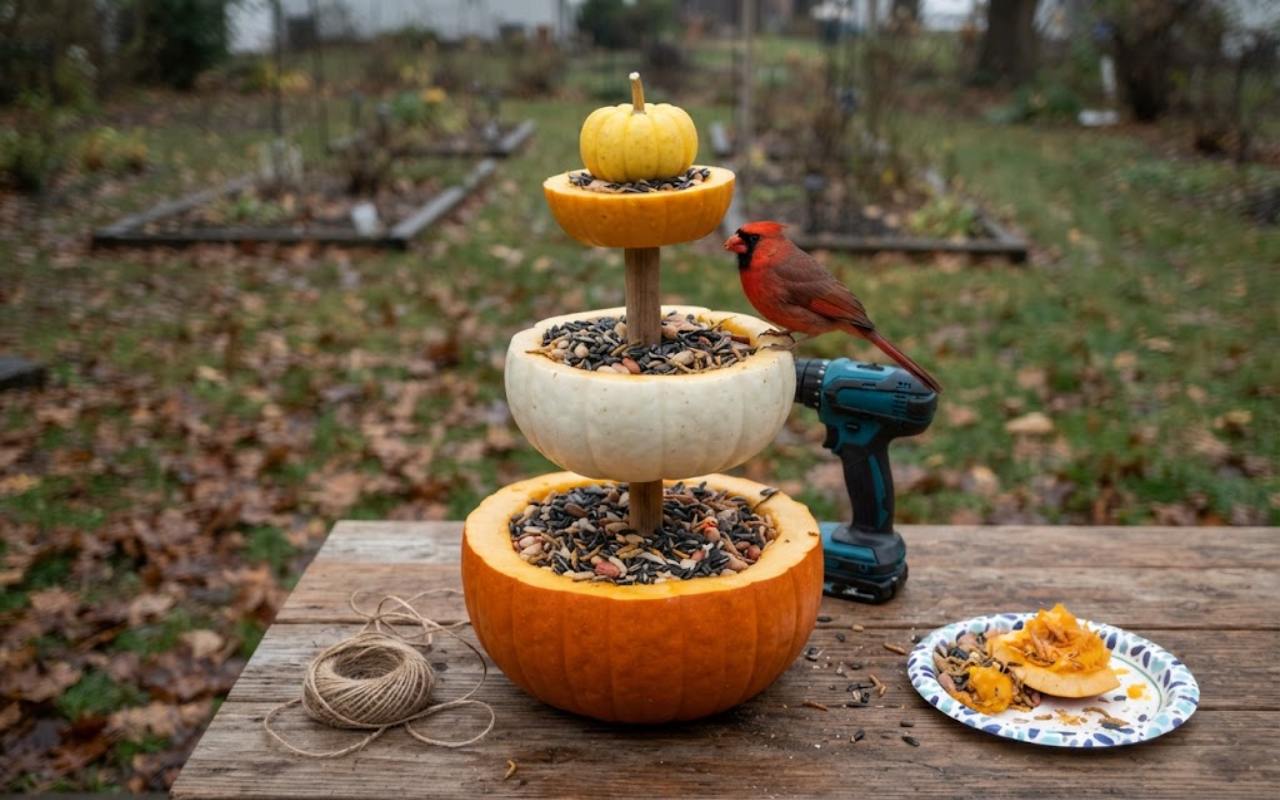
Constructing a stacked tiered pumpkin feeder tower is an exceptional way to provide migrating and overwintering wild birds with a dense feeding station during late autumn. When natural seed heads deplete and frost hardens the topsoil, backyard flocks actively seek out elevated, lipid-rich foraging sites. Learning how to build a stunning multi level pumpkin bird feeder offers multiple feeding zones while repurposing seasonal fall harvests into functional avian enrichment.
However, standard craft projects often fail in real-world backyard conditions within forty-eight hours. Unanchored gourds quickly tip under wind sheer, moisture pools in carved hollows, and heavy seed loads attract rodents or breed toxic fungi. Building a durable, bird-safe feeding station requires careful material selection, engineered structural balance, and strict sanitation management.
Quick-Glance Field Summary
A successful multi-tiered pumpkin feeder relies on a ground-anchored steel spine to distribute vertical weight and comprehensive gravity drainage to stop interior seed rot. Carving wide, sheltered feeding ports and using targeted lipid-dense seed types ensures safe, continuous winter foraging for small to medium songbirds.
- Central support: 0.5-inch steel threaded rod or solid rebar driven 12 inches into stable soil
- Base anchor: Flattened field pumpkin measuring 12 to 14 inches wide for low center of gravity
- Intermediate tiers: Medium pie pumpkins or flat-bottomed heirloom varieties (Cinderella or Fairytale)
- Drainage apertures: Minimum of four 0.25-inch angled weep holes drilled into each hollow basin
- Hardware cloth: 0.25-inch galvanized wire mesh installed beneath seed beds for air circulation
- Cleanout standard: 1:9 bleach-to-water disinfectant wash prior to seed filling
- Maximum ambient temperature threshold: 55 degrees Fahrenheit before pulp softening accelerates
Structural Rod Physics and Wind Load Stabilization
Community threads across r/backyardbirds frequently highlight the catastrophic structural collapse of decorative pumpkin stacks when using wooden dowels. As user reports often demonstrate, a standard wooden garden stake absorbs pulp moisture within days, softens, and snaps whenever gray squirrels or strong autumn gusts hit the top tier. Wood also swells inside the pumpkin flesh, accelerating soft rot around the spine.
To prevent sudden tipping, you must anchor the entire assembly using a single 0.5-inch threaded zinc-plated steel rod or standard rebar. The foundational bottom pumpkin must be a broad, flat-bottomed variety like a classic Cinderella or large carving pumpkin. Drive the metal rod at least twelve inches directly into solid ground before threading the gourds down onto the shaft.
- Core rod: 48-inch long, 0.5-inch diameter threaded zinc-plated steel rod
- Base stabilization: Two 1.5-inch galvanized fender washers and locking nuts beneath the bottom tier
- Base gourd: Minimum 14-inch diameter, thick-walled flat pumpkin
- Intermediate spacers: 1-inch exterior-grade rubber washers positioned between pumpkin rinds
These intermediate rubber washers distribute pressure away from the hollow cavity walls of the lower fruit. Without these spacers, the vertical weight of the upper gourds will crush the lower pumpkin as its interior walls slowly lose turgor pressure. This hardware reinforcement preserves your vertical alignment through sustained autumn storms.
| Tier Layer | Gourd Sizing & Volume | Optimal Seed & Feed Matrix | Target Bird Traffic |
|---|---|---|---|
| Base Layer (Bottom) | Large, wide Cinderella or carving pumpkin; provides structural ballast. | Raw cracked corn, white proso millet, and unshelled peanuts. | Mourning doves, blue jays, towhees, and native sparrows. |
| Center Layer (Middle) | Medium-sized pie pumpkin or white ghost gourd; offers mid-tier roosts. | Black oil sunflower seeds, pure safflower, and dried mealworms. | Northern cardinals, rose-breasted grosbeaks, and tufted titmice. |
| Crown Layer (Top) | Small miniature Jack Be Little gourd; high, light, and secure. | Nyjer thistle thistle seed and premium high-lipid beef tallow suet pellets. | American goldfinches, black-capped chickadees, and nuthatches. |
Drainage Hole Architecture and Moisture Control
Water management is the single most critical factor separating a functional feeder from a rotting trap. In localized wildlife forum discussions, experienced birders consistently report that standard scooped-out pumpkin cups turn into putrid soup after a single rainstorm. Rainwater settles into the pulp floor, submerging seed and spoiling food reserves within hours.
To establish passive airflow and rapid water drainage, you must cut wide exterior feeding windows rather than hollowing out the entire upper half of the fruit. Leave the pumpkin top intact as a natural roof to deflect incoming precipitation. Cut side portals at least two inches above the interior floor to leave adequate room for seed while shielding the basin from blowing rain.
- Window dimensions: 3-inch wide by 2.5-inch high arched oval cutouts on opposite sides
- Basin weep channels: Four to six 0.25-inch downward-angled drill holes along the outer edge
- Bottom lining: Elevated 0.25-inch galvanized hardware cloth disc seated 0.5 inches off the floor
- Absorbent layer: Thin scattering of clean, unhulled sunflower hulls beneath the wire mesh
The elevated hardware cloth creates a false floor that keeps dry seed elevated above residual moisture. The angled weep holes allow gravitational water runoff while preventing heavy rains from washing seed out through the bottom. This mechanical ventilation also slows the breakdown of the interior pumpkin wall.
Tier Geometry, Perch Clearance, and Avian Access
Wild birds exhibit strict micro-habitat preferences based on flight clearance and predator sightlines. A common mistake observed on crafting boards is placing pumpkin tiers too close together, which effectively blocks access for timid native songbirds. Chickadees, titmice, and nuthatches require clear landing zones, whereas larger nuisance species like European starlings easily crowd out tight spaces.
Establish distinct dimensional gaps between each pumpkin level to accommodate varying avian foraging styles. The largest bottom tier serves ground-adjacent foragers, while upper tiers provide open skyward escape trajectories for cautious woodland species. Incorporating exterior perches gives small clinging species a staging area prior to entering the carved cavity.
- Vertical clearance: 8 to 10 inches of open rod space between the top of one tier and the base of the next
- Perch dowels: 0.3125-inch natural hardwood twigs inserted 1 inch below each feeding portal
- Perch extension: 3 inches of external perch space treated with light score marks for claw traction
- Top tier sizing: Small 6-inch sugar pie pumpkin or ornamental gourd to maintain an inverted pyramid profile
Never seal natural wooden perches with petroleum products or slick chemical varnishes. Songbird feet rely on rough natural bark or coarse wood grain for secure purchase in freezing temperatures. Position the feeder tower at least ten feet away from dense ground cover to eliminate ambush points for outdoor domestic cats.
Fungal Pathogen Prevention and Aflatoxin Mitigation
Damp seed combined with decaying biological matter provides an ideal incubation ground for dangerous pathogens. Wet autumn grain frequently harbors Aspergillus flavus, a mold that produces lethal aflatoxins capable of causing acute liver failure in wild birds. Community wildlife rehabilitators repeatedly warn that decomposing pumpkin flesh also spreads systemic fungal infections like Candida albicans.
Before adding a single seed to the feeder, thoroughly scrape every trace of interior fibrous pulp and loose seeds from the cavities. Dip or spray the carved surfaces with an avian-safe disinfectant solution to destroy surface bacterial spores and delay fungal colonization. Allow the cut surfaces to dry fully in sunlight before mounting the gourds onto the support spine.
- Sanitization wash: 1 part household unscented bleach diluted in 9 parts clean tap water
- Soak time: Submerge carved pumpkins for 10 minutes, followed by a pure water rinse
- Desiccant treatment: Lightly dusting cut interior rims with food-grade cinnamon to inhibit mold
- Inspection frequency: Conduct a structural and mold check every 48 hours in mild weather
If ambient daytime temperatures rise above 60 degrees Fahrenheit, the pumpkin tissue degrades rapidly. Discard the entire biological structure immediately if you detect a sour fermented odor, internal pulp softening, or visible fuzzy white or black mold rings. Maintaining clean feeder environments prevents preventable mortality events across your local bird population.
Rodent Excluder Baffles and Seed Chemistry Selection
A pumpkin tower is an open invitation for eastern gray squirrels, raccoons, and nocturnal rodents. Because the feeder itself is composed of edible squash, standard mechanical seed deterrents are vital to protect the structure from being chewed apart. Backyard enthusiasts frequently note that squirrels will gnaw through the structural walls of an unprotected pumpkin in an afternoon.
Mount a standard 18-inch metal torpedo baffle directly onto the central steel pole beneath the lowest pumpkin tier. Ensure the top of the baffle sits at least four feet above ground level to prevent small mammals from leaping over it. Pair this physical barrier with strategically chosen seeds that cater to wild birds while reducing mammalian interest.
- Mounting baffle: 18-inch diameter smooth metal cone or torpedo baffle secured at a 4-foot height
- Base layer seed: High-lipid black oil sunflower seeds, delivering essential cold-weather fats
- Excluder seed: Pure safflower seed, which possesses a bitter taste profile disliked by squirrels
- Cold-weather supplement: Raw, unsalted suet kibble mixed in limited amounts during sub-freezing days
Avoid using commercial seed blends filled with red milo, cracked corn, or wheat fillers. Foraging birds kick these low-nutrient fillers onto the ground, attracting mice and rats directly beneath the tower. By combining high-grade seed chemistry with robust hardware defenses, your pumpkin tower remains an efficient, sanitary haven for songbirds throughout the entire fall season.