
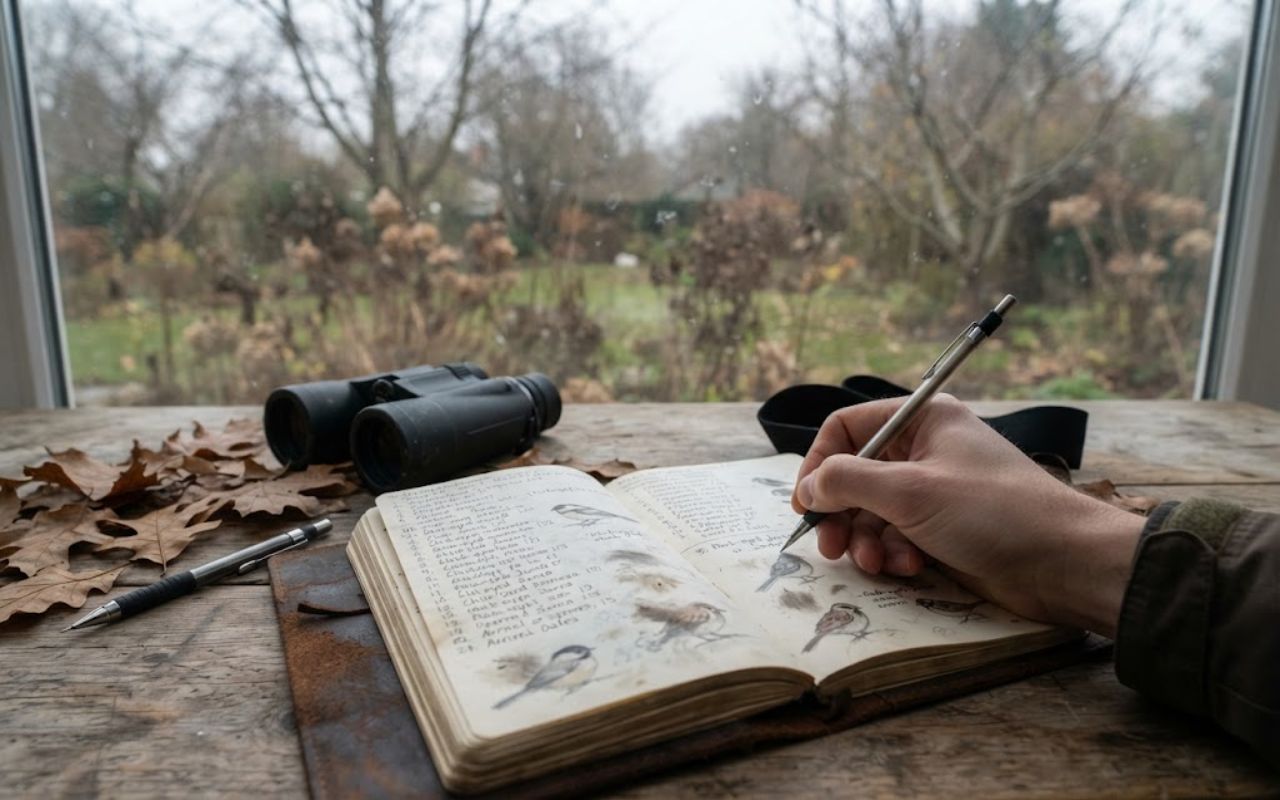
Keeping a comprehensive fall backyard birding journal allows you to capture the fleeting, chaotic dynamics of autumn migration right from your porch. As photoperiods shorten and regional temperatures drop, documenting daily species shifts provides invaluable phenological data that casual watching simply miss.
A structured record bridges the gap between casual feeder observation and actionable community science. By tracking subtle seasonal variables, you transform routine yard sightings into a dense ecological ledger.
Quick-Glance Field Summary
A functional autumn birding record pairs microclimate weather logging with rigorous plumage and behavioral observations. Maintaining this ledger requires resilient field supplies and systematic entry points recorded at identical time intervals each morning.
- Primary recording medium: All-weather synthetic paper notebook with 20-pound archival density
- Writing implement: 2B soft-lead mechanical pencil or pressurized gas-cartridge ballpoint pen
- Critical microclimate variables: Ambient temperature, barometric trend, wind direction, cloud ceiling percentage
- Feeder proximity safety limit: Document window strikes against the 3-foot or 30-foot glass distance rule
- Nectar maintenance threshold: Record syrup swaps when 4:1 ratios risk freezing below 27 degrees Fahrenheit
- Sanitization log schedule: Bi-weekly soaking rotation using a 1:9 bleach-to-water dilution
Moisture Degradation and Archival Paper Selection in Early Morning Frost
Autumn field journaling presents immediate physical challenges caused by heavy condensation, falling rain, and freezing morning frost. On community platforms like r/backyardbirds, observers frequently lament ruined field sketches caused by standard ink bleeding across damp wood-pulp pages during rapid dawn temperature drops.
Another recurring user complaint on local nature forums highlights how standard gel pens freeze or smudge completely when exposed to dense autumn ground fog. Standard notebooks quickly absorb ambient water vapor, causing pulp fiber expansion and permanent structural warping.
Replacing standard stationery with specialized all-weather options prevents water ingress and ensures pencil graphite adheres cleanly under wet conditions.
For standard field use, an all-weather cellulose-based option, like Rite in the Rain’s patented wood-based paper, retains its 20-pound archival density, handles heavy moisture without warping, and remains fully recyclable.
For absolute waterproofing in severe freezes, synthetic polymer papers (such as polyester or Yupo) completely isolate water, though they require longer drying times for specialized ink.
Pressurized ballpoint cartridges or medium-soft lead pencils eliminate ink freeze during sudden late-autumn cold snaps.
- All-weather cellulose paper: A water-repellent, 20-pound wood-pulp paper that resists fiber saturation while remaining fully recyclable as standard paper.
- Synthetic polymer paper: A 100 percent waterproof plastic-based sheet designed for severe downpours that resists tearing but is prone to ink smudging when wet.
- Pressurized ink pens: Internal nitrogen gas chambers that write continuously through thick condensation and cold snaps.
- 2B mechanical pencil lead: Softer graphite blend that bonds to damp coated or synthetic surfaces without tearing the sheets.
- Polyethylene field binder: Exterior covers that will not crack or warp during freeze-thaw cycles.
Field gear should remain accessible in an exterior coat pocket to minimize thermal shock between your heated home and the cold morning air. Storing paper directly against body heat can cause rapid condensation to form on cold covers when opened outside.
Establishing a dry staging area under a porch awning ensures your documentation equipment remains legible and structurally sound throughout the entire season.
| Journaling Style | Primary Core Metrics Logged | Scientific Discovery Benefit | Primary Data Tracking Limit |
|---|---|---|---|
| Quantitative Field Log | Exact headcount tallies, strict timestamp boundaries, and wind/temperature data. | Establishes flawless, hard numerical trends for multi-year arrival comparisons. | Omits descriptive behavioral notes and transitional molting plumage details. |
| Qualitative Sketchbook | Detailed pencil sketches, verbal plumage descriptions, and feeder habit notes. | Captures fine variations in molting cycles and individual bird profiles beautifully. | Highly subjective data that is difficult to aggregate into statistical data spreadsheets. |
Documenting Post-Breeding Molt Variations and Confusing Fall Warblers
Autumn identification requires tracking drab plumage variations rather than relying on bright spring breeding colors. In community discussions on r/birdwatching, novice observers often report deep frustration trying to distinguish dull immature American goldfinches from female warblers foraging on seed heads. Experienced forum contributors consistently emphasize documenting specific feather tracts, such as wing bars and undertail coverts, rather than general body coloration.
Your journal entries must record specific molting stages as adult birds trade worn flight feathers for winter coats. Note the gradual progression of yellow feathers giving way to olive and buff tones across common backyard species. Tracking these physiological transformations provides exceptional context when local flocks shift their foraging behavior from aerial insects to oil-rich seed stations.
- Crown and nape coloration: Document striations, cap edges, or emerging drab cap patterns
- Wing feather condition: Note primary feather wear, presence of fresh buffy tips, and dual wing bar clarity
- Eye ring definition: Record broken arcs versus complete orbital rings on skulking canopy visitors
- Bill shape and hue: Differentiate slender insectivorous bills from heavy conical granivore structures
Always sketch bill geometry and record structural proportions whenever an unfamiliar bird appears for only a few seconds. Documenting exact foraging locations, such as gleaning insects under oak leaves versus probing bark fissures, often confirms a difficult identification faster than feather color alone. These comparative notes turn confusing fall transients into predictable annual visitors.
Logging Barometric Fronts and Migratory Fallout Pulses Across Microclimates
Autumn bird movement is fundamentally governed by continental weather movements and steep barometric gradients. Backyard hobbyists frequently note in forum threads that sudden activity surges correlate directly with clearing skies immediately following sharp cold front passages.
Logging barometric pressure drops and shift lines in surface winds allows you to anticipate massive morning fallout events before they occur. Local geography creates unique microclimates within a single yard that dictate where migrating flocks land.
Document which areas of your yard offer shelter when high winds scour exposed treetops. Migrants consistently seek out dense, south-facing brush piles and low evergreen branches that trap lingering ground warmth while blocking northern gusts.
- Barometric trend: Record rising or falling millibar levels over the previous six-hour window
- Wind vector: Document ground-level directional currents that drift migrants downward into yard canopies
- Overnight precipitation: Track clearing times, as rain cessation right before dawn triggers heavy stopovers
- Canopy shelter zones: Note localized windbreak effectiveness across specific shrubs and hedgerows
Tracking local wind shifts alongside morning flight calls reveals when continental flyways shift overhead. Ground foragers like white-throated sparrows frequently appear within hours of northern frontal systems clearing your county line. Adding a simple thermometer and a basic analog barometer to your observation post turns every entry into a multi-layered weather habitat study.
Correlating Feeder Hygiene Protocols and Pathogen Detection in Daily Notes
Fall moisture creates acute disease risks around crowded feeding stations that require constant observation and logging. Damp seed trays promote rapid fungal growth, particularly Aspergillus flavus, which generates hazardous aflatoxins within wet corn and millet substrates.
Tracking maintenance routines directly in your journal ensures your yard remains a safe haven rather than an incubator for avian illnesses. Observant forum participants regularly share warnings regarding lethargic finches clustering around tray feeders during damp October mornings.
Catching early symptoms of mycoplasmal conjunctivitis or salmonellosis requires documenting subtle changes in bird posture, such as crusty eyes or fluffed feathers. Your daily log should include a dedicated checklist verifying that feeding surfaces remain dry and disinfected.
- Feeder cleaning records: Document bi-weekly sanitization cycles using a 1:9 bleach-to-water dilution soak
- Moisture inspection: Note whether lower feeding ports contain clumping seed residues after autumn rains
- Window placement audits: Verify feeding stations remain within 3 feet or beyond 30 feet from glass panes
- Late nectar dynamics: Track 4:1 sugar-water solutions before freezing at 27 degrees Fahrenheit
Avoid using boiling water on polycarbonate feeder tubes, as high temperatures cause plastic crazing and structural failure. If keeping a late-season hummingbird feeder for lingering vagrants, note daily temperatures to prevent the solution from turning to slush. Documenting feeder hygiene intervals alongside bird densities helps you immediately isolate and eliminate potential disease vectors.
Integrating Acoustic Metadata and Sonogram Verification into Written Records
Autumn migration is largely an auditory phenomenon, as many species travel under the cover of night and call overhead before dawn. Recent forum debates across birding networks focus heavily on reconciling automated sound-identification applications with verifiable visual sightings.
Relying solely on automated digital algorithms without recording supporting field observations often introduces inaccurate regional records into personal logs. Use your journal to transcribe the specific acoustic properties of nocturnal flight calls heard during early morning vigils.
Document call duration, inflection patterns, and pitch shifts alongside any recorded audio file timestamps. Cross-referencing field notes with saved audio files creates a permanent, verifiable record that confirms cryptic species visiting your property.
- Call cadence: Record whether flight notes occur as isolated chips, doubled rising sweeps, or raspy buzzes
- Time stamp synchronization: Match acoustic mobile app audio clips directly to journal entry timestamps
- Foraging height context: Document if the vocalizing bird called from the ground, mid-story, or canopy
- Behavioral trigger: Note whether the vocalization was an alarm call, contact note, or social chatter
Writing phonetic approximations such as sharp chips or rising zhees trains your ear to recognize unfamiliar transients quickly. Pair these phonetic transcriptions with environmental notes detailing fog density or cloud ceiling height.
Over time, your accumulated acoustic records will reveal the precise calendar weeks when elusive thrushes, warblers, and sparrows pass through your backyard airspace.