
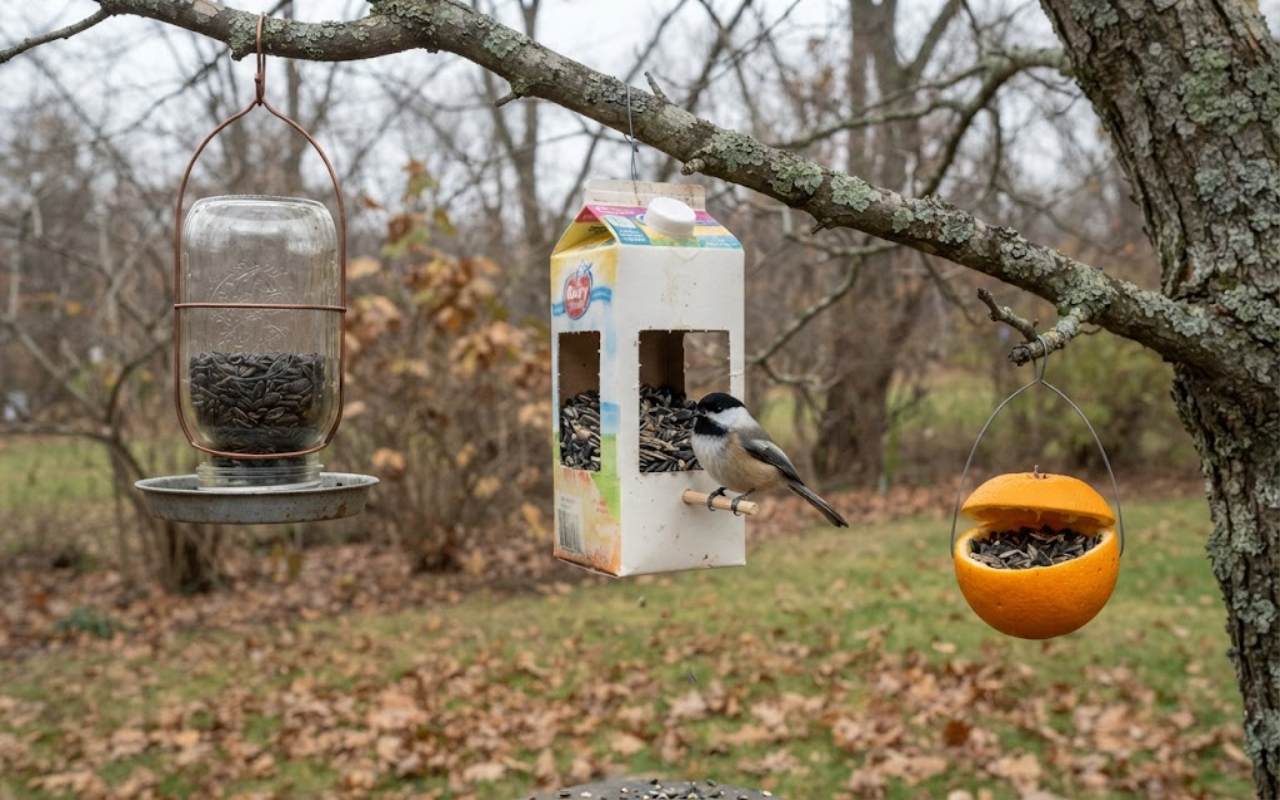
Installing functional upcycled autumn bird feeders allows backyard naturalists to provide critical caloric support during peak migration and pre-winter molting periods. Upcycling domestic recyclables eliminates the expense of commercial hoppers while repurposing clean household containers.
When autumn weather shifts into prolonged drizzle, these simple feeding stations bridge severe nutritional deficits for resident and transient birds. Backyard birders often observe territorial shifts as winter flocks establish home ranges, making rapid feeder deployment essential. Fast ten-minute builds offer flexible micro-stations that distribute foraging pressure across your property.
Quick-Glance Field Summary
Deploying temporary autumn feeding stations requires balancing rapid assembly with strict moisture defense to prevent fatal fungal contamination. Selecting high-lipid feeds like black oil sunflower seeds and pure rendered tallow ensures maximum caloric intake for visiting songbirds facing dropping temperatures.
- Assembly Time: Under 10 minutes per station using clean household recyclables.
- Recommended Fillers: Black oil sunflower seeds, raw suet, unseasoned peanut butter, nyjer seed.
- Window Safety Spacing: Mount within 3 feet of glass or beyond 30 feet.
- Drainage Standards: 0.125-inch bottom weep holes on all rigid basins.
- Target Lifespan: 3 to 5 days for biodegradable units; full season for rigid plastics.
- Sanitization Protocol: Non-porous components cleaned with a 1:9 bleach-to-water soak.
Repurposing Citrus Rinds and Pinecones for High-Lipid Autumn Suet
Halved citrus rinds serve as completely biodegradable suet cups that naturally conform to avian perching mechanics. Scrape out the interior pulp of an orange or grapefruit, then pierce two opposing holes near the rim to thread thick jute twine. Pack the cavity with a firm blend of rendered beef tallow and black oil sunflower seeds, which provide essential fats without synthetic additives.
Open-scale pinecones offer an ideal textured surface for birds that naturally cling to tree bark, such as chickadees, nuthatches, and woodpeckers. Collect fallen, dry cones and work room-temperature lard or unsalted peanut butter deep between the rigid scales. Roll the coated cone in high-protein sunflower hearts to create an instant foraging station that requires zero specialized hanging hardware.
Suspended fat balls and filled rinds deteriorate rapidly in unseasonably warm autumn sunlight. Inspect these natural feeders every three days to ensure the fats do not turn rancid or soften excessively. High-lipid feeds must remain firm to prevent grease from transferring to breast feathers, where it compromises avian thermoregulation.
| Upcycled Base Material | Assembly Mechanism | Avian Safety Benefit | Primary Weather Risk |
|---|---|---|---|
| Hollowed Citrus Rinds | Suspended horizontally by natural jute cords and filled with solid suet. | 100% biodegradable and compostable; introduces zero plastic waste to branches. | High autumn humidity can accelerate mold growth on the organic skin. |
| Clear Plastic Bottles | Pierced horizontally with wooden spoons serving as integrated landing perches. | Completely shatterproof if dropped; keeps loose seeds shielded from heavy rain. | Lightweight frame sways violently in windstorms, spilling seed payloads. |
| Cardboard Milk Cartons | Lateral windows cut into the walls while keeping the top roof line intact. | Waxy coating repels water; large feeding ports accommodate multiple finches. | Base seams can soggy and split if water retention isn’t managed with drain holes. |
Milk Jug and Mason Jar Hopper Builds for Rain-Sheltered Seed Dispersion
A clean one-gallon plastic milk jug quickly transforms into a high-capacity gravity hopper that shields grain from autumn squalls. Cut two-inch access ports roughly three inches from the jug base, leaving the overhead plastic intact to act as an awning. Push a wooden chopstick or pencil through the plastic directly below each port to create secure landing perches.
Repurposed glass or rigid plastic jars can be rigged horizontally to form enclosed, wind-resistant foraging tubes. Wrap 16-gauge galvanized wire securely around the mouth and base of the jar, creating an overhead suspension loop that keeps the bottle balanced horizontally. This geometry keeps drifting drizzle off the seed bed while allowing small passerines easy access to the interior.
In community discussions on r/birdwatching, experienced hobbyists consistently caution against using thin nylon string or decorative yarn to suspend heavy hopper feeders. Chickadees and titmice easily entangle their tiny claws in frayed synthetic fibers, leading to severe injury. Heavy natural jute or non-reactive wire provides a rigid suspension alternative that prevents feeder swinging and eliminates snagging hazards.
- Milk jug hoppers: Best for high-volume black oil sunflower seed distribution.
- Horizontal jar feeders: Superior rain deflection during wet autumn coastal storms.
- Perch dowels: Sized between 0.25 inches and 0.375 inches for optimal songbird foot grip.
Cardboard Roll and Egg Carton Ground Foragers for Migratory Finches
A cardboard paper towel roll functions as a rapid, zero-waste roller feeder for arboreal foraging species. Coat the outer cardboard cylinder in a thin layer of unsalted peanut butter, avoiding sticky sweet syrups that adhere to facial plumage. Roll the cylinder in nyjer or finely cracked corn, then slide the entire assembly horizontally over an exterior tree branch.
Pressed-pulp egg cartons provide an exceptional multi-compartment feeding tray for autumn ground-foragers like juncos, towhees, and native sparrows. Cut the hinged lid away, poke four corner holes in the deep cup tray, and suspend the flat base using twine tied to a central hook. Fill alternating cups with varying seed types to identify which localized seed mixes draw the highest foraging interest in your yard.
On platforms like r/backyardbirds, community analysts frequently note that unprotected cardboard feeders turn into soggy, moldy masses within 48 hours of autumn rainfall. Users emphasize hanging all pulp-based feeders strictly beneath dense conifer boughs, covered porch eaves, or wide patio awnings. Discard and compost these cellulose-based feeders immediately after rainfall to prevent bacterial growth.
Structural Moisture Defense and Drainage Modifications to Prevent Aflatoxin Growth
Moisture is the single greatest hazard associated with DIY bird feeding gear during wet autumn transitions. When grain rests in damp basins, the fungus Aspergillus flavus proliferates rapidly, releasing lethal aflatoxins that poison songbird livers. Every enclosed plastic hopper requires dedicated weep holes melted or drilled into the lowest basin floor.
Use a heated nail or 0.125-inch drill bit to punch at least six evenly distributed drainage channels through the bottom of plastic bottles, jugs, and cans. Line the interior bottom with a thin layer of small river pebbles or clean coarse gravel before pouring seed. This gravel bed elevates the grain above any pooling condensation, allowing airflow to dry the interior reservoir.
When selecting seeds for wet autumn conditions, prioritize unhulled black oil sunflower seeds over cracked corn, millet, or wheat. Thin-shelled oil seeds resist moisture penetration far longer than cracked grains, which rapidly fuse into toxic, fermenting clumps. Discard any seed reservoir that emits a sour odor or shows visible grey mycelial threads.
- Drill bit diameter: 0.125 inches ensures water drainage without letting seed spill out.
- Bleach sanitization ratio: 1 part household bleach to 9 parts water for cleaning plastic hoppers.
- Inspection frequency: Check bottom seed layers every 48 hours during rainy spells.
Strategic Yard Placement and Micro-Baffle Rigging Against Autumn Scavengers
Correct biological placement determines whether an upcycled feeder benefits wildlife or exposes visiting birds to fatal hazards. Adhere strictly to the window placement rules established by the Audubon Society by positioning feeders within 3 feet of glass or further than 30 feet away. Feeders placed within 3 feet prevent birds from building enough flight velocity to suffer fatal collisions if startled.
Position your upcycled stations within 10 to 15 feet of dense shrubs or brush piles. This intermediate distance gives shy autumn migrants immediate escape cover from predatory accipiters like Sharp-shinned Hawks while keeping ground predators at bay. Avoid placing feeders directly inside dense shrubbery, where lurking domestic cats can ambush ground-feeding birds.
Upcycled materials also solve autumn rodent and squirrel conflicts without expensive commercial baffles. Cut a slit into the center of a flexible plastic plant saucer or a wide two-liter soda bottle dome, mounting it inverted directly above your feeder on the suspension wire. This smooth barrier prevents squirrels from descending the hanging line while simultaneously acting as a wide weather umbrella over the seed port.