uilding a diy pumpkin bird feeder craft for autumn is a great way to feed local songbirds during seasonal transitions. Standard blogs treat this project as simple decor, but true success requires prioritizing real wildlife safety. Leaving damp interior pulp or ignoring rainwater collection can quickly turn the basin into a hazardous mold trap.
Adapting field-tested techniques allows you to assemble a stable platform that stands up to harsh weather. Drilling mandatory drainage holes and cradling the base protects your seed payload from fermenting under autumn rain. These quick, intentional adjustments turn a basic craft into a highly effective, predator-safe sanctuary.
Quick-Glance Field Summary
Converting a whole pumpkin into a safe feeding station requires moisture-evacuating base channels, non-slip dowel perching points, and heavy-gauge support geometry that survives both moisture degradation and wind oscillation.
Prioritizing food hygiene and mechanical stability ensures that visiting songbirds feed safely without contracting fungal ailments or suffering predation accidents.
- Pumpkin size: 8 to 10 inches in diameter with a flat base and dense flesh
- Drainage requirements: 5 to 7 base perforations drilled at 0.375-inch diameter
- Perch specifications: Two 0.375-inch hardwood dowels crisscrossed horizontally
- Suspension hardware: 16-gauge galvanized steel craft wire or 0.25-inch natural jute rope
- Seed capacity: 1.5 to 2.0 cups of high-lipid black oil sunflower seed
- Optimal ambient range: 35°F to 55°F to reduce structural mold bloom rates
Rind Selection and Structural Carving Geometry
The success of your feeder relies on selecting the right squash and executing precise structural cuts. Traditional jack-o’-lantern pumpkins feature thin walls that soften rapidly under autumn rain, while smaller pie pumpkins or sugar pumpkins boast dense flesh that resists ambient mold spores.
On backyard bird forums, hobbyists frequently warn against traditional open top-cut designs because rainfall pools directly in the central cavity, quickly soaking the provisions.
Instead of slicing off the pumpkin crown, carve large feeding portals directly into the lateral rind while leaving the top intact as an umbrella. Cut two to four symmetrical windows roughly 3 inches wide and 4 inches tall along the equator of the pumpkin.
This arrangement provides adequate flight clearance for species like chickadees and nuthatches while shielding the inner trough from driving rain.
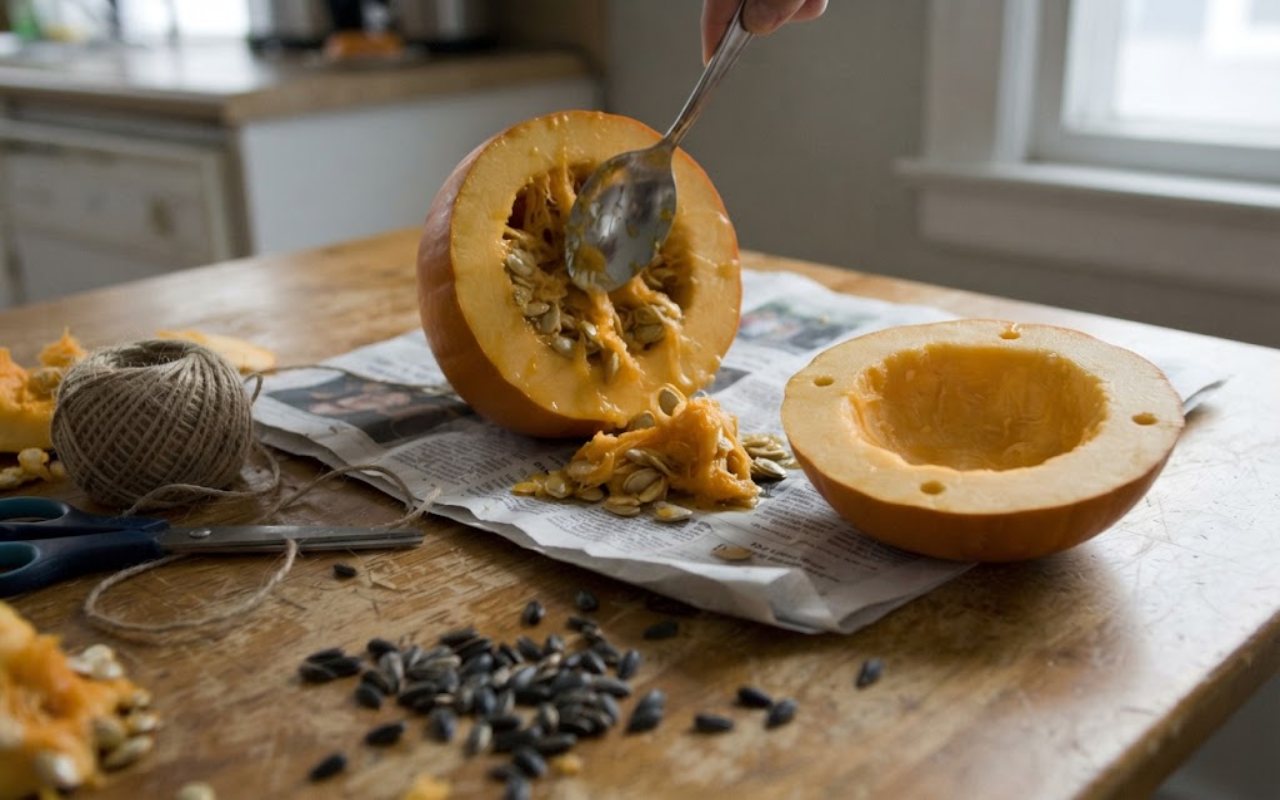
Scrape the internal cavity aggressively with a serrated metal spoon until all fibrous string pulp and loose seeds are completely eradicated. Damp stringy matter accelerates mold and traps loose debris against the rind walls. Leaving a smooth, firm inner flesh barrier slows microbial degradation and creates an even surface for fresh seed distribution.
Base Drainage Engineering and Aflatoxin Prevention
Moisture accumulation is the primary operational hazard of an organic feeding basin. User discussions on r/backyardbirds frequently document how quickly uneaten seeds turn into a rancid slurry after autumn rainstorms.
When moisture saturates organic seed husks, warmth and stagnant air promote the growth of Aspergillus flavus, an environmental fungus that produces fatal aflatoxins when ingested by wild birds.
To stop water retention entirely, drill five to seven 0.375-inch drain holes through the absolute bottom floor of the pumpkin cavity. Standard small punctures created by toothpicks or skewers clog immediately with loose grain husks and pulp slime.
These larger holes allow rain to exit the bottom rather than pooling inside the feeding basin.
- Drill the primary center drain hole using a standard 0.375-inch spade bit
- Position supplementary drain holes equidistant around the base floor
- Layer a 0.25-inch square cut of untreated galvanized hardware cloth over the holes to keep seeds from falling through
- Elevated placement prevents trapped bottom condensation from rotting out the underside
Standard crafting websites frequently advise soaking carved pumpkins in mild bleach solutions or rubbing petroleum jelly along cut edges to delay rotting.
Field ornithologists explicitly condemn these practices for wild bird feeders because petroleum products transfer to avian plumage, destroying feather barbule interlocking and inducing fatal hypothermia.
Leave the rind completely untreated, and discard the entire pumpkin into your compost pile at the first sign of soft mold.
Cross-Dowel Perch Stability for Native Songbirds
Wild birds require stable landing sites to safely access seed supplies. Pumpkin skin is naturally slick, and damp autumn humidity creates a slippery surface that small songbirds cannot securely grip with their feet.
A recurring complaint shared in r/birdwatching notes that small passerines abandon pumpkin feeders altogether if forced to balance awkwardly on unstable or slimy edges.
You can solve this gripping issue by installing rigid cross-perches through the base perimeter. Drive two 0.375-inch untreated wooden birch dowels horizontally through the pumpkin flesh just below the window sills.
Pierce the dowels entirely through opposing walls so that 3 to 4 inches of stable landing area extends outward from every portal.
- Select unfinished hardwood dowels or wild-foraged, pesticide-free twigs with rough bark
- Align perches 0.5 inches below the feeding window lip to optimize feeding posture
- Ensure dowels pierce cleanly through both sides of the pumpkin for balanced weight distribution
- Rough the perches with coarse sandpaper to create micro-grooves for avian claws
These external perches accommodate species like the tufted titmouse, black-capped chickadee, and downy woodpecker, which prefer landing before retrieving individual seeds. Sturdy cross-dowels also keep bird feet elevated above moist floor pulp, reducing the transmission of avian pathogens between individuals.
Suspension Rigging and Heavy Mammal Load Management
Carved pumpkins gain substantial moisture weight during rain events, making basic hanging threads useless. In localized wildlife forum threads, users frequently report structural drops caused by heavy twine slicing straight through softened pumpkin walls under mammal pressure.
Squirrels and raccoons will test any hanging yard feature, meaning your suspension assembly must withstand dynamic lateral pulling forces.
Never rely on a single string looped through the pumpkin stem, as rotting occurs first around the stem cap interface. Construct a load-bearing cradle underneath the pumpkin base using heavy 16-gauge galvanized steel wire or durable natural jute rope.
Pass the suspension lines directly beneath the solid bottom rind to disperse upward tension across the thickest base structure.
- Measure two 5-foot lengths of 16-gauge galvanized wire or rot-resistant cordage
- Cross the wires beneath the center bottom of the pumpkin to form an equal X-cradle
- Notch shallow grooves along the lower exterior rind so the wire sits flush against the skin
- Bring the strands up along the solid outer walls between the feeding portals
- Twist the wire ends together 12 inches above the pumpkin cap to form a stable hanging eyelet
Suspend the completed assembly from a dedicated metal pole fitted with an effective baffle, or hang it from a branch at least 10 feet out from tree trunks. If squirrels access the feeder, they will quickly gnaw through the walls to consume the seeds.
Elevating the unit in a clear flight corridor also satisfies Audubon recommendations to minimize predator ambushes from stalking neighborhood cats.
Seed Blends and Post-Display Decomposition Protocols
The final operational step is stocking your feeder with targeted nutrition suited for low ambient temperatures. Avoid commercial budget seed mixes that contain large percentages of red milo, cracked corn, and wheat fillers.
Backyard birds scratch through these low-value grains looking for fat, dumping unwanted filler into the moist pumpkin floor where it rots rapidly. Fill the floor cavity with premium, lipid-dense black oil sunflower seeds or pure safflower seeds.
Black oil sunflower features a high oil-to-meat ratio that supplies crucial caloric density for migratory and resident songbirds as freezing weather approaches. Safflower seeds offer an additional practical benefit, as squirrels and common grackles often ignore them due to their bitter taste.
- Black oil sunflower seeds provide primary caloric lipids for chickadees and nuthatches
- White safflower seeds discourage squirrels and house sparrows while attracting northern cardinals
- Hulled sunflower chips minimize inner shell accumulation in the moisture-prone cavity
- Raw pumpkin seeds harvested during the initial carving can be dried and mixed in safely
Add only enough seed to last visiting birds two to three days, replenishing small amounts as needed instead of filling the cavity to the brim. Overfilling blocks the critical base drain holes and invites premature spoilage.
When the squash walls inevitably begin to collapse after a week or two of autumn weather, remove the hanging wire and recycle the remaining rind in your compost.