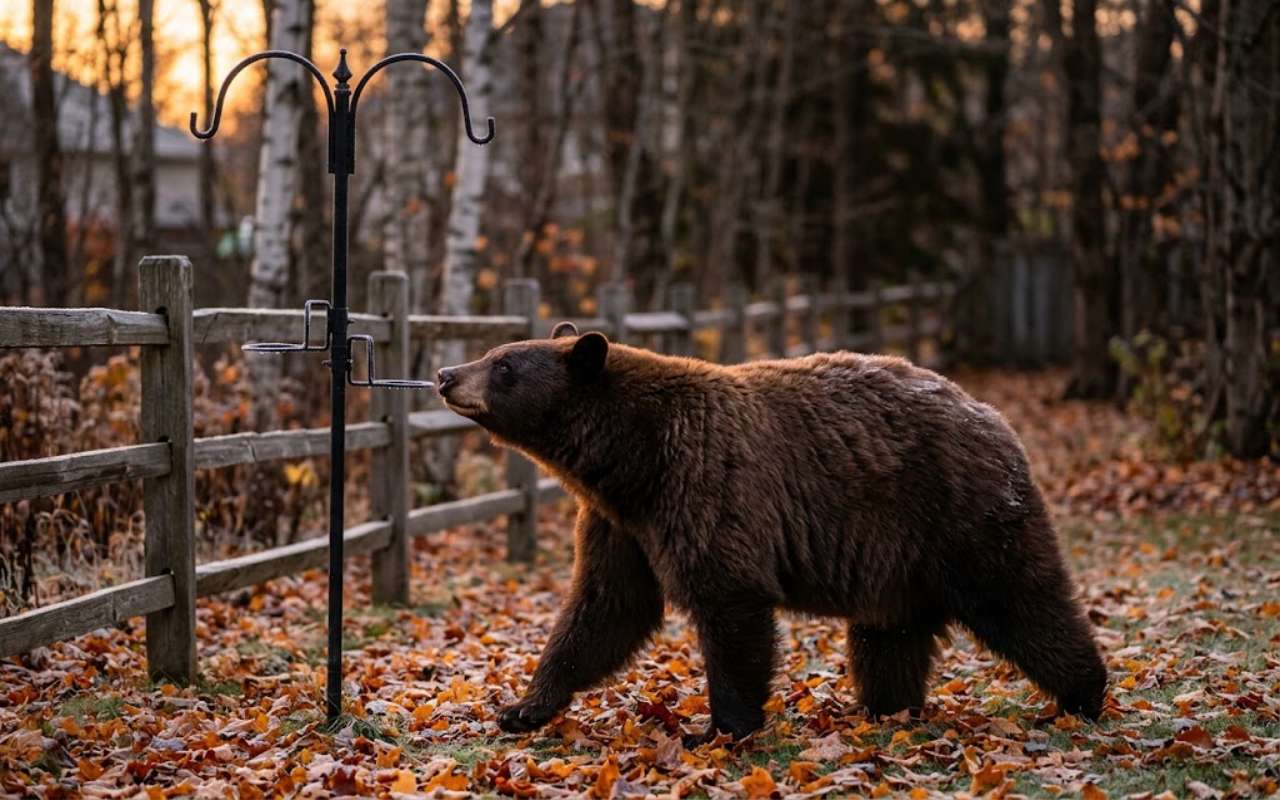
Many backyard birders are surprised to find that do bird feeders attract bears remains a pressing concern in late October and November, assuming these large animals should already be sound asleep in their winter dens.
While traditional advice often suggested taking feeders down only through early autumn, shifting weather patterns and biological realities have changed that timeline completely.
Understanding why these late-season visits happen will help you keep local wildlife wild while still protecting your expensive feeding gear. Here is what is driving this late-season activity and how to safely manage your yard until winter truly sets in.
The Relentless Caloric Drive of Hyperphagia
Before entering their winter dens, black bears experience a biological phase called hyperphagia, which drives them to eat almost non-stop for weeks. During this critical window, an adult bear needs to consume roughly 20,000 calories every single day to build the fat reserves required for winter survival. This physiological urgency makes them cast aside their normal fear of human spaces in search of quick, energy-dense meals.
A standard backyard feeding station is essentially an open buffet loaded with the exact high-fat foods bears crave. Consider how much energy is packed into standard backyard bird foods:
- Black oil sunflower seeds provide roughly 2,500 calories per pound.
- Commercial beef suet cakes contain upwards of 2,300 to 2,400 calories per standard 11-ounce block.
- Shelled peanuts deliver approximately 2,570 calories per pound.
- Mixed seed with cracked corn and millet offers roughly 1,650 calories per pound for high-quality corn blends.
When an animal is driven by an instinctual countdown to consume tens of thousands of calories daily, a feeder pole holding ten pounds of seed represents an irresistible, low-effort jackpot. A bear can empty a multi-feeder pole in five minutes, gaining calories that would otherwise take hours of foraging for wild berries or scattered acorns.
Changing Autumn Climates and Delayed Denning
The old backyard rule of thumb told birders that it was safe to hang feeders by Halloween, but climate data and wildlife biology show that schedule is entirely outdated. Warmer autumn temperatures and delayed snow cover across North America are keeping bears active well into November and even early December. Bears do not hibernate based on calendar dates; they respond directly to ambient temperature, food availability, and snow accumulation.
Long-term wildlife studies tracking bear denning chronology demonstrate that a mere 1 degree Celsius rise in winter minimum temperatures shifts bear behavior significantly, delaying hibernation and shortening their overall time spent inside winter dens by roughly six days.
When daytime temperatures linger above freezing and the ground remains clear, bears continue to actively patrol their territories. State wildlife agencies across the Northeast, Upper Midwest, and mountain regions now routinely urge residents to hold off on hanging feeders until consistent freezing weather arrives.
Females with cubs and young solitary males are often the last to turn in for the season. Pregnant females need maximum body condition to nurse newborn cubs in midwinter, so they forage as late as physically possible.
If natural food remains accessible and backyard feeders stay stocked, these bears will delay den entry until deep snow forces them into slumber.
Natural Mast Failures Drive Bears into Suburbia
Natural foraging conditions vary wildly from year to year depending on local weather, insect cycles, and tree health. In years where native hard mast crops like acorns, beechnuts, and hickory nuts fail, bears face severe nutritional deficits. When the forest floor lacks wild nuts, bears are forced to travel miles outside their normal home ranges.
These lean foraging years inevitably lead bears straight into suburban neighborhoods, rural subdivisions, and residential backyards. Residential properties offer constant, artificial scent corridors that travel surprisingly far on crisp autumn evening breezes. Once natural food sources dry up, your backyard becomes the primary dining option for miles around.
Birders who keep feeders filled during a mast failure often inadvertently habituate bears to neighborhood human scents. Once a bear learns that wooden deck rails, metal shepherd hooks, and suburban porches equal high-calorie food, breaking that habit becomes exceptionally difficult.
Common Feeder Gear Failures and Backyard Hazards
Many bird enthusiasts believe their setup is bear-proof simply because it features heavy metal hardware or tall poles. In reality, standard backyard birding gear stands little chance against an animal weighing three hundred pounds or more with powerful claws.
Community forums are filled with photos of heavy galvanized pipes bent completely flat and commercial baffle cones crushed like aluminum cans.
Bears easily bypass standard deterrents that were designed merely to stop squirrels, raccoons, or smaller pests:
- Stovepipe and torpedo baffles collapse under the sheer weight of a climbing bear.
- Half-inch metal shepherd hooks snap or bend at the ground joint under minimal downward pressure.
- Wire hanging cables snap when bears hook claws through them and pull their body weight downward.
- High tree branches bend toward the ground under heavy loads, bringing hanging feeders within easy reach.
When these setups fail, the damage is rarely limited to lost seed and shattered plastic tubes. Bears frequently damage wooden porch rails, tear down gutter systems, and rip apart exterior siding while attempting to reach elevated feeding stations. Even worse, bears that successfully feed in a yard will return night after night, escalating conflicts that often end poorly for the bear.
Practical Steps to Transition Safely into Winter
Responsible feeding requires adjusting your habits to protect both the local wildlife and your property. If bears are known to live in your county, wait to put your seed and suet feeders out until your area experiences sustained sub-freezing temperatures and permanent snow cover. In many northern and high-elevation regions, this means waiting until early to mid-December.
If you choose to feed birds during early November, strict daily routines are essential:
- Bring every feeder, hanging tray, and suet cage indoors before dusk without exception.
- Store your feeders inside a secure garage, basement, or sturdy outbuilding rather than on a screened porch.
- Rake or sweep the ground beneath your feeding poles daily to remove hulls and fallen seed.
- Clean dirty feeders with a solution of one part bleach to nine parts warm water to eliminate lingering food scents.
- Avoid hanging suet cakes entirely until temperatures remain reliably below freezing day and night.
You can also support your resident birds during November without offering loose seed at all. Planting native seed-bearing perennials like coneflowers, black-eyed Susans, and native grasses gives finches and sparrows natural foraging opportunities that bears largely ignore.
Offering fresh, clean water in a heated birdbath is another fantastic attractant that brings in dozens of bird species while presenting zero attraction for passing bears.