Choosing to leave dead sunflowers standing through the winter provides vital biological support for local wildlife when natural resources become scarce. While many gardeners rush to cut down spent annuals during autumn cleanup, these towering dried stalks serve as powerhouse micro-ecosystems.
Allowing dried plants to endure through December bridges an ecological gap between the end of autumn bounty and the harsh depths of winter. This simple choice directly mimics wild seed distributions across prairie landscapes, sustaining native birds and beneficial insects during freezing weather.
Nutritional Value of Sunflower Seed Discs in Winter
Sunflower seeds are packed with dense crude fats, plant lipids, and proteins that function as critical thermal fuel for cold-climate birds. A single seed head can produce hundreds of oil-rich seeds, which remain shielded from moisture beneath fibrous bracts. Unlike ground litter that quickly rots under wet conditions, elevated seed heads stay comparatively dry and resist premature mold growth.
During December, sub-freezing temperatures force small endothermic birds to consume significant portions of their body weight daily to sustain core temperatures overnight. Sunflower seeds provide an efficient calorie-to-foraging ratio, helping birds conserve energy when daylight hours are short.
- Black oil sunflower seeds contain high concentrations of energy-dense lipids.
- Thick outer hulls protect inner kernels from precipitation and freezing rain.
- Seed heads held two to six feet above the soil line remain accessible above moderate snow cover.
These natural feeders resist the clumping issues often seen in synthetic hopper feeders during sleet or snow events. The strong structure of the sunflower disk acts as an anchored platform, allowing wild foragers to feed in natural postures.
Native Avian Foragers Relying on Standing Stalks
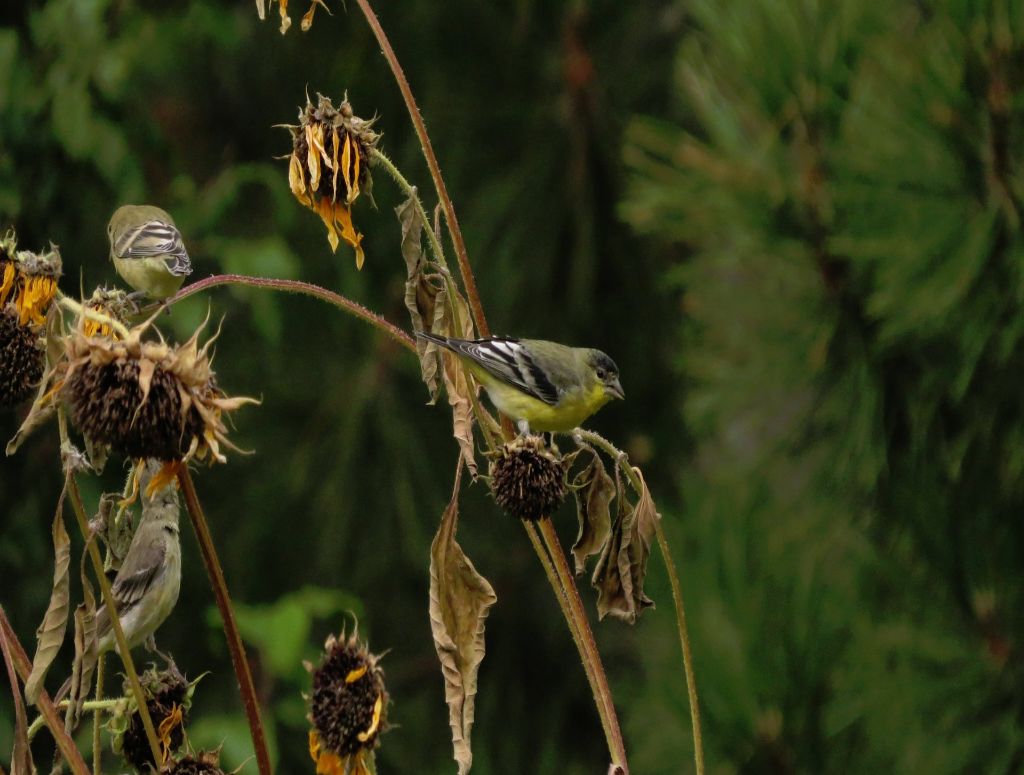
Multiple bird families have evolved specialized anatomical adaptations specifically for harvesting seed heads. American Goldfinches frequently perch directly on dried sunflower disks, using their conical beaks to pry seeds from the stiff outer bracts. Black-capped Chickadees, Tufted Titmice, and White-breasted Nuthatches will harvest individual seeds, flying them to nearby tree bark to hammer them open.
- American Goldfinches extract seeds while balancing on inverted flower heads.
- Downy Woodpeckers cling to sturdy upright stems to reach intact seed clusters.
- Dark-eyed Juncos and native sparrows forage on fallen seeds that drop to the ground.
By leaving stalks intact, you avoid crowding birds into concentrated feeding stations where diseases like mycoplasmal conjunctivitis can spread. Natural foraging distributions help birds disperse safely across the garden. This dispersed feeding pattern reduces physical territorial disputes and mimics natural wild flock dynamics.
Insect Microhabitats Within Pithy Sunflower Stems
Beneath the fibrous exterior of a sunflower stalk lies a soft, spongy inner pith that serves as critical shelter for overwintering invertebrates. Native solitary bees, including small carpenter bees in the genus Ceratina, often excavate nest cavities inside broken, dry hollow stems. These docile native pollinators overwinter as adults or pupae within these protected vascular channels.
- Native solitary bees utilize the porous inner stem core for winter hibernation.
- Parasitic wasps and predatory insect eggs overwinter in stem crevices to emerge in spring.
- Downy Woodpeckers inspect sunflower stems to forage on dormant stem-boring insect larvae.
Beneficial predators such as lady beetles, lacewings, and syrphid fly pupae also tuck themselves into the dry folds where leaf petioles meet the main stem. Stripping a garden clean in autumn inadvertently destroys these valuable biological pest controls. By preserving these stalks through December, you guarantee a resident population of beneficial insects to manage garden pests the following spring.
Natural Architectural Shelter Against Wind and Snow
Tall sunflower stems provide structural complexity that breaks prevailing winter ground winds. These resilient dried stalks trap windblown leaves and catch drifting snow, forming an insulating blanket over perennial roots and resting soil beds. This snow capture insulates the soil against severe freeze-thaw cycles that can heave delicate roots out of the earth.
Dense stands of standing stalks also create a multi-layered canopy that shields small ground-foraging birds from aerial predators like Cooper’s Hawks. Birds feeding on the ground beneath sunflower stands can dive into the lower brush when danger threatens.
- Stiff vertical stems act as natural snow fences that capture insulating snowdrifts.
- Fibrous roots secure topsoil against winter erosion caused by heavy rain or wind.
- Dried plant mass creates micro-climates that stay warmer than open lawn areas.
This habitat complexity encourages small birds to remain in your yard throughout the coldest weeks of the year. The presence of continuous architectural structure transforms an otherwise flat winter lawn into a functioning refuge.
Winter Garden Maintenance and Spring Preparation Steps
Leaving sunflowers in place requires very little intervention, but thoughtful management maximizes their wildlife value. In late autumn, simply inspect the stalks and remove any diseased leaves that showed signs of severe fungal rust during the growing season. Allow the main stem and the heavy seed heads to remain fully anchored in the soil without staking.
- Leave whole stalks completely undisturbed through December and January.
- Cut stalks back in late winter or early spring using clean, bypass pruners.
- Trim stems to varying heights between eight and twenty-four inches to provide bee nesting sites for the upcoming summer.
When spring cleanup eventually arrives in late March or April, do not haul the debris to municipal landfills. Instead, bundle the remaining woody stalks in an out-of-the-way garden corner or leave cut stems standing for spring bees. This step completes the natural life cycle, returning carbon to your soil while maintaining biological diversity year-round.