
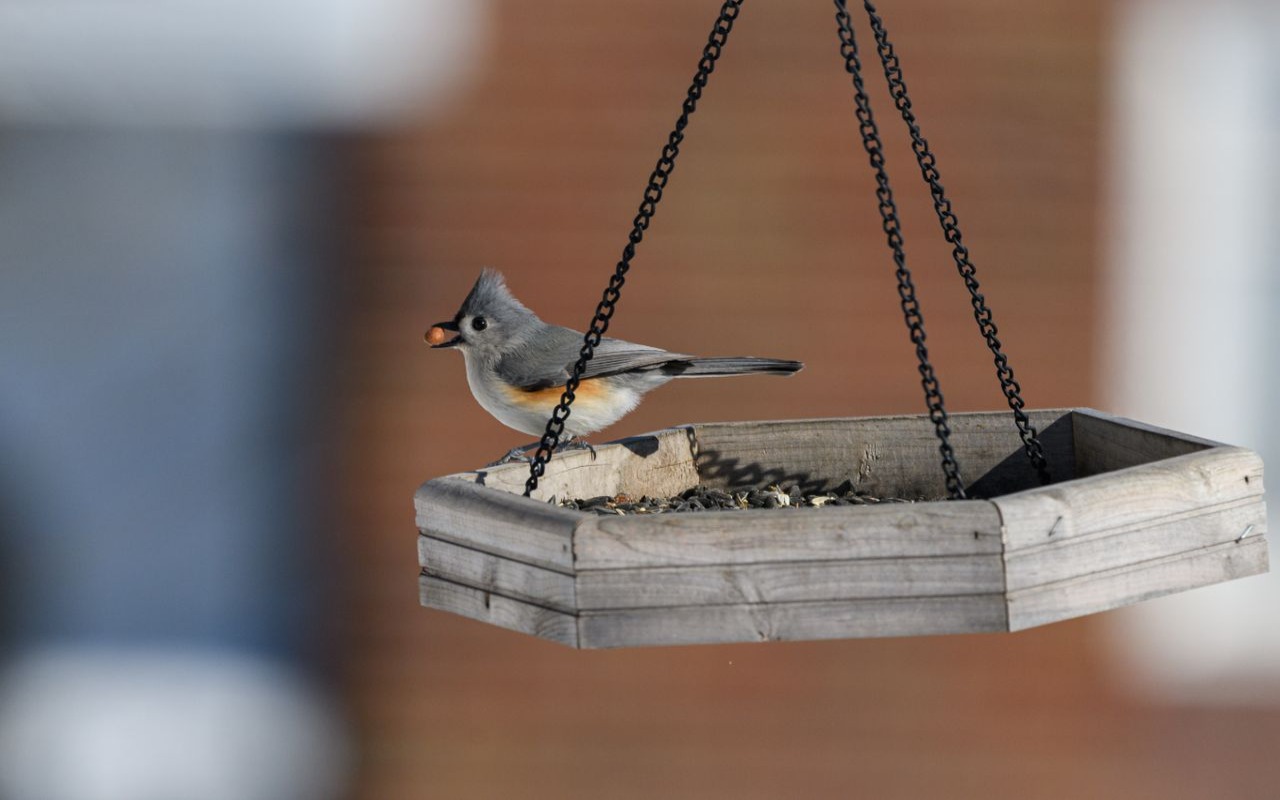
Learning how to recognize a Tufted Titmouse visiting your November feeder brings a lively presence to your backyard birdwatching routine as winter approaches. This small, active songbird belongs to the chickadee family, Paridae, and frequently visits backyard stations across eastern North America during the late autumn months.
November is a critical transition period when natural food sources dwindle, prompting these birds to rely more heavily on supplemental feeders. Observing their physical traits, unique foraging actions, and social vocalizations will help you identify them instantly among other common backyard species.
Distinctive Crest and Plumage Field Marks of the Tufted Titmouse
The most reliable visual trait of the Tufted Titmouse is its prominent brush-like crest of feathers atop its head. This gray crest can be raised high when the bird is alert or flattened against the crown when it is calm or submissive.
Measuring roughly 5.5 to 6.3 inches in length from bill to tail tip, it is noticeably larger than a Black-capped Chickadee but smaller than a Blue Jay.
Its overall plumage consists of soft, muted gray tones covering the upperparts, wings, and tail. The underparts are predominantly dull white or pale gray, accented by a striking patch of warm, rusty peach wash along the flanks just beneath the folded wings.
A bold black forehead patch sits directly above the stout, dark bill, framed by large, entirely black eyes that give the face an expressive appearance.
Key physical characteristics to inspect when observing an individual include:
- A distinct, pointed gray head crest that rises and falls with behavioral arousal.
- Soft silvery-gray plumage across the back, wings, and tail.
- A prominent square or triangular black patch resting above the bill base.
- Warm buff or peach-colored flanks contrasting against white belly feathers.
- Short, stout black bills built specifically for cracking heavy seed coats.
These markings remain consistent throughout November because adults complete their post-breeding molt in late summer and early autumn. Immature birds also display this identical plumage by November, making adult and first-year birds virtually indistinguishable in the field.
Foraging Behaviors at November Feeder Stations
Tufted Titmice rarely sit out in the open on feeder perches to eat their meals casually. Instead, they exhibit a rapid grab-and-go feeding strategy designed to minimize exposure to aerial predators like Cooper’s Hawks. A bird will dart in from surrounding shrubbery, select a single seed, and fly off immediately to a sheltered tree branch.
Once secured in nearby cover, the titmouse holds the seed firmly between its strong feet against a sturdy branch. It then uses its stout bill like an avian chisel, hammering repeatedly through the tough outer hull to extract the lipid-rich kernel inside. This rhythmic tapping sound is often loud enough to hear clearly through a closed window on calm November mornings.
In addition to eating seeds immediately, titmice engage in extensive food caching throughout the autumn months. They store individual seeds inside bark crevices, under lichens, or beneath fallen leaves within roughly one hundred feet of the feeder.
This deliberate hoarding behavior ensures they have accessible caloric reserves when freezing conditions arrive later in the season.
Vocalizations and Acoustic Cues of the November Titmouse
Recognizing the acoustic signals of the Tufted Titmouse allows you to detect its arrival before it lands on your feeder. Their most famous breeding call, a ringing two-note song often transcribed as peter-peter-peter, is rarely heard in late autumn. Instead, November encounters feature mechanical scolding notes and brief contact whistles exchanged between flock mates.
The most frequent cold-weather sound is a harsh, raspy scold that sounds like tsee-day-day-day or cheeva. This call shares structural similarities with chickadee vocalizations, but it is noticeably lower in pitch, scratchier, and slightly louder.
Titmice utilize these calls to maintain spatial contact while moving through deciduous woodlands and to alert flock members to nearby threats.
Backyard birders should listen for the following standard cold-weather vocal signatures:
- A rapid, high-pitched tsee note used as a mild contact or flight signal.
- A harsh, mechanical scolding sequence when approaching unfamiliar objects or threats.
- Low-volume conversational murmurs exchanged while foraging in mixed winter flocks.
These vocalizations often attract other species, including White-breasted Nuthatches, Downy Woodpeckers, and chickadees. If you hear a titmouse scolding near your feeding station, scan the adjacent trees, as an entire mixed-species foraging flock is likely trailing behind it.
Preferred Feeder Hardware and Seed Geometry
Tufted Titmice possess strong feet and short legs, allowing them to balance easily on a wide variety of feeder designs. They comfortably use hopper feeders, large platform trays, and wire mesh peanut feeders. Because of their dynamic take-and-flee feeding method, they prefer setups with generous clearance and immediate flight paths toward protective tree canopy.
The ideal food selections to attract this species during the late autumn include:
- Black-oil sunflower seeds, which provide exceptional fat ratios encased in thin, manageable shells.
- Striped sunflower seeds, which offer larger energy-dense meats requiring vigorous bill hammering.
- Whole or shelled peanut halves placed inside hanging mesh silos with standard quarter-inch openings.
- High-quality suet cakes containing animal fats, peanut bits, or insect meal.
- Safflower seeds, which titmice readily consume while nuisance mammals often bypass them.
Position your feeding hardware approximately ten to fifteen feet away from dense vegetation or brush piles. This specific clearance provides sufficient shelter from wind and ambush predators, while preventing squirrels from jumping directly onto feeder roofs.
Winter Preparation and Backyard Feeder Hygiene
Late autumn weather introduces rain, frost, and damp leaf accumulation, creating conditions that accelerate seed spoilage and fungal growth. Moldy seeds harbor toxic byproducts that can cause severe respiratory and gastrointestinal illness in wild birds. Inspecting seed trays daily ensures that moisture does not form dense, wet clumps at the bottom of the feeder reservoir.
Maintain feeder health and disease prevention using these proven sanitation steps:
- Discard damp, clumping seed hulls and droppings from feeder trays before morning refills.
- Soak emptied feeding stations in a solution containing one part standard household bleach to nine parts clean water.
- Scrub perches, mesh surfaces, and seed ports with a stiff wire brush to remove stuck debris.
- Rinse the cleaned hardware thoroughly with warm running water until all chemical odor completely dissipates.
- Allow every component to air-dry completely before refilling with fresh, dry seed stock.
Providing a reliable water source is equally critical as temperatures drop below freezing toward the end of the month. A clean, shallow birdbath equipped with a thermostatically controlled submersible heater keeps liquid water available when natural puddles freeze solid.
Fresh water allows titmice to maintain plumage alignment, ensuring their downy feathers trap insulating body heat through harsh November nights.