
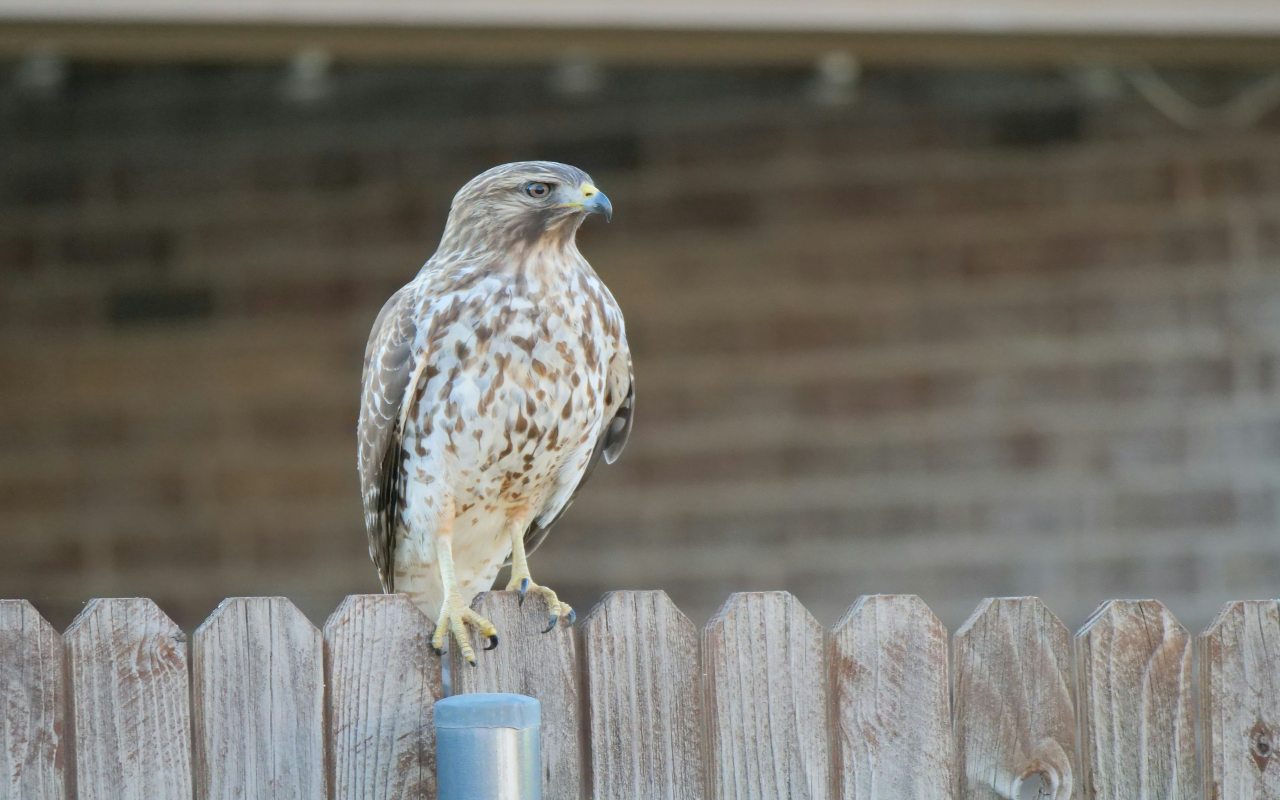
Learning how to stop window-strikes when winter hawks chase your backyard birds is essential for maintaining a safe sanctuary during peak predatory months. When stealth hunters strike, panicked prey flush at terminal velocity and slam into reflective glass.
Many homeowners mistakenly assume that solitary hawk silhouette decals pasted in window corners will frighten away smaller visitors. In reality, songbirds easily identify stationary stickers as inanimate and strike the clear glass mere inches away from the silhouette cutout.
Species Profile and Core Behavioral Differences
Winter backyard predation primarily involves two stealth accipiters: the Cooper’s hawk and the smaller Sharp-shinned hawk. Both species possess short, rounded wings and long rudder-like tails engineered for explosive acceleration through dense foliage.
In contrast, quarry such as Dark-eyed Juncos and Northern Cardinals rely on rapid, burst-flock escape mechanics that scatter outward without strategic flight path planning. This panic reflex causes birds to perceive sky and vegetation reflections in exterior glazing as viable escape corridors.
- Cooper’s Hawk: Exhibits high maneuverability in semi-open tree canopies and primarily targets medium-sized birds like doves and thrushes.
- Sharp-shinned Hawk: Utilizes dense, low-brush surprise corridors and targets smaller passerines like finches and sparrows.
- Songbird Prey Flocks: Rely on sudden explosive vertical and lateral flushes that override depth perception against reflective surfaces.
Understanding these distinct hunting strategies highlights why traditional visual deterrents fail during high-velocity chases. Eliminating structural ambush vulnerabilities requires a deliberate configuration of surrounding vegetation and foraging gear.
Habitat Layout and Feeder Setup
Accipiters exploit wide sightlines to stage surprise horizontal ambushes against feeding flocks. Placing feeding stations directly exposed in wide expanses leaves songbirds without close refuge, forcing dangerous high-speed evasive dives toward house walls.
To eliminate these attack angles, create intermediate staging zones using dense, non-deciduous native plantings. Strategic cover breaks the raptor’s direct visual lock and provides safe shelter within fractions of a second.
- Intermediate Escape Cover: Evergreen shrubs and dense brush piles positioned 8 to 12 feet from feeding stations.
- Linear Attack Disruption: Staggered multi-layered plantings that break up straight horizontal flight corridors from nearby tree lines.
- Low Canopy Shelters: Open-sided brush shelters that allow songbird entry while impeding the wide wingspans of diving raptors.
Never position feeding stations in deep dead-end alcoves or enclosed patios where glass flanks multiple sides. These architectural traps amplify spatial disorientation and drastically raise the mortality rate of fleeing birds.
Structural Dimensions and Placement Guidelines
Window strike physics dictate strict placement distances relative to exterior glass surfaces. Feeders must sit either within 3 feet of exterior windows or beyond 30 feet from the building facade.
At distances under 3 feet, a fleeing bird cannot build up sufficient kinetic energy to cause lethal blunt-force trauma during an impact. Conversely, placing stations beyond 30 feet gives panicked songbirds sufficient lateral space to veer away from reflections.
- Glass Decal Grid Spacing: High-contrast exterior markers spaced no more than 2 inches vertically by 2 inches horizontally to stop small passerines.
- Paracord Barrier Dimensions: Hanging exterior cords spaced 3.5 to 4 inches apart along the full window width, clearing glass by 1 inch.
- Feeder Safety Zone: Strictly under 36 inches from glass surfaces or positioned at a minimum baseline of 35 feet away.
- Pole Baffle Elevation: Conical predator baffles mounted at a minimum height of 4.5 feet above grade to exclude terrestrial pests.
Interior blinds and indoor decals fail to prevent strikes because they sit behind the external reflective surface of modern low-emissivity glass. Exterior treatments are mandatory on all south and west facing elevations to eliminate sun-glare reflection.
Nutritional Biochemistry and Feeding Protocols
Winter survival demands precise energetic budgeting to fuel high-metabolism predator evasion and thermoregulation. Selecting high-density macronutrients ensures visiting songbirds spend less time exposed on active feeders.
Comparative biochemical evaluations establish clear nutritional hierarchies among traditional winter feeds:
- Rendered Beef Suet: Premium winter fuel yielding 80 to 90 percent crude lipid content, 5 to 8 percent protein, and under 5 percent carbohydrates.
- Raw Peanut Kernels: High-yield fuel providing 45 to 50 percent crude lipids, 25 to 30 percent protein, and 15 to 20 percent carbohydrates.
- Black Oil Sunflower Seed: Balanced foundational ration delivering 38 to 42 percent crude lipids, 16 to 20 percent protein, and 25 to 30 percent carbohydrates.
Avoid low-grade commercial filler grains like red milo, cracked corn, and oats, which offer less than 4 percent crude fat. Songbirds discard these starchy fillers, creating hazardous damp piles on the soil beneath feeding structures.
Pest Mitigation and Sanitation Safeguards
Ground waste accumulation under feeder arrays provides a dangerous vector for lethal avian pathogens. Moisture triggers colonization by Aspergillus flavus, a soil-borne fungus that synthesizes deadly aflatoxins, alongside rampant outbreaks of Salmonella enterica.
Relying on outdoor blacklight inspections is ineffective because natural lichens and organic minerals fluoresce under ultraviolet illumination, generating false positives. Strict routine chemical disinfection remains the only reliable safeguard against flock-level transmission.
- Dilute Sodium Hypochlorite Solution: A 1:9 household bleach-to-water bath offering broad-spectrum bactericidal and sporicidal action with a strict 10-minute soak time.
- Thermal Disinfection: Boiling water rinses delivering immediate thermal neutralization for non-plastic hardware without chemical residue, though vulnerable to rapid heat loss.
- Dilute Acetic Acid: A 1:1 white vinegar solution providing mild antifungal activity but completely failing to eliminate resilient bacterial endospores.
Never exceed a 10-minute soak when using hypochlorite solutions on galvanized steel or consumer acrylic hoppers to prevent severe pitting and micro-cracking. Rake and dispose of all seed debris within a 15-foot radius weekly to starve ground pathogens.