
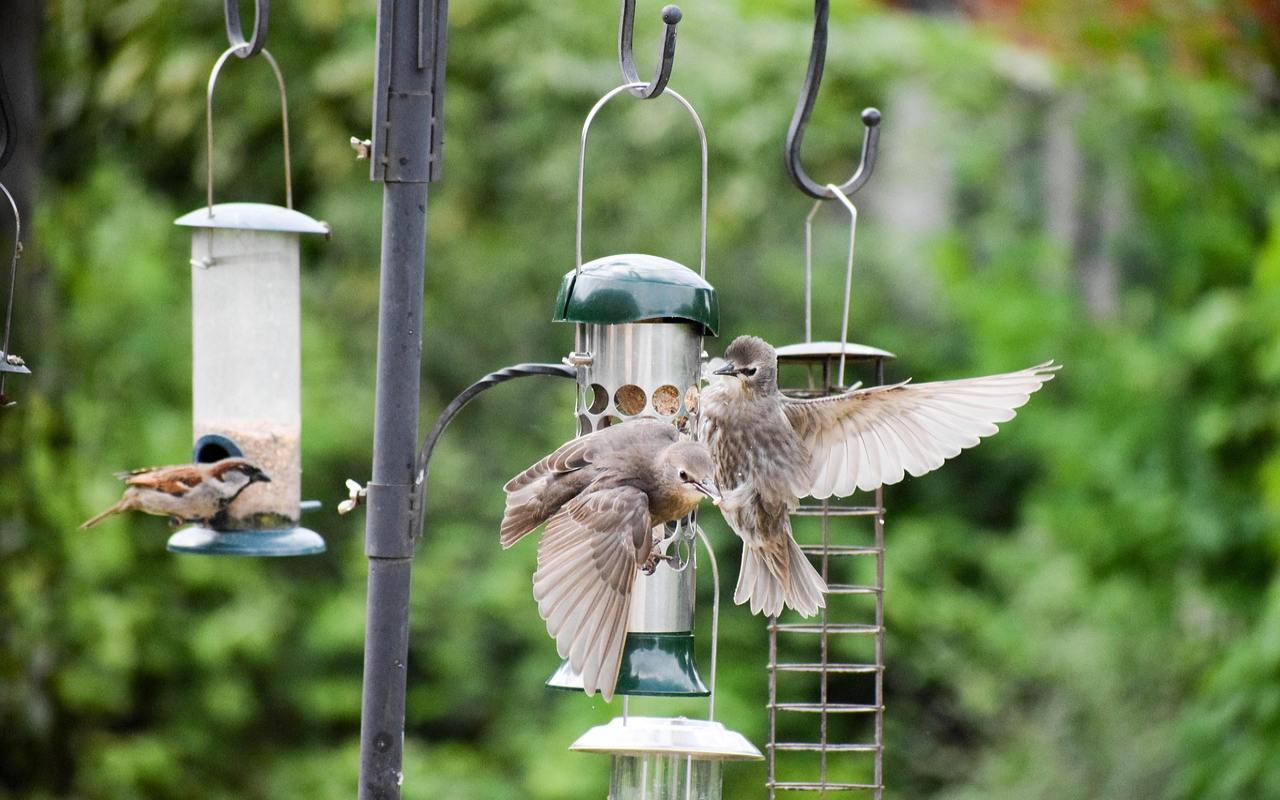
Learning how to focus on deterring European starlings in winter requires understanding the biomechanical vulnerabilities and feeding physiology of this invasive passerine. Backyard birders frequently watch these formidable flocks overwhelm feeding stations within minutes, displacing native woodpeckers, nuthatches, and chickadees.
Many consumers mistakenly believe that establishing a secondary diversion feeder stocked with cheap grain will lure starlings away from high-value stations. In reality, supplemental feeding simply elevates local carrying capacity and recruits larger winter murmurations through social facilitation.
Species Profile and Core Behavioral Differences
European starlings (Sturnus vulgaris) exhibit specialized cranial musculature known as gaping or prying jaw mechanics, allowing them to exert outward force with their bills to forage in dense turf and rip apart suet cakes.
In contrast, native cavity nesters like the Downy Woodpecker (Dryobates pubescens) and Black-capped Chickadee (Poecile atricapillus) utilize chiseling pecks and specialized gripping foot configurations.
Winter starling flocks operate through aggressive flock dynamics, monopolizing open stations through sheer density and physical intimidation. Recognizing their anatomical limitations reveals effective exclusion strategies:
- Weak jaw adductor muscles prevent starlings from cracking thick, hard seed coats.
- Unspecialized perching anatomy limits their capacity to hang completely inverted for extended feeding bouts.
- Broad pectoral dimensions restrict passage through rigid, small-gauge wire enclosures.
Native species routinely navigate dense brush and tight spaces that deter bulky flocking birds. Capitalizing on these morphometric differences allows targeted exclusions without displacing resident songbirds.
Habitat Layout and Feeder Setup
Modifying backyard geography disrupts the staging lines starlings rely on before descending onto feeding stations. Starlings prefer wide, open staging branches where the flock monitors ground hazards before swarming food sources en masse.
Placing feeders within dense shrub corridors or beneath evergreen canopies restricts flock descent while providing shelter for native foragers. Avoid open lawn placements that mimic agricultural stubble fields favored by foraging starlings:
- Install feeder arrays at least 10 feet away from exposed overhead utility wires or barren canopy branches.
- Position stations either within 3 feet of exterior windows or beyond 30 feet to eliminate fatal flight collision vectors.
- Mount elevated debris collection trays with micro-mesh drainage 12 inches below suspended reservoirs.
Scattering seed directly onto turf or platform trays is strictly forbidden in high-pressure starling zones. Broadcast ground feeding triggers rapid recruitment, drawing hundreds of communal roosting starlings into residential lots.
Structural Dimensions and Placement Guidelines
Exclusion hardware must conform to rigid physical tolerances to defeat starling incursions. Standard cage guards with 1.5-inch square wire mesh permit chickadees, titmice, and small nuthatches to enter while mechanically blocking adult starlings.
Inverted suet feeders exploit the starling’s weak clinging endurance; starlings can only flutter briefly beneath an inverted block, whereas woodpeckers and nuthatches feed comfortably upside down:
- Utilize feeder exclusion cages with an exact maximum mesh opening of 1.5 inches (38 millimeters).
- Deploy hanging inverted suet shelters featuring solid roofs, solid sidewalls, and bottom-only wire access grids.
- Shorten standard feeder perches to under 0.6 inches (15 millimeters) or remove perches entirely to favor clinging species.
- Calibrate counterweighted hopper perches to trigger shut under loads exceeding 2.2 ounces (62 grams).
Baffles must measure at least 22 inches in diameter and mount a minimum of 4.5 feet above the ground on smooth metal poles. Never wrap wooden posts with plastic mesh, as starlings easily gain foot purchase on semi-rigid netting.
Nutritional Biochemistry and Feeding Protocols
Starlings possess a straight, soft-edged bill optimized for soft invertebrates, fruits, and agricultural cereals rather than heavily armored seeds. Eliminating cracked corn, millet, and bakery waste starves starlings of readily accessible, simple carbohydrates.
Backyard stations should transition to specialized nutritional profiles that fulfill native metabolic demands while repelling starling consumption:
- Safflower seed: 38% crude lipid, 16% crude protein, enveloped in a thick, bitter cellulose hull that starlings cannot crush.
- In-shell peanuts: 48% crude lipid, 25% crude protein, exceeding starling bill prying strength while sustaining nuthatches and jays.
- Nyjer seed: 35% crude lipid, 21% crude protein, featuring minute dimensions that starlings ignore due to energetic foraging costs.
- Pure rendered beef suet: 95% lipid content, utilized strictly inside inverted hardware to block starling access to raw winter calories.
In comparison, cracked corn contains roughly 4% lipid and over 70% simple starch, functioning as an open fuel source that accelerates flock aggregations. Denying high-starch feed compels murmurations to search for easier forage elsewhere.
Pest Mitigation and Sanitation Safeguards
Winter starling aggregations deposit immense volumes of excrement, creating biological hazard hot spots around feeding platforms. Damp seed waste fosters Salmonella enterica and the pathogenic fungus Aspergillus flavus, which synthesizes lethal aflatoxins in unconsumed grain.
Sanitation protocols require rigorous chemical disinfection that neutralizes pathogens without destroying feeder components:
- Rank 1: Diluted 1:9 household bleach solution (5.25% sodium hypochlorite) providing complete pathogen eradication within a 10-minute soak.
- Rank 2: Standard 5% white vinegar (acetic acid) exhibiting moderate antibacterial action but limited efficacy against hardy fungal spores.
- Rank 3: Boiling water rinses offering thermal sanitation but risking warping on polycarbonate tubes and acrylic hoppers.
Rinse all sanitized equipment thoroughly with potable water to prevent chlorine off-gassing and metal corrosion on galvanized wire. Daily clearing of ground debris within a 15-foot radius maintains pristine backyard biosecurity throughout peak starling pressure.