
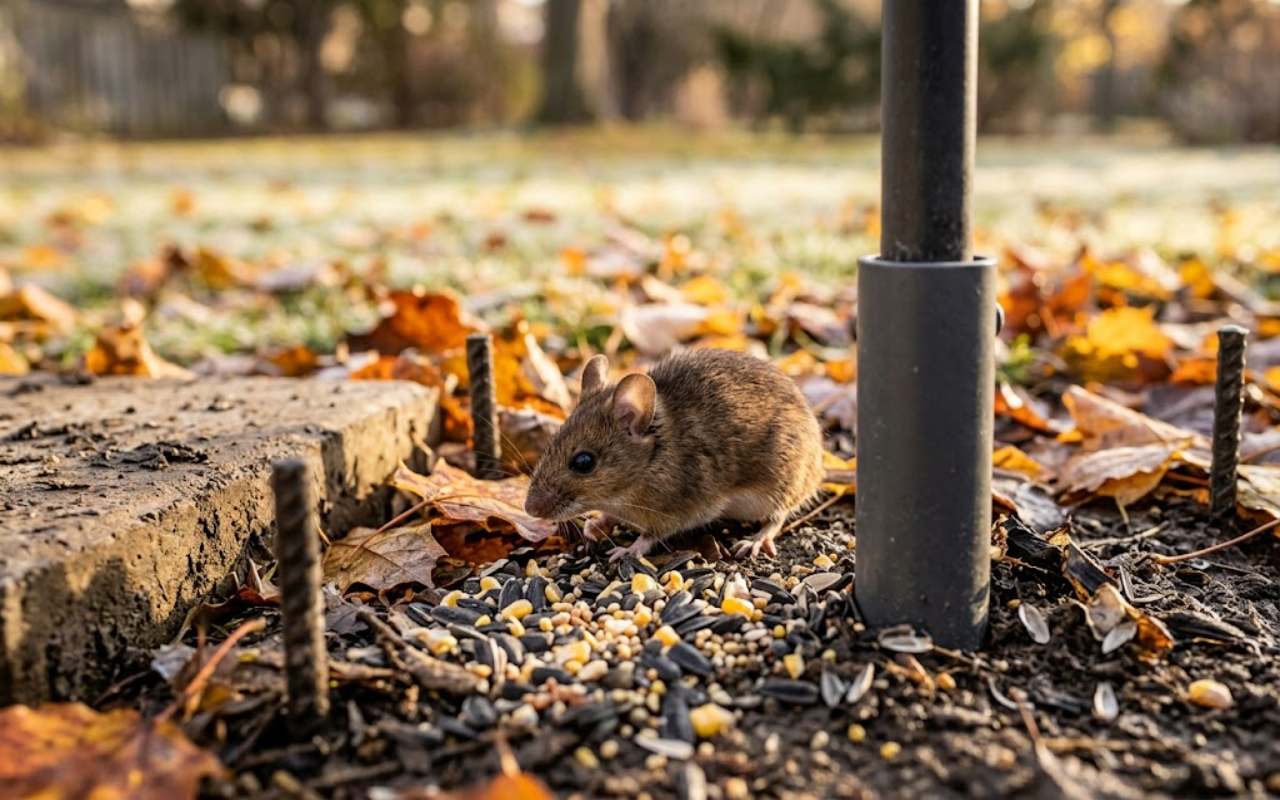
Homeowners routinely wonder why rats and mice under bird feeders invade your yard in November, often suspecting sudden cold snaps as the sole culprit. In reality, the synchronized collapse of wild seed heads, agricultural harvest disruptions, and falling soil temperatures trigger an urgent seasonal foraging shift. Rodents transition from dwindling rural and meadow canopies directly into suburban yards that offer rich, accessible calorie reservoirs.
A widespread backyard myth suggests that rodents infiltrate properties primarily looking for indoor living quarters. Biological field tracking proves that these opportunists establish outdoor staging territories first, drawn by spilled avian food caches before ever attempting home structural ingress.
Species Profile and Core Behavioral Differences
Targeting winter pest dynamics requires identifying the four primary rodent species competing with native cold-weather birds like the Dark-eyed Junco (Junco hyemalis). Each species displays unique foraging micro-niches and climbing behaviors that dictate your property risk profile:
- Norway rat (Rattus norvegicus): Heavy-bodied burrower prioritizing ground-level fallen grains, caching up to several ounces of seed daily beneath slabs and woodpiles.
- Roof rat (Rattus rattus): Agile arboreal climber utilizing overhead branches, fence rails, and power lines to descend onto elevated feeding hardware.
- House mouse (Mus musculus): Compact omnivore with a home range often restricted to thirty feet, thriving on micro-droppings under low shrubs.
- Deer mouse (Peromyscus maniculatus): Forest-edge native driven by severe autumn hyperphagia, hoarding thousands of individual seeds in sheltered outdoor caches.
These species accelerate feeding in November to meet the high metabolic costs of winter thermoregulation. Uncontrolled seed spillage provides them with concentrated caloric density that natural woodlands cannot match at this time of year.
Habitat Layout and Feeder Setup
Preventing rodent colonization requires restructuring your yard to eliminate defensive cover and landing zones. Eliminating ground broadcast feeding is non-negotiable, as scattering mixed grains on turf creates an immediate nocturnal feeding station.
A sound perimeter plan minimizes safety hazards for visiting birds while denying access to opportunistic mammals:
- Establish a zero-vegetation drop zone extending a minimum of six feet beneath all elevated feeding equipment.
- Position hanging stations either within three feet of exterior windows or beyond thirty feet to prevent fatal avian window collisions.
- Install wide catch-trays directly beneath tube reservoirs to capture discarded husks before they reach turf level.
Open flight corridors allow songbirds to spot aerial predators while stripping rodents of tall grass cover. Ground debris must be raked twice weekly to prevent fallen hull accumulation.
Structural Dimensions and Placement Guidelines
Hardware failure is the leading cause of feeder-driven rodent infestations. Using wooden fixtures, soft plastic hoppers, or low poles invites immediate gnawing and structural colonization.
Implement exact mechanical barriers to isolate elevated food reservoirs:
- Feeder elevation: Suspend the base of all seed reservoirs at least five feet above ground grade.
- Horizontal clearance: Maintain ten to twelve feet of horizontal separation from overhanging trees, decks, and fence lines.
- Baffle specifications: Install smooth steel or polycarbonate torpedo baffles measuring at least six inches in diameter and twenty-four inches in length on mounting poles.
- Exclusion mesh: Utilize quarter-inch galvanized hardware cloth to protect compost bins and shed footings, as adult mice can penetrate openings wider than a quarter inch.
Never grease mounting poles to deter pests, as petroleum products destroy avian plumage waterproofing. Rigid mechanical geometry remains the only safe exclusion standard.
Nutritional Biochemistry and Feeding Protocols
November rodent pressure correlates directly with the nutritional composition of offered feeds. Inexpensive commercial seed blends contain excessive fillers that birds actively discard onto the ground.
Evaluating food profiles reveals why certain blends accelerate rodent aggregation:
- Black oil sunflower seeds: Contains approximately 40% crude lipid and 16% protein, delivering vital avian fuel with moderate hull spillage.
- Raw shelled peanuts: Delivers 48% crude lipid and 25% protein, presenting an exceptional high-energy profile that requires strict caged dispensing.
- White proso millet: Features merely 4% crude lipid, 11% protein, and nearly 70% carbohydrates, causing high ground waste when offered to non-ground birds.
- Rendered beef suet: Supplies up to 80% lipid density, making it essential for insectivores but attractive to rats if hung below baffle heights.
Replacing low-fat grain blends with high-lipid sunflower hearts or hulled chips eliminates waste hulls. When birds consume seeds entirely at the perch, ground-level caloric availability drops toward zero.
Pest Mitigation and Sanitation Safeguards
Accumulated seed spillage beneath feeders creates severe toxicological hazards in wet late-autumn weather. Damp hulls harbor Salmonella enterica and foster Aspergillus flavus, a fungus producing fatal aflatoxins that kill native birds and wildlife.
Proper sanitation demands systematic application of verified residential disinfectants:
- Bleach solution (1:9 ratio of sodium hypochlorite to water): Delivers broad-spectrum eradication of bacteria and fungal spores within a ten-minute soak, requiring a thorough fresh-water rinse.
- White vinegar (undiluted 5% acetic acid): Provides a safe, mild alternative for dissolving mineral deposits, though it fails to neutralize hard-shelled fungal spores.
- Boiling water rinse: Thermally neutralizes pathogens on galvanized wire components, though it warps polycarbonate plastics and acrylic reservoirs.
Always discard damp feed cakes rather than relying on field diagnostics like blacklight sweeps, which produce false positives against harmless natural lichens. Diligent mechanical exclusion and bi-weekly sterilization ensure your yard sustains winter birds without sustaining invasive rodents.