
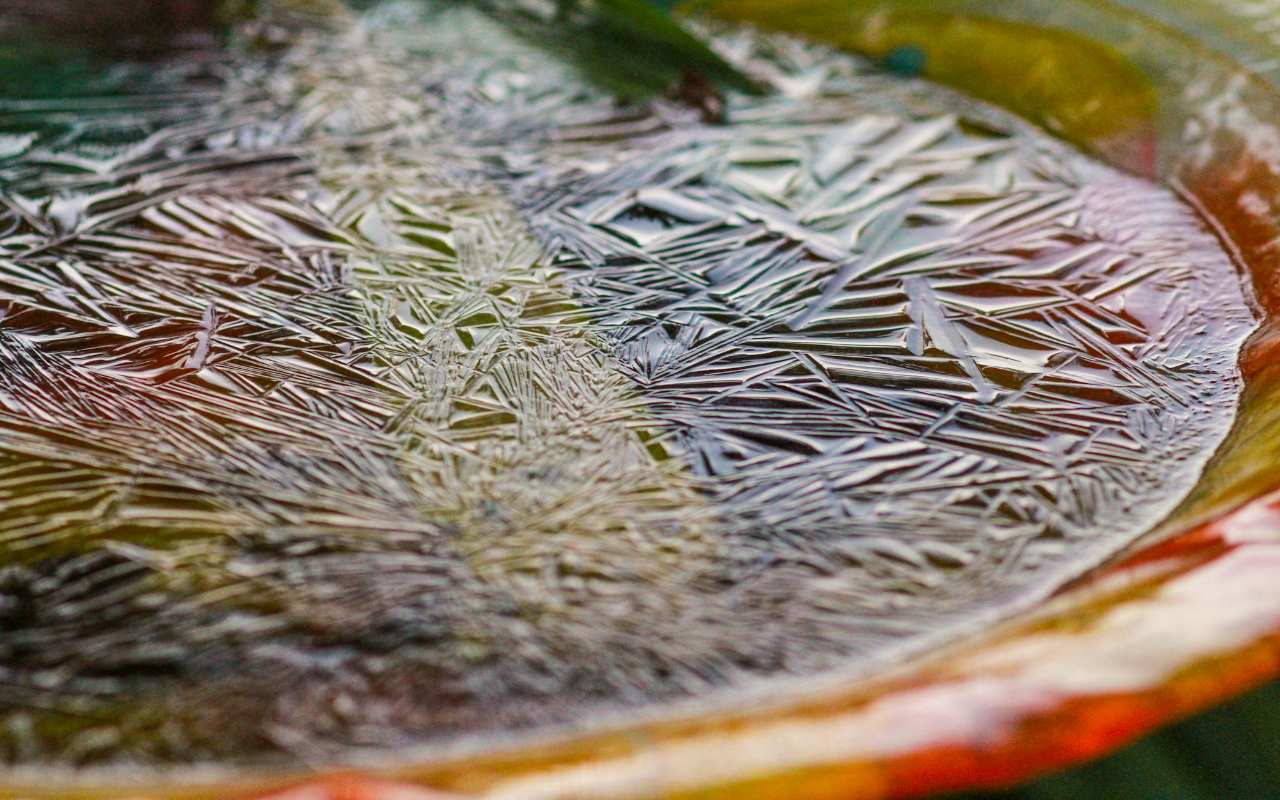
Providing a reliable frozen bird water solution in zero-degree weather is significantly more critical for avian survival than replenishing seed hoppers during catastrophic freezes. While cold-climate birds can often locate dormant insects, conifer seeds, or backyard feeders, finding unfrozen surface water remains an extreme physiological bottleneck. When ambient temperatures plunge to zero degrees Fahrenheit, metabolic demands spike dramatically to maintain a core avian body temperature near 105 degrees.
A persistent backyard myth claims that winter residents comfortably consume snow to satisfy their biological hydration requirements without consequence. In reality, ingesting solid ice forces a bird to burn precious caloric reserves merely to melt the frozen mass internally. This unnecessary thermoregulatory expenditure rapidly accelerates hypothermia and death during severe cold snaps.
Species Profile and Core Behavioral Differences
Small passerines experience rapid moisture loss during cold spells through respiration and metabolic excretion. Species with high surface-area-to-volume ratios must conserve thermal energy while processing dry, fat-heavy winter rations.
- Black-capped Chickadees (Poecile atricapillus) enter regulated nocturnal hypothermia, requiring immediate dawn rehydration to clear metabolic waste.
- White-breasted Nuthatches (Sitta carolinensis) rely on cached seeds that demand significant systemic water reserves to metabolize efficiently.
- Dark-eyed Juncos (Junco hyemalis) forage primarily along frozen ground perimeters where accessible water sources freeze earliest.
These birds do not seek deep water for recreational bathing when ambient temperatures drop below freezing. Instead, they require rapid perching access to sip minimal volumes while keeping their contour and down feathers dry. Wet plumage compromises the barbule interlocking mechanism, triggering catastrophic heat dissipation in sub-zero wind.
Habitat Layout and Feeder Setup
Configuring a functional watering station in sub-zero conditions requires deliberate hardware separation from standard feeding zones. Installing heavy-duty cast aluminum or silicone heating elements prevents surface crystallization without heating the water to unnatural temperatures.
- Thermostatically controlled de-icers operating between 50 and 150 watts maintain surface liquid states down to minus twenty degrees.
- Open-top plastic or resin basins prevent footpad freezing injuries caused by bare, conductive metal perches.
- Integrated heating fountains maintain steady water volume between 0.5 and 1.5 gallons to buffer thermal loss.
Avoid unheated solar bubblers or shallow ceramic dishes, which crack instantly when surface water expands into solid ice. Never add chemical antifreeze, alcohol, or glycerin to winter water baths; these compounds destroy feather insulation and poison wild birds. Keep seed stations separated by at least six feet from liquid water to stop hull debris from drifting into the reservoir.
Structural Dimensions and Placement Guidelines
Hardware geometry directly influences avian safety during severe winter weather events. Basins must restrict total water depth to safe levels while maintaining sufficient perimeter perching infrastructure.
- Water depth must never exceed 1.0 to 1.5 inches at the center to prevent deep immersion.
- Basin rims require a minimum width of 0.5 inches to provide secure talon grip without feather contact.
- Pedestal mounting poles should stand 4.0 to 5.0 feet above ground level to eliminate terrestrial ambush risks.
Position the heated basin within three feet of structural windows or farther than thirty feet away to mitigate fatal window strikes. Face the basin toward the south or southeast to leverage passive solar gain throughout short winter days. Clear all dense underbrush within a six-foot radius of the pedestal to expose stalking predators, while providing an escape roost six to ten feet away.
Nutritional Biochemistry and Feeding Protocols
Processing winter feed requires continuous metabolic hydration, as high-fat foods yield cellular water only after energy-intensive chemical breakdowns. Pairing unfrozen water with calorically dense lipids gives birds the thermal energy needed to survive zero-degree nights.
- Rendered beef tallow suet ranks highest, delivering 80 to 90 percent crude lipid content and zero moisture overhead.
- Black oil sunflower seeds rank second, providing 40 to 45 percent crude fat alongside 16 percent crude protein.
- Raw peanut hearts rank third, supplying 45 percent crude lipids but capped by a 20 percent carbohydrate ceiling.
Diets skewed exclusively toward high-protein or carbohydrate rations demand elevated kidney filtration rates, accelerating cellular dehydration. Liquid water allows immediate assimilation of these vital fats without pulling moisture from avian muscle tissues.
Pest Mitigation and Sanitation Safeguards
Heated water reservoirs attract high concentrations of winter wildlife, creating focal points for pathogen transmission. Damp, crowded basins facilitate the rapid proliferation of dangerous microflora if left unmaintained.
- Diluted Household Bleach: A 1:9 sodium hypochlorite-to-water ratio ranks highest for complete eradication of Salmonella enterica. Submerge durable basin components for 3 to 5 minutes to ensure full disinfection without causing premature polymer degradation.
- White Vinegar: A 1:1 dilution with warm water ranks second. It effectively dissolves stubborn mineral scale and calcium deposits but fails to eliminate hardier viral pathogens.
- Boiling Water Rinses: This method ranks third, offering localized thermal disinfection but introducing a high risk of structural warping on cold consumer plastics and resins.
Always rinse components thoroughly with clean water to neutralize chlorinous fumes before refilling the basin outdoors. Additionally, rake and discard fallen seed debris twice weekly within a ten-foot radius of the water station. This disrupts the damp conditions required for deadly Aspergillus flavus fungal blooms and prevents the accumulation of toxic aflatoxins.ekly within a ten-foot radius of the water station to prevent deadly Aspergillus flavus fungal blooms and toxic aflatoxins.