
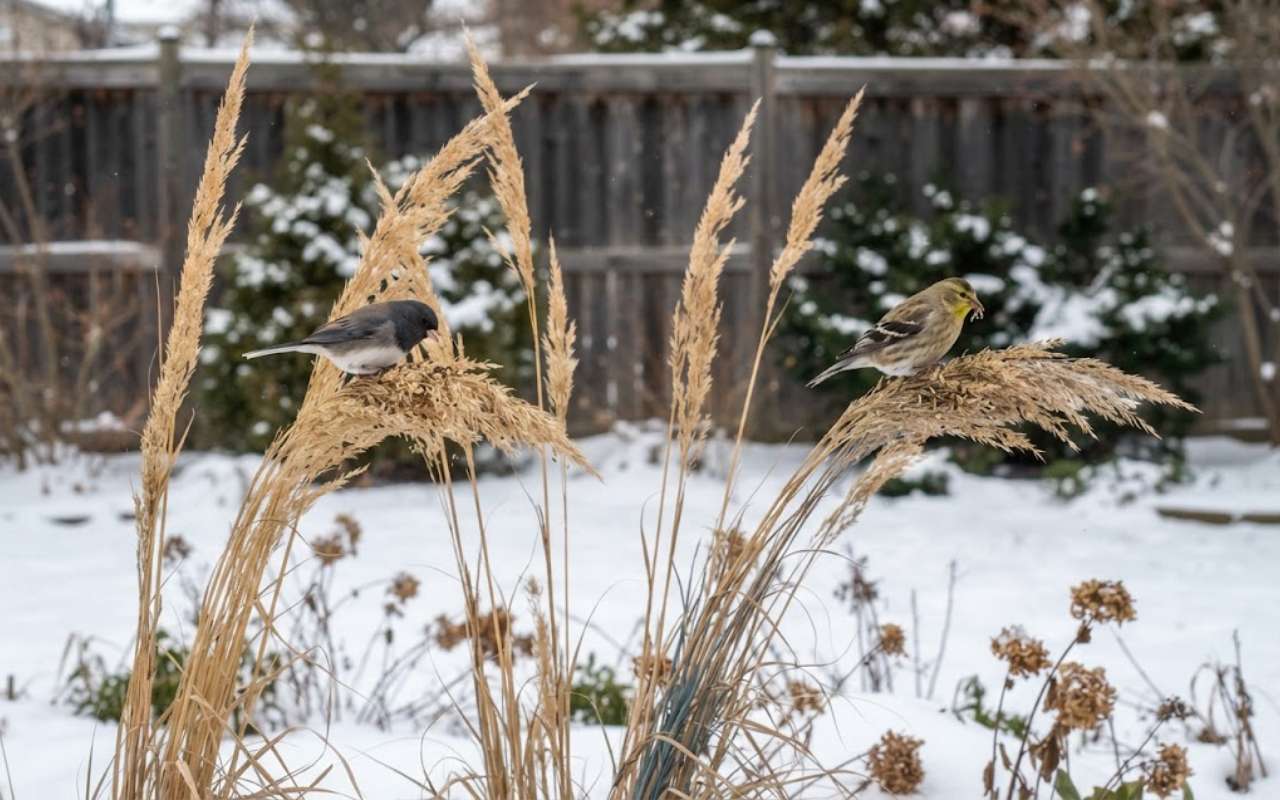
Leaving ornamental grasses standing through winter gives winter birds critical natural seedheads, thermal windbreaks, and protective roosting cover. While traditional autumn yard cleanup urges gardeners to shear perennials down to the soil in October, waiting until early spring transforms your dormant garden beds into a self-sustaining winter survival station for backyard songbirds.
Intact grass plumes hold high-fat native seeds above deep snow drifts while shielding songbirds from freezing winds and aerial predators. Simultaneously, those standing dried stems insulate the plant’s root crown from freeze-thaw damage, ensuring healthier, more vigorous green shoots when you prune them according to your USDA hardiness zone.
Quick-Glance Field Summary
Delaying fall pruning preserves natural forage, thermal shelter, and plant crown insulation across cold hardiness zones. Cut dead warm-season foliage back to 4 to 6 inches above ground level only in late winter or early spring right before new green shoots emerge.
- Primary ecological benefit: Standing plumes supply natural seeds and dense cover during heavy snow
- Plant health advantage: Intact foliage sheds rainwater away from the root crown, preventing winter crown rot
- Best native grasses for winter birds in snow: Switchgrass, Little Bluestem, Northern Sea Oats, and Prairie Dropseed
- Primary winter bird visitors: Dark-eyed Juncos, American Tree Sparrows, American Goldfinches, Black-capped Chickadees
- Optimal spring pruning window: Late January through mid-April depending on your USDA Hardiness Zone
- Recommended cut height: 4 to 6 inches for warm-season grasses; trim cool-season grasses by one-third to two-thirds
- Wildfire zone exception: Cut grasses down in autumn only if your property sits in an active high-risk wildfire interface
How Standing Ornamental Grasses Help Winter Birds Survive
Standing ornamental grasses support overwintering songbirds by providing accessible high-energy seedheads above the snowline, blocking freezing wind chill, and concealing roosting birds from hawks. Unlike commercial tube feeders that require constant refilling, native bunchgrasses release seeds gradually across harsh winter months.
During sub-zero nights, small songbirds burn massive caloric reserves just to maintain their internal body temperatures. Dense, vase-shaped grass clumps create microclimates near the ground where wind speeds drop significantly, allowing ground-foraging species to conserve energy. Furthermore, the hollow stems and leaf litter at the base of unpruned grasses shelter overwintering caterpillars, pupae, and insect eggs—providing an essential protein source for chickadees, titmice, and woodpeckers long before spring insects hatch.
- Elevated Snow-Free Forage: Upright stems like Switchgrass hold ripe seed panicles two to six feet above ground, keeping food accessible even after heavy blizzards.
- Thermal Windbreaks: Thick clusters of dried blades trap pockets of still air near the soil, reducing convective heat loss for roosting sparrows and juncos.
- Predator Concealment: Tangled tan and bronze foliage breaks up a bird’s silhouette, hiding small finches from Cooper’s Hawks and neighborhood cats.
- Nesting Material Supply: By late winter, birds strip soft, frayed fibers from weathered grass blades to line their earliest spring nests.
Best Native Grasses for Winter Birds in Snow
Native warm-season bunchgrasses deliver the highest wildlife value because their rigid stems resist collapsing under wet snow and their seeds match the nutritional needs of local birds. Selecting native North American varieties over invasive non-native plumes ensures your winter garden supports local ecosystems without spreading aggressively into nearby woodlands.
Guidance from the National Audubon Society emphasizes leaving native ornamental grasses standing over winter because small songbirds feed directly on their seeds while using the clumps for roosting cover. If you are planning new garden additions, prioritize sturdy native bunchgrasses that hold their architecture through ice storms.
Winter Bird-Friendly Ornamental Grass Comparison Matrix
| Grass Species | Mature Height | Seed & Shelter Value | Snow Load Durability |
|---|---|---|---|
| Switchgrass (Panicum virgatum) | 3 to 6 feet | High (Airy seed panicles + dense cover) | Excellent (Rigid upright stems) |
| Little Bluestem (Schizachyrium scoparium) | 2 to 4 feet | High (Fluffy white seed tufts + nesting fiber) | Good (Sturdy bronze-red clumps) |
| Northern Sea Oats (Chasmanthium latifolium) | 2 to 5 feet | High (Large dangling oat-like seedheads) | Moderate (Graceful arching stems) |
| Prairie Dropseed (Sporobolus heterolepis) | 2 to 3 feet | High (Scented seeds favored by sparrows/juncos) | Good (Dense fountain mound) |
Validated Winter Bird Visitors
- Dark-eyed Juncos and American Tree Sparrows
- American Goldfinches and Pine Siskins
- Black-capped Chickadees and Tufted Titmice
- Song Sparrows and White-throated Sparrows
- Downy Woodpeckers (foraging for overwintering stem insects)
Why Leaving Grasses Standing Protects Your Plants Until Spring
Leaving ornamental grasses uncut through winter protects the plant’s central root crown from freezing rain, prevents fatal crown rot, and insulates dormant roots against extreme frost heaving. Cutting hollow grass stems down in October leaves open tubes that funnel melting snow and rain directly into the heart of the plant, where refreezing ice can split and kill the crown.
According to horticultural specialists at Nature Hills Nursery, intact winter foliage acts as a natural thatch roof that sheds excess moisture away from the root zone while adding four-season movement and golden texture to snowy landscapes.
Spring Ornamental Grass Pruning Schedule by USDA Zone
Timing your spring cutback by USDA Hardiness Zone ensures you prune dormant stems right before new green shoots emerge—whether you grow early cool-season grasses like Feather Reed Grass (Calamagrostis ‘Karl Foerster’) or late warm-season prairie natives. Cool-season grasses break dormancy up to four weeks earlier than warm-season bunchgrasses, so check their crowns first as winter thaws.
USDA Hardiness Zone Spring Cutback Calendar
| USDA Hardiness Zone | Cool-Season Grass Cutback | Warm-Season Grass Cutback | Recommended Cut Height |
|---|---|---|---|
| Zones 3 – 5 (Northern) | Late March | Mid-to-Late April | Warm: 4–6 in. | Cool: Trim 1/3–2/3 |
| Zones 6 – 7 (Central) | Late February – Early March | Mid-to-Late March | Warm: 4–6 in. | Cool: Trim 1/3–2/3 |
| Zones 8 – 9 (Southern) | Late January – Early February | Mid-to-Late February | Warm: 4–6 in. | Cool: Trim 1/3–2/3 |
Note: While warm-season prairie grasses are cut back to 4 to 6 inches above soil level, cool-season grasses should be trimmed by only one-third to two-thirds of their height to preserve their green basal foliage.
How to Cut Back Ornamental Grasses in Spring Step by Step
To prune ornamental grasses safely in early spring, bundle the tall stalks with twine, gear up with thick gloves, slice the stems cleanly above the crown, and leave cut stalks loose near a brush pile for emerging insects. Following this sequence protects emerging growth buds while preventing sharp blades from cutting your hands.
- Step 1: Inspect the base of the clump during your zone’s pruning window to check for tiny green tips emerging at the crown—pruning cool-season grasses like Calamagrostis ‘Karl Foerster’ first.
- Step 2: Bundle tall grasses like Switchgrass by wrapping a length of biodegradable jute twine or a bungee cord tightly around the midsection of the stems.
- Step 3: Gear up with thick leather gardening gloves and eye protection, as dried grass blades have sharp, serrated edges that can slice bare skin.
- Step 4: Prune bundled warm-season stalks cleanly to 4 to 6 inches above ground level (or trim cool-season grasses by one-third to two-thirds) using sharp bypass loppers, hedge shears, or a cordless hedge trimmer.
- Step 5: Scatter or loosely bundle the cut stems near a back fence or brush pile for a few more weeks so any overwintering beneficial insects inside the hollow stalks can emerge safely in warm weather.
- Step 6: Clear away matted dead leaves resting directly on top of the soil crown so spring sunlight and airflow can warm the roots.
Avoid cutting warm-season grasses any lower than 4 inches, as slicing straight into the woody crown can damage emerging growth buds. For cool-season evergreen grasses like Blue Fescue, skip hard pruning entirely and simply comb out dead blades with gloved fingers in early spring.