
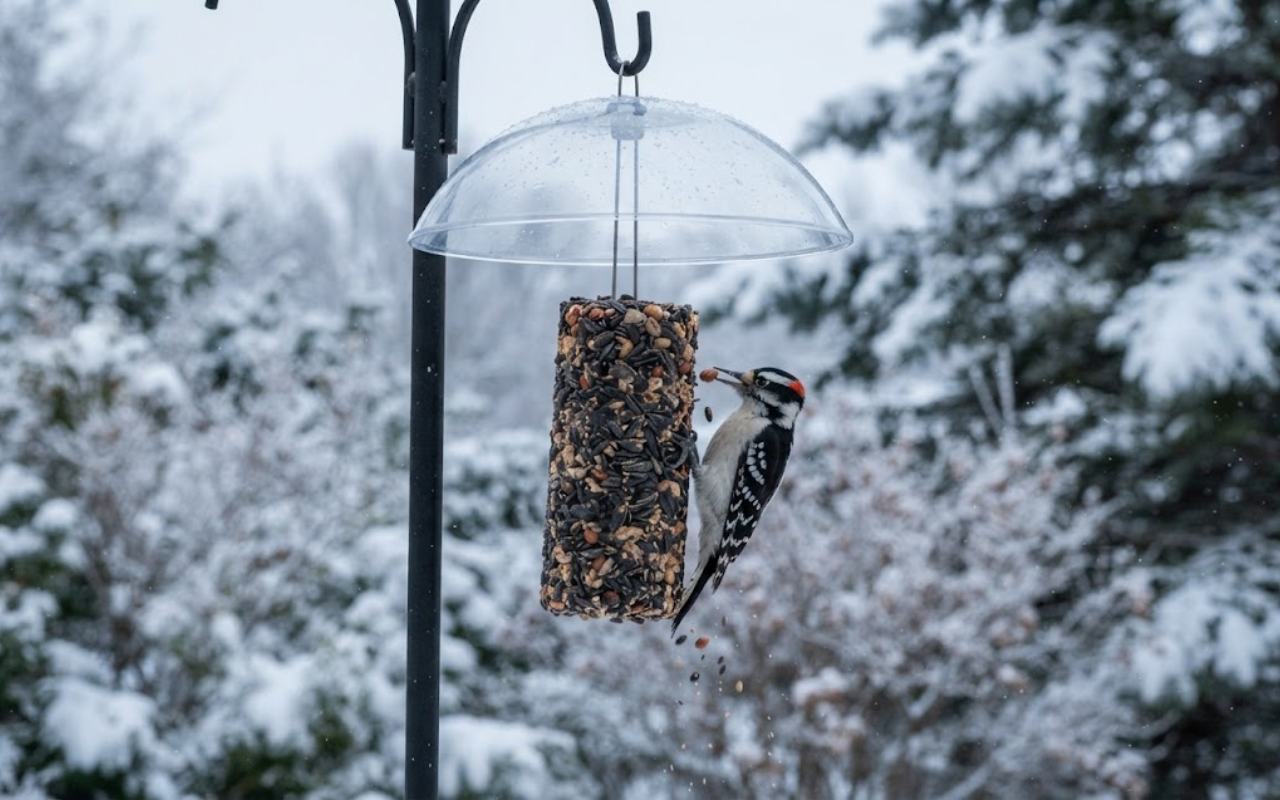
High-density cylinder seed feeders solve the problem of loose grain blowing away or getting buried under deep snow during freezing storms. Backyard birders frequently struggle with loose seed hopper models that clog with damp snow or dump expensive sunflower hearts onto frozen soil. Solid cylinders bind calorie-rich grains, nuts, and fats into tight blocks that force birds to pick away food systematically right at the feeder.
These compressed cakes eliminate the rapid scatter waste caused by aggressive ground feeding birds like common grackles and starlings. By locking food onto a central post, you ensure small songbirds get continuous access to nutrition when natural forage is locked under sheets of ice. Setting up these heavy-duty stations correctly prevents weather damage and keeps your local flock thriving through sub-zero nights.
Quick-Glance Field Summary
High-density seed cylinders concentrate critical winter calories into weather-resistant blocks, preventing wind displacement and snow burial when mounted on protected, rigid central poles. Success requires combining wide-span physical overhead domes with locked mounting posts to stop moisture rot and prevent scavenging mammals from absconding with whole food cakes.
- Minimum overhead dome diameter: 12 inches for light snow, 18 inches for wind-driven sleet
- Feeder distance from windows: Under 3 feet or beyond 30 feet to eliminate collision hazards
- Mammal baffle clearance: 4 feet minimum above ground, 8 feet lateral clear radius
- Safe cleaning solution: 1 part household bleach to 9 parts clean water
- Safe cleaning water limit: Maximum 120 degrees Fahrenheit to prevent polycarbonate warping
- Key ingredients: High-oil black oil sunflower meats, peanuts, tallow, gelatin binder
Choosing the Right Hardware and Mounting Setup for Heavy Snow
Solid seed blocks carry substantial mass, often weighing between two and five pounds. Thin decorative shepherd hooks bend or sway wildly under this weight during winter gales, dumping the entire apparatus into snowdrifts. You should mount your station on a rigid, one-inch diameter steel pole secured into the soil before the winter ground freeze locks your yard.
To prevent deadly glass strikes, install your pole within three feet of your home windows or push it out past thirty feet. The three-foot distance prevents birds startled by winter predators from gaining enough flight speed to injure themselves against exterior glass panes. The thirty-foot clearance gives birds sufficient room to see the pane reflections and adjust their flight paths safely away from the house.
Hang the cylinder from an all-metal central pin assembly rather than flimsy twine or untreated natural cordage. Standard hanging ropes break down quickly under the combination of wet snow, freezing temperatures, and sharp rodent claws. A threaded steel rod with a broad bottom baseplate supports the core of the cylinder and keeps it upright in heavy crosswinds.
| Winter Cylinder Core Blend | Moisture & Ice-Crust Resistance | Avian Caloric Efficiency Rating | Mandatory Storm Setup Rule |
|---|---|---|---|
| Gelatin-Bound Seed Blocks | Moderate; porous grain gaps can absorb melting snow lines if left uncovered. | High; packed densely with high-oil sunflower seeds, nuts, and clean safflower grains. | Always hang underneath a wide 18-inch acrylic protective dome to block lateral snow entry. |
| Suet & Tallow Fat Logs | Elite; hard rendered animal fats shed liquid moisture naturally and resist waterlogging. | Maximum; supplies concentrated lipid calories to maintain core avian body temperatures. | Mount on a central weather-protected pin post; scrape ice from the bottom drainage tray daily. |
Protecting Seed Logs from Rain, Sleet, and Gelatin Meltdown
On backyard birding forums like r/backyardbirds, members frequently describe waking up after winter sleet storms to find their expensive commercial seed cakes turned into gelatinous soup on the lawn. Most commercial cylinders use food-grade gelatin as a bonding agent to hold the seeds together. While gelatin holds firm in dry sub-zero cold, freezing rain and driving slush break down these protein bonds quickly, washing the calories away.
You must install a wide polycarbonate or metal weather dome directly over the cylinder hanger to shed moisture. A standard 12-inch weather dome works well for gentle, vertical snowfall in sheltered yards. For areas subject to drifting, wind-driven winter sleet, step up to an 18-inch dome that extends well past the outer diameter of the food block.
Moisture trapped inside damp seed blocks creates an ideal environment for harmful micro-fungi like Aspergillus flavus. This mold species produces dangerous aflatoxins, which cause severe liver damage and respiratory failure in small songbirds. If a cylinder becomes sodden, mushy, or discolored after an unseasonable winter thaw, pull it off the hanger immediately and discard it.
Stopping Squirrels and Raccoons from Stealing Whole Cylinders
A common troubleshooting trick shared by users on wild bird keeping forums involves swapping factory nylon wing nuts for stainless steel hitch pins or locking carabiners, because urban raccoons quickly figure out how to unthread bottom caps and drop entire blocks to the ground. Once the bottom disc falls away, squirrels will happily haul large chunks of compressed seed into nearby trees. Using a locking pin mechanism below the support plate stops clever animals from stripping the hardware.
Pole placement remains your primary defense against persistent gray squirrels and red squirrels. Mount a smooth metal cylinder baffle beneath the feeder, making sure the top rim sits at least four feet off the snowline. You must clear a horizontal jump distance of at least eight feet from fence rails, tree trunks, and porch roofs.
- Mount the bottom plate using a locking cotter pin or locking carabiner instead of a hand-twisted wing nut.
- Position the hanging station at least eight feet horizontally from tree branches or deck railings.
- Place a stovepipe or torpedo-style metal baffle four feet above the highest anticipated snow level.
- Wrap exposed wooden hanging brackets with 0.25-inch hardware cloth to deter gnawing rodents.
If mammalian pests still bypass the baffle, switch to cylinders that incorporate ground cayenne or habanero pepper flakes. Avian species lack the capsaicin receptors found in mammals, meaning the fiery pepper will not disturb cardinals, titmice, or nuthatches. Squirrels, opossums, and raccoons will take a single taste of the capsaicin-laced fat and leave the feeder alone.
Picking the Best Seed Blend and Binder for Deep Cold
Small passerines burn up to ten percent of their total body mass each winter night just maintaining their normal core body temperature. Forcing them to crack heavy shells wastes precious metabolic energy on sub-zero mornings. Cylinders packed with hulled sunflower chips, chopped tree nuts, and black oil sunflower hearts deliver pure fat and protein with zero mechanical effort required.
Safflower-heavy cylinders work well if your yard suffers from massive flocks of European starlings and house sparrows. These pest species struggle to break down hard, bitter safflower, while northern cardinals and chickadees consume it readily. Avoid cheap bargain cylinders loaded with red milo, cracked corn, and wheat fillers, as native birds simply discard these grains into the snow to spoil.
During extended periods of extreme cold, choose cylinders enriched with rendered beef tallow or suet. Animal fat provides dense, instant calories that digest rapidly to fuel shivering thermogenesis in tiny birds like kinglets and goldfinches. Pure suet blends stay firm in freezing weather, whereas low-quality commercial cakes filled with excessive moisture will turn as hard as concrete.
Cleaning Feeders and Keeping Food Safe from Winter Mold
Even during sub-zero stretches, feeding stations collect fecal material, scale dust, and pathogenic bacteria from crowded visiting birds. Clean your central metal rod, perches, and protective domes every two weeks using a standard 1:9 bleach-to-water dilution soak. This concentration kills stubborn poultry pathogens, including avian poxvirus and Salmonella, without leaving harmful residue behind.
Do not use boiling water to clean clear polycarbonate domes or feeder frames during the winter months. Pouring boiling water over cold plastic causes rapid thermal shock, which warps the structural frame and creates hairline cracks across the protective shield. Use warm water around 100 to 120 degrees Fahrenheit to break up stuck-on grease, followed by a cold-water bleach bath.
- Soak all disassembled metal parts in a 1:9 bleach solution for ten minutes to eliminate pathogens.
- Scrub the central hanging rod and baseplate with a stiff wire brush to strip away old, gummy gelatin.
- Rinse all treated components thoroughly with fresh, clean water until the chlorine odor vanishes completely.
- Allow every component to air-dry fully before mounting a fresh, dry seed cylinder onto the assembly.
Never apply chemical anti-freeze agents, cooking oils, or glycerin to the feeder hardware to stop ice accumulation. If wild birds brush their feathers against glycerin or vegetable oil coatings, the slick substance ruins the interlocking barbules of their plumage. Feather matting destroys their natural thermal insulation, leading to swift, fatal hypothermia on cold winter nights. Keep the hardware bare, dry, and sheltered under wide shields for a healthy winter flock.