
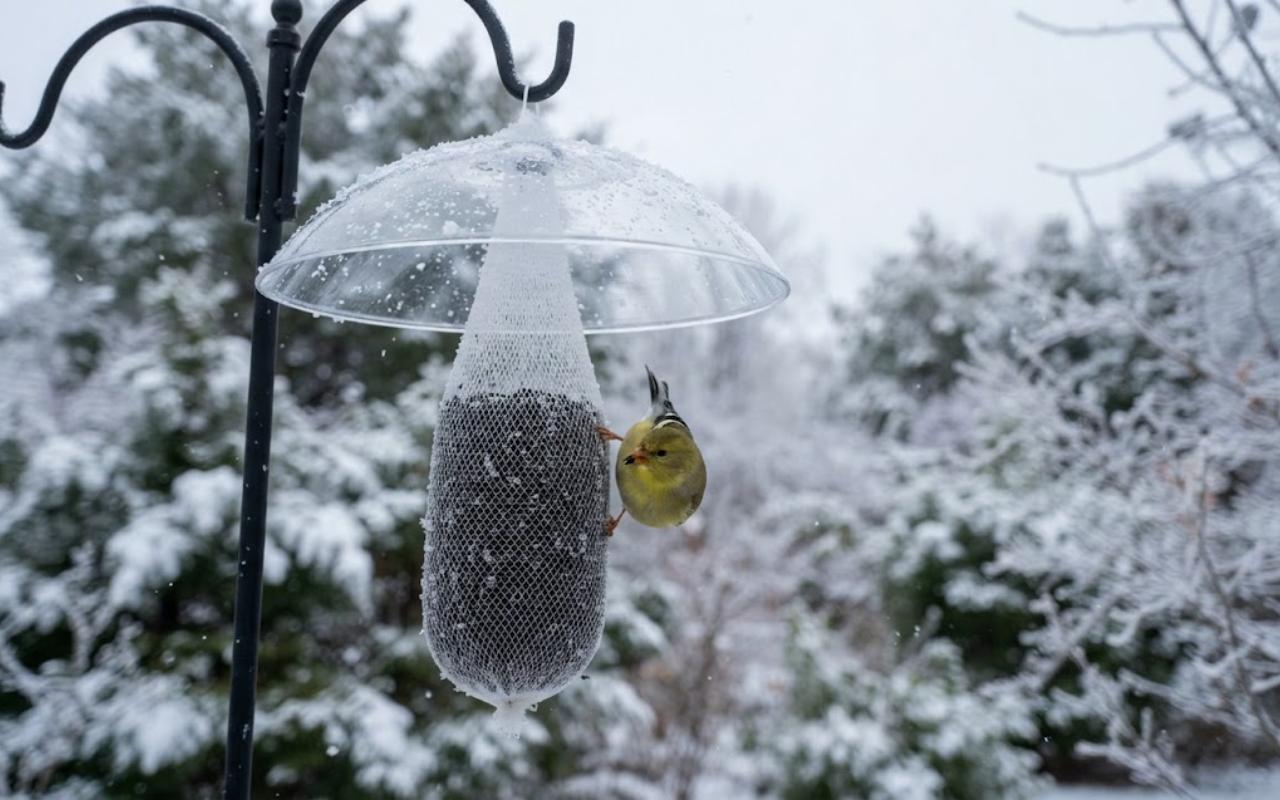
Backyard birders who struggle to prevent thistle socks from freezing during wet winter cold snaps know how quickly driving sleet ruins expensive nyjer seed. When moisture penetrates the porous mesh weave, the high-oil seed binds together, turning the feeder into an impenetrable block that goldfinches cannot penetrate.
Mastering the use of thistle socks in winter weather and allowing a feeder to remain frozen starves local finches of necessary cold-weather calories and exposes them to dangerous fungal pathogens once temperatures rise. Keeping winter seed dry requires adjusting your feeder hardware, hanging physical weather barriers, and cycling clean fabric before ice forms.
Quick-Glance Field Summary
Preventing frozen thistle socks requires combining wide physical overhead deflectors with rapid indoor fabric rotation to stop wind-driven moisture before ice sets. The checklist below outlines the hardware specifications and environmental thresholds needed to maintain an accessible, dry feeding station throughout sub-freezing weather.
- Overhead weather guard diameter: minimum 14 to 18 inches
- Mesh fabric replacement rotation: every 48 hours during active snow or rain
- Safe window collision placement: under 3 feet or beyond 30 feet from glass
- Nyjer seed moisture safety threshold: below 8 to 9 percent moisture content
- Sanitizing wash ratio: 1 part household bleach to 9 parts cold water
- Freezing threshold for wet seed mass: 32 degrees Fahrenheit (0 degrees Celsius)
Why Wet Nyjer Seed Freezes into a Concrete Brick
Nyjer seed comes from the African yellow daisy, Guizotia abyssinica, and contains roughly 35 to 40 percent natural oils. While this oil provides dense metabolic energy for wintering American Goldfinches and Pine Siskins, the seed hull is exceptionally thin and porous.
When winter rain or blowing sleet hits an exposed nylon sock, capillary action pulls water directly through the mesh holes and into the center of the seed pack.
In community discussions across r/backyardbirds, several winter hobbyists note that wet thistle does not just freeze on the surface; it expands and compresses into what members call a solid seed brick. The internal moisture acts as mortar between the thousands of tiny, needle-like seeds.
Once ambient temperatures dip below 32 degrees Fahrenheit, the entire core freezes into a dense mass that locks the fabric pores shut.
Beyond rendering the sock unusable for foraging finches, locked-in moisture creates an immediate biological hazard inside the feeder. Wet thistle that repeatedly freezes and thaws becomes a prime breeding ground for Aspergillus flavus, a soil-borne mold that produces deadly aflatoxins.
Ingesting moldy seed causes respiratory distress and rapid mortality in wild songbirds, making frozen damp socks a severe environmental risk rather than just a minor inconvenience.
| Storm Exposure Class | Moisture Threat to Mesh Sacks | Seed Compaction & Flow Status | Fastest De-Icing Action |
|---|---|---|---|
| Dry Powdery Snow | Minimal initial damage; loose flakes cling to the exterior nylon fibers but do not penetrate the core. | Flowing; seed matrix stays loose inside as long as powder is cleared away before daytime thaws. | Tap the bottom of the sack firmly against a post to blast dry flakes off the mesh weave in two seconds. |
| Freezing Rain / Slush | Extreme; fabric absorbs liquid water instantly, causing it to freeze into a solid, solid glassy shell layer. | Totally locked; Nyjer grains bind together into an un-peckable brick that blocks all feeding ports. | Bring the frozen sack inside to thaw completely; dry the mesh thoroughly by a heater before refilling. |
Hang a Wide Weather Dome Directly Over the Sock
Standard thistle socks provide zero mechanical shelter against falling precipitation. Adding an overhead weather baffle is the simplest physical modification you can make to stop sleet from ever reaching the fabric. An overhead baffle acts as an umbrella, deflecting vertical snow and shedding run-off well past the outer perimeter of the hanging bag.
- Install an acrylic or polycarbonate dome measuring at least 14 to 18 inches wide directly above the hanging cord.
- Position the bottom rim of the dome no more than 2 to 3 inches above the top tie of the thistle sock.
- Secure the top attachment point with a rubber gasket or silicone washer to prevent water from dripping down the hanging wire.
Keeping the dome close to the sock prevents angled rain from blowing under the shelter. If you leave too much open clearance between the baffle and the feeder, crosswinds will blow sleet straight into the upper third of the mesh. A tight overhead setup forces moisture out past the bottom of the sock, leaving the fabric completely dry and accessible to clinging birds.
Swap Mesh Bags for Rigid Feeders During Sleet and Snow
While soft nylon socks are cheap and allow multiple finches to cling at once, they fail completely during heavy freezing rain. A forum user on a regional wild bird board pointed out that woven mesh actively traps melting slush against seed hulls, whereas smooth polycarbonate tubes shed ice instantly.
If your local forecast calls for prolonged freezing precipitation, pulling down soft socks in favor of hard-walled feeders prevents costly seed waste.
Rigid finch feeders feature solid plastic reservoirs with tiny, calibrated feeding ports designed specifically for thistle. Because water cannot penetrate polycarbonate plastic, precipitation slides harmlessly down the exterior wall.
Small overhanging perches shield the individual feeding ports from direct frost accumulation, allowing finches to pull dry seeds out even during active blizzards.
When deploying rigid feeders, verify that the base contains functional drainage holes to evacuate any condensation that builds inside the tube. You can also look for models with inverted feeding ports, which force birds like goldfinches to feed upside down while naturally locking out larger nuisance birds.
Placing these rigid units within 3 feet of your windows prevents lethal glass strikes if approaching raptors startle the flock.
Rotate Dual Thistle Socks to Keep Food Dry and Fresh
Experienced backyard birders rarely leave a single thistle sock hanging outdoors continuously throughout the winter months. Instead, keeping two or three identical socks in an active indoor rotation ensures your birds always have access to dry food. When freezing rain begins, swap the damp outdoor sock for a fresh, room-temperature bag filled with fresh seed.
- Hang the dry, room-temperature sock outdoors immediately before a storm front arrives.
- Bring the damp, exposed sock indoors to thaw over a shallow plastic tray.
- Discard any seed that smells sour, feels warm, or shows dark discoloration from internal mildew.
- Allow the empty fabric sock to dry completely near a radiator or warm airflow before refilling it.
Never pack a thistle sock completely full during damp winter weather. Filling the sock only one-third or one-half full reduces the total volume of seed exposed to the elements. Goldfinches empty a smaller volume within a single day, eliminating the stagnant core of seed that typically freezes into ice.
How to Clean and Thaw Frozen Seed Safely
If your thistle sock freezes solid before you can bring it inside, do not attempt to crack the ice by slamming the sock against hard surfaces. Striking frozen nylon against frozen posts or brick walls shears the synthetic fibers, tearing large holes that dump expensive seed onto the snow. Bring the entire frozen block indoors and allow the ambient room temperature to soften the ice naturally.
Once the seed core thaws, dump the entire contents directly into the trash rather than attempting to dry it out on baking sheets. Seed that has been frozen into a wet slush loses its volatile aromatic oils, causing wild finches to reject it outright. More importantly, partially thawed damp seed begins growing bacterial colonies and fungal spores within hours of warming to room temperature.
Wash the empty nylon sock thoroughly before returning it to outdoor winter service. Submerge the sock in a sanitizing solution made of 1 part household bleach mixed into 9 parts cold water for at least 15 minutes. Rinse the mesh thoroughly under running tap water until all chlorine odor disappears, and hang it to dry fully before refilling it with clean, dry thistle.