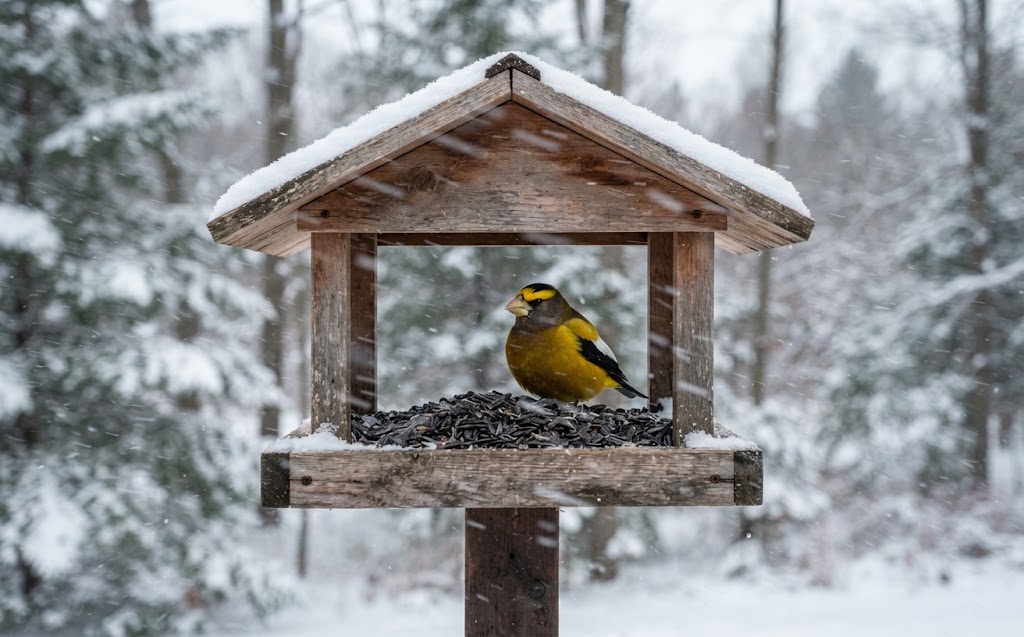
Setting up fly-through bird feeders before a major winter blast gives backyard birds fast calories, but open platform designs present serious weather challenges. When freezing precipitation arrives on gusty winds, open designs often leave seed vulnerable to moisture, slush, and deep snowdrifts.
Field observations show that while larger birds love the open flight path, an unprotected tray can quickly turn dry seed into a frozen block of waste. Understanding how these stations behave in sub-freezing temperatures helps you modify your setup and keep your local flock fed through the worst winter weather.
Quick-Glance Field Summary
Fly-through platforms offer birds high visibility and easy landing access during storms, but they require physical wind breaks and perforated drainage to prevent dangerous seed freezing. Modifying the windward side with temporary clear baffles and swapping to oil-rich seeds keeps feed dry, accessible, and free of deadly moisture pathogens.
| Winter Storm Element | Fly-Through Feeder Vulnerability | Impact on Bird Seed Integrity | Mandatory Storm Modification Rule |
|---|---|---|---|
| Blowing Lateral Snow | Extreme; open-sided design allows wind-driven flakes to accumulate straight across the tray. | Seeds become buried instantly under drifts; thaws and refreezes into a solid, solid ice block layer. | Slide temporary clear polycarbonate windbreak panels into the windward side slots to block the storm path. |
| Heavy Freezing Rain | Moderate; overhead roof blocks vertical drops, but swirling winds force moisture onto the inner ledge. | Triggers rapid grain waterlogging, seed expansion, fermentation, and dangerous mold loops. | Verify the internal mesh tray floor is fully clear of old seed debris to allow immediate water drainage. |
Why Open Platform Feeders Struggle in Freezing Winds
Open-sided platform stations are designed for clear lines of sight, which helps birds spot approaching predators while feeding. In winter storms, this open architecture acts as a wind tunnel that funnels blowing snow directly across the seed bed. Horizontal gale winds blow precipitation straight under the roof eaves, coating the tray in frozen slush within an hour.
Recent discussions on backyard birding forums highlight this exact hardware failure. A contributor on r/backyardbirds noted that during a typical blizzard, horizontal winds completely buried their open cedar fly-through tray under three inches of packed powder. Another community member observed that birds landing with snow-caked feet packed the moisture down into the seed, creating a solid frozen crust that small finches could not crack.
When dry feed mixes with sleet and snow, it triggers rapid spoilage once temperatures fluctuate. Damp feed cakes together, trapping moisture in the corners of wooden frames. This trapped slush ruins your seed investment and prevents smaller songbirds from extracting individual grains during high-stress foraging windows.
DIY Winter Bird Feeder Modifications: Weather-Proofing Platform Trays
Backyard hobbyists have developed practical ways to stormproof their platforms without blocking bird flight paths. One widely shared community hack involves cutting sheets of clear polycarbonate or heavy-duty vinyl binder covers to fit the prevailing windward side of the feeder.
Fastening these clear panels to the corner posts using small brass screws or heavy binder clips creates an effective storm wall that preserves visibility while deflecting horizontal snowdrifts.
Adding an auxiliary weather guard above the wooden roof adds another layer of storm defense. Standard wooden feeder roofs are rarely wide enough to shield the tray during turbulent gusts.
- Install an 18-inch clear acrylic weather dome on the hanging chain directly above the roof peak.
- Replace solid wooden tray bottoms with removable 0.25-inch stainless steel mesh inserts to allow melted frost to drain out.
- Screw 0.5-inch wooden risers underneath tray corners so air circulates beneath the feeding surface.
These physical modifications redirect falling moisture away from the platform floor. Elevating the seed on an open wire mesh keeps it above cold melted runoff. When the wind changes direction, unclip the temporary windward clear shield and move it to the opposite corner posts to maintain a dry feeding floor.
Choosing the Right High-Energy Seed to Prevent Clumping
Winter feeding requires dense calories that do not absorb moisture quickly. Small grains like red millet and cracked corn act like sponges, absorbing water from driving sleet and expanding into an inedible mush. In contrast, whole black oil sunflower seeds feature thick, oil-rich hulls that naturally shed liquid during brief snow squalls.
- Black oil sunflower seeds provide high fat ratios and water-resistant outer hulls.
- Safflower seeds resist moisture absorption and deter nuisance birds like European Starlings.
- Whole peanut halves deliver concentrated lipids, but they must be discarded if exposed to prolonged sleet.
- Clean nyjer seed works best in dedicated tubular finch tubes rather than open platform trays.
Forum members frequently warn against using cheap mixed seed blends in open winter stations. Millet and oats absorb water, rapidly freezing into solid chunks that harbor moisture. Offering straight black oil sunflower seeds or coarse sunflower chips ensures that feeding birds consume the available food quickly before blowing snow buries the pile.
Never add commercial chemical anti-caking powders or cooking sprays to the seed bed to stop ice buildup. Similarly, never apply liquid glycerin to seeds or nearby perches to depress freezing points. Glycerin mats feather barbules, destroying a bird’s natural thermal insulation and causing rapid, fatal hypothermia.
Where to Hang Your Feeder to Block Wind and Stop Window Strikes
Feeder placement directly affects how much snow enters the platform and how safely birds can escape winter predators. Placing an open feeder in the middle of a wind-swept clearing leaves it vulnerable to drifting snow from every direction. Positioning the station on the leeward side of a dense evergreen hedge, a garden shed, or an outbuilding naturally cuts heavy wind speeds.
Window placement requires careful measurement to keep winter birds safe. Audubon collision guidelines emphasize placing feeding stations either within 3 feet of your exterior window glass or further than 30 feet away. Feeders positioned within 3 feet prevent birds from building enough flight speed to sustain fatal injuries if spooked into the pane.
Stations placed between 10 and 20 feet from windows sit in a dangerous strike zone. A startled flock fleeing a Cooper’s Hawk will often fly toward reflected skies and collide with the glass at maximum speed. Tucking your modified fly-through unit close to a sheltered wall keeps the seed tray clear of wind while preventing dangerous window strikes.
Preventing Aflatoxins: How to Clean a Moldy Winter Bird Feeder
Prolonged moisture in feeding platforms creates a breeding ground for harmful fungal pathogens. When damp conditions mix with ambient temperatures above freezing, fungi like Aspergillus flavus quickly colonize wet grain. This mold produces aflatoxins, which cause severe liver damage and death across backyard songbird populations.
A proper disinfection routine eliminates hidden bacterial and fungal spores. Scrape out all clotted, soggy seed directly into the trash as soon as a storm passes.
- Soak the empty feeding tray in a solution of 1 part unscented household bleach to 9 parts warm tap water for ten minutes.
- Scrub the inner corners, roof underside, and perches using a stiff wire brush to remove stuck organic matter.
- Rinse the entire unit thoroughly with clear running water until all chemical odor vanishes completely.
- Allow the feeder to air-dry fully in a warm room before adding fresh, dry seed.
Avoid pouring boiling water over clear polycarbonate roof panels or acrylic wind guards during clean-up. High temperatures warp and crack rigid plastic panels, ruining their optical clarity and structural fit. Sticking to a cold 1:9 bleach immersion maintains your equipment while keeping your winter birds healthy through the coldest months.