Backyard birders looking to support thrushes during freezing spells often struggle to figure out how to rehydrate dried fruit for winter robins and bluebirds without creating a soggy, frozen mess. American Robins and Eastern Bluebirds switch their diets heavily toward wild berries when cold ground temperatures lock away earthworms and insects.
Standard store-bought dried fruits are often too leathery or large for a songbird’s bill, and commercial brands frequently contain additives that harm avian digestive systems. Soaking the fruit restores its plump texture, making it easy to digest while providing supplemental moisture when open water sources freeze over.
Quick-Glance Field Summary
Rehydrating dried fruit involves soaking preservative-free fruit in warm water for fifteen to twenty minutes, draining it thoroughly, and dicing it to match avian gape limits. Placing small portions on sheltered platform feeders or heated dishes prevents the moisture-rich fruit from freezing solid during severe winter cold snaps.
- Water temperature: 100°F to 110°F (lukewarm tap water; never boiling)
- Soak duration: 15 to 20 minutes maximum
- Fruit selection: Unsulfured, oil-free raisins, Zante currants, cranberries, or blueberries
- Bluebird target cut: 3 mm to 5 mm (finely diced)
- Robin target cut: 6 mm to 10 mm (whole currants or halved raisins)
- Outdoor tray life: 4 hours in freezing weather; 24 hours above freezing
- Cleaning protocol: 1:9 household bleach-to-water soak
Which Dried Fruits Work Best and What to Avoid
Selecting the right fruit base prevents digestive distress and ensures backyard visitors actually eat what you put out. Wild thrushes naturally consume small, soft fruits like dogwood berries, sumac, juniper, and holly drupes during the winter months.
On Reddit’s r/backyardbirds forum, multiple hobbyists noted that wintering bluebirds completely ignored commercial raisins placed on feeding trays. The members discovered that commercial packers coat standard grocery store raisins in sunflower or canola oil to stop them from sticking together in the box. Songbirds often reject these oily, waxy coatings, and the added fats can spoil quickly outdoors.
Always read ingredient labels to verify that the fruit contains no added oils, artificial sweeteners, or preservatives.
- Zante currants (naturally small, seedless dried grapes that match wild berry dimensions)
- Unsweetened dried blueberries (rich in antioxidants and readily accepted by thrushes)
- Diced dried cranberries (opt for varieties sweetened only with fruit juice concentrate, never cane sugar)
- Unsulfured Thompson seedless raisins (must be thoroughly chopped before serving)
Avoid any dried fruit treated with sulfur dioxide, which manufacturers add to keep golden raisins and apricots bright in color. Sulfur dioxide can trigger respiratory distress and metabolic toxicity in small songbirds.
| Dried Fruit Selection | Mandatory Water Temperature & Soaking Window | Avian Safety & Nutritional Quality Rule | Winter Feeder Serving Strategy |
|---|---|---|---|
| Organic Raisins / Currants | 15 to 20 minutes in warm water maintained strictly between 100°F and 110°F. | Safe; never boil as high heat ruptures delicate fruit cell walls and leaches away vital vitamins. Verify zero sulfur dioxide on label. | Drain thoroughly in a mesh strainer; serve on an open wooden tray or log feeder plug port. |
| Dehydrated Cranberries | 25 to 30 minutes in warm water maintained strictly between 100°F and 110°F. | Moderate; skin is thicker and takes longer to plump without boiling heat. Avoid grocery bags packed with processed white sugars. | Chop finely after cooling; best mixed directly into a raw cornmeal peanut butter suet dough. |
The Right Way to Soak and Soften the Fruit
Proper hydration softens the tough, leathery skin of dried fruit so bird stomachs can break it down efficiently. The goal is to restore moisture content without turning the fruit into a waterlogged paste that falls apart.
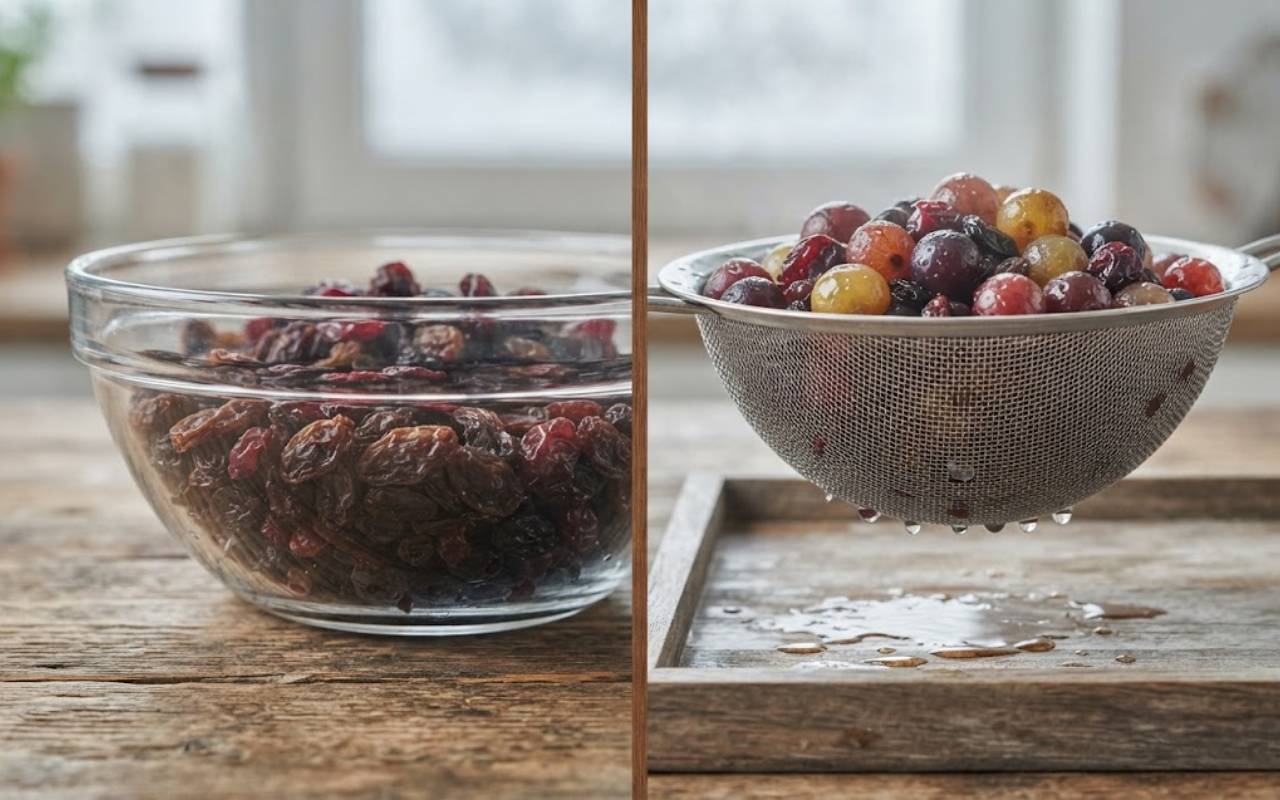
Start by placing your chosen fruit into a shallow glass or ceramic bowl. Pour warm tap water over the fruit until the liquid sits roughly one half-inch above the fruit level. Keep the water temperature between 100°F and 110°F to accelerate moisture absorption without cooking the delicate flesh.
- Measure two to four tablespoons of dried fruit per feeding station.
- Submerge the fruit in warm water for fifteen to twenty minutes.
- Drain the fruit in a fine-mesh kitchen colander until all standing liquid drips away.
- Spread the drained fruit across a dry paper towel to blot the outer surfaces.
Never boil dried fruit on the stove. High boiling temperatures rupture internal cell walls, leach water-soluble vitamins into the discarded water, and create a mushy consistency that birds avoid.
Blotting surface moisture is a mandatory step that prevents external ice formation. A forum contributor on a wild bird care group observed that wet, unblotted fruit freezes into an impenetrable ice block within thirty minutes of outdoor placement. Removing excess surface water leaves the interior flesh supple while keeping the outer skin dry.
Sizing and Chopping Fruit for Robins and Bluebirds
Anatomical differences between American Robins and bluebirds dictate how you must prepare the rehydrated food. Robins feature a wider gape width of 12 to 15 millimeters and readily swallow whole berries and larger fruit fragments.
Eastern and Western Bluebirds have much smaller gape widths, typically measuring between 9 and 11 millimeters across. Because bluebirds cannot chew food, they must swallow pieces entirely whole. Offering full-sized Thompson raisins often leads to feeding failures, as bluebirds drop the fruit in frustration or risk choking.
- Finely dice whole raisins and dried cranberries into pieces no larger than 3 to 5 millimeters for bluebirds.
- Cut raisins into halves or quarters for American Robins.
- Leave Zante currants whole, as their natural diameter matches winter gape capacities perfectly.
Use a sharp kitchen knife on a clean cutting board to dice the fruit immediately after blotting. Tossing the diced pieces with a light dusting of coarse cornmeal can reduce surface tackiness, keeping the pieces separate in the dish.
How to Keep Moist Fruit from Freezing Solid Outside
Hydrated fruit carries a high freezing risk because the absorbed water crystallizes as soon as ambient temperatures drop below 32°F. When ambient air plunges into the teens, soft fruit turns into hard, inedible stones that can break bird beaks.
Backyard birders on localized wildlife forums often overcome this challenge by placing stainless steel cups inside heated bird bath rims. The gentle radiant heat from the bath base keeps the fruit above freezing without drying it out.
- Use shallow, dark-colored composite dishes that absorb ambient solar radiation on sunny winter days.
- Place feeding trays under a standard 12-inch or 18-inch acrylic weather dome to shield fruit from falling snow.
- Position the feeder within 3 feet of a window to reduce the risk of fatal bird collisions while allowing frequent monitoring.
- Set small ceramic ramekins atop outdoor-rated, low-wattage reptile heating cables inside platform trays.
Another dependable field strategy is batch feeding based on daily bird habits. Put out small portions twice daily, once at sunrise when thrushes need immediate caloric refueling and once in the mid-afternoon.
Never add chemical anti-freeze agents, salts, or glycerin to the soaking water to prevent freezing. Glycerin adheres to down feathers, destroying their microscopic barbules and eliminating the insulating air barrier birds rely on to prevent fatal hypothermia.
Cleaning Feeder Trays to Stop Dangerous Mold Growth
Introducing moisture to feeding stations increases the risk of microbial contamination. Warm winter sun or midday thaws allow bacteria and fungi to proliferate rapidly on sugary fruit residues.
Damp fruit sugars support the growth of Aspergillus flavus, a fungal mold that produces lethal aflatoxins. Ingesting these toxins causes liver damage, immune suppression, and rapid mortality in songbirds.
- Clear away uneaten rehydrated fruit after four hours during freezes, or after twenty-four hours in mild weather.
- Scrape away any sticky fruit smears with a stiff plastic brush before washing.
- Submerge the feeding dish in a 1:9 bleach-to-water dilution for ten minutes to eliminate fungal spores.
- Rinse the feeder thoroughly with clean, cold water until all chlorine odor dissipates completely.
Avoid using boiling water to clean clear polycarbonate plastic feeders, as extreme heat warps the plastic and creates micro-cracks that harbor bacteria. Air-dry all feeding surfaces thoroughly before restocking with fresh fruit and seed blends.