
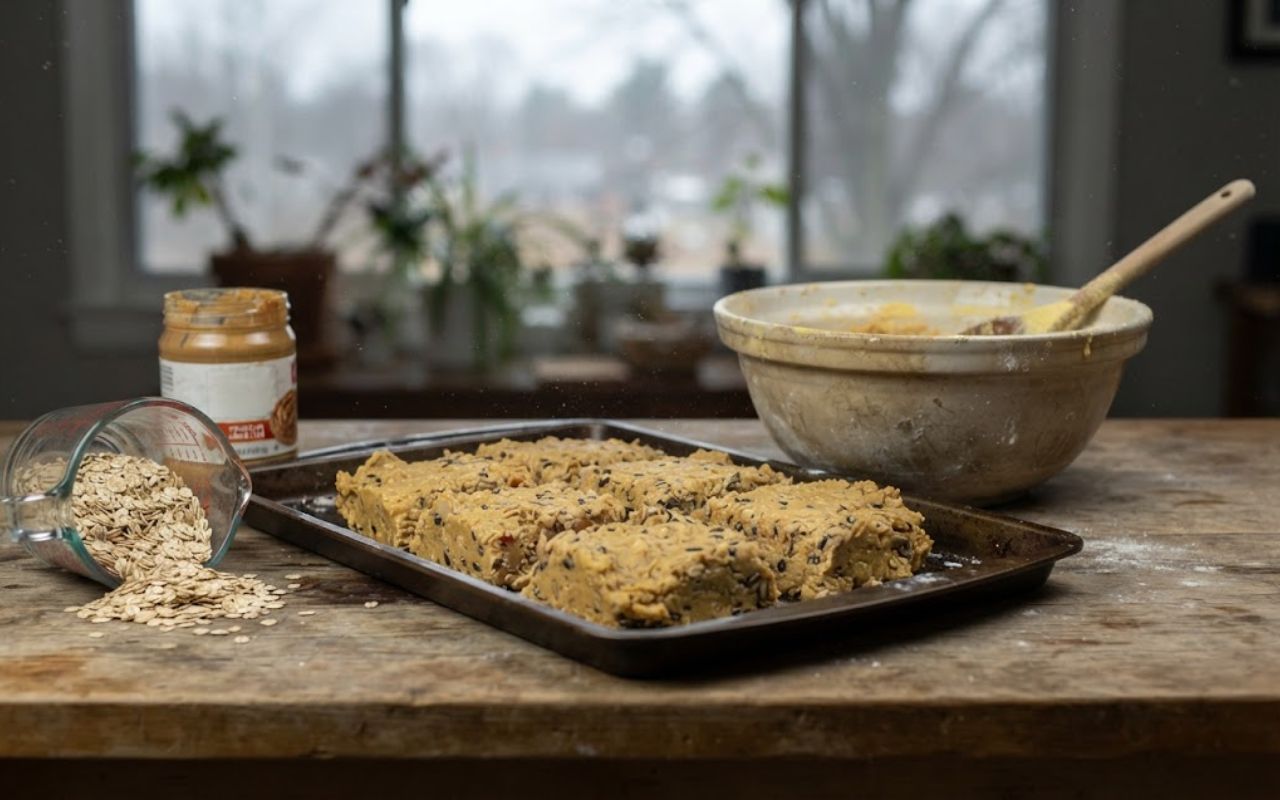
Peanut butter suet alternatives provide wild birds with clean fuel when extreme temperatures turn standard pantry ingredients into messy yard hazards. Grocery peanut butter liquefies quickly under direct summer sunlight, while sub-zero winter temperatures freeze thick nut spreads into concrete slabs that small birds cannot chip away.
Backyard birders often struggle to balance calorie density with structural durability across changing seasons. Switching to climate-resilient ingredients prevents ruined plumage, avoids wasted food, and keeps woodpeckers, chickadees, and nuthatches fed year-round.
Quick-Glance Field Summary
Replacing soft nut butters with hard animal fats, insect bases, and dry grains keeps supplemental wild bird food functional across wide temperature swings. The following parameters outline safe thresholds and material ratios for building durable outdoor cakes.
- Base fats: Rendered beef kidney tallow with a melting point of 113°F to 122°F, or pure unhydrogenated pork lard with a melting point of 95°F to 105°F
- Structural binders: Coarse yellow cornmeal, ground rolled oats, or high-bloom unflavored gelatin
- Protein additives: Dried mealworms, black soldier fly larvae, and sunflower chips comprising 30 to 50 percent of total recipe volume
- Feeder gear: Wire mesh cages made with 0.25-inch hardware cloth suspended beneath an 18-inch weather baffle
- Sanitation protocol: Periodic soak in a 1:9 bleach-to-water dilution; avoid boiling water on polycarbonate cage components
Why Standard Peanut Butter Fails in Harsh Weather
Commercial peanut butter contains high amounts of free oils that rapidly separate when temperatures climb past 80°F. In community threads on r/backyardbirds, Texas birders routinely report finding grease smeared across downy woodpecker head feathers after birds visit melted peanut butter feeders. When oil coats avian plumage, feathers lose their interlocking barbule alignment, stripping birds of their ability to regulate body temperature during sudden summer rainstorms.
Winter presents the opposite structural failure for soft nut butters. Members of r/birdwatching from northern Alberta note that nuthatches and chickadees completely abandon store-bought peanut butter once temperatures drop past 15°F. The natural moisture and soft fats freeze rock-hard, forcing birds to expend more metabolic energy pecking at an immovable block than they gain from eating it.
Warm, humid weather introduces biological contamination to moist seed doughs. Damp peanut mixtures stored outdoors serve as an active breeding ground for Aspergillus flavus, a fungal pathogen that produces deadly aflatoxins in wild birds. High-heat alternatives eliminate these risks by locking proteins into rigid matrices that do not sweat oils or trap ambient humidity.
| No-Melt Alternative Matrix | Structural Starch Binding Agents | Peak Thermal Resistance | Target Avian Foragers |
|---|---|---|---|
| 1. The Oatmeal-Flour Anchor | Quick-cooking oats, unbleached all-purpose flour, and yellow cornmeal. | Elite; remains completely solid up to 115°F (46°C) in direct sun. | Downy woodpeckers, chickadees, nuthatches, and tufted titmice. |
| 2. The Pure Cornmeal Dough | Double portions of coarse cornmeal bound with warm structural water. | High; crumbly, non-sticky paste that will not coat wing feathers. | Blue jays, cardinals, mockingbirds, and towhees. |
Rendered Beef Tallow and Oat Flour Dough Cakes
Pure beef kidney fat, known as suet, melts between 113°F and 122°F once fully rendered into tallow. This exceptionally high melting point allows tallow cakes to hang in direct midday sun without dripping onto visiting wildlife. Rendering the fat twice removes all residual water, preventing internal ice crystals from forming during bitter winter freezes.
- 2 cups twice-rendered beef kidney tallow
- 2 cups finely ground rolled oats
- 1 cup coarse yellow cornmeal
- 1 cup black oil sunflower hearts
Melt the tallow slowly in a heavy pan until clear, then stir in the ground oats and cornmeal until the mixture resembles thick porridge. The oats act as a natural sponge, locking up surface oils while delivering easily digestible carbohydrates. Pour the mix into a standard rectangular container and allow it to solidify at room temperature before hanging.
This formulation remains firm up to 100°F and soft enough for small bill tips at 0°F. Woodpeckers and creepers readily tear off bite-sized morsels without picking up greasy residue on their wing coverts.
High-Protein Mealworm and Gelatin Blocks
For locations experiencing extreme summer humidity where all animal fats risk softening, unflavored food-grade gelatin offers a completely fat-free binder. Gelatin forms a tough, rubbery matrix that holds dense insect proteins together without melting or softening under blazing heat. It also eliminates greasy drippings that attract nuisance yellowjackets and raccoons.
- 2 packets unflavored powdered gelatin
- 0.5 cup cold water
- 0.5 cup near-boiling water
- 3 cups dried mealworms or black soldier fly larvae
Dissolve the gelatin powder completely into cold water first, then add the near-boiling water to activate the collagen bonds. Stir the dried insects directly into the liquid until every larva is coated in a thin sheen of gelatin. Pack the insect slurry firmly into a mold and refrigerate for four hours to set the structure.
Gelatin insect cakes remain stable up to 110°F and perform exceptionally well during early summer fledging seasons. Breeding insectivores like bluebirds and wrens gain dense animal protein without receiving unnecessary fats that can spoil in humid heat.
Homemade Pure Lard and Seed Scratch Cakes
While beef tallow serves as the gold standard for high summer, pure grocery lard performs significantly better in sub-zero winter setups. Lard melts at a lower threshold of 95°F to 105°F, which means it remains noticeably softer than beef tallow when temperatures drop below zero. This pliability prevents the block from becoming an impenetrable brick during deep polar freezes.
- 2 cups pure grocery lard; ensure the package contains no added hydrogenated oils or salt
- 1.5 cups coarse yellow cornmeal
- 1 cup raw hulled sunflower chips
- 0.5 cup clean, crushed chicken eggshells for supplemental calcium
Gently warm the lard until it softens into an opaque paste rather than a fully clear liquid. Fold in the dry cornmeal, hulled sunflower seed chips, and finely pulverized eggshells until thoroughly combined. Press the thick paste into shallow trays to produce thin, easy-to-break slabs.
The addition of crushed eggshells aids birds in replenishing their mineral stores during bone-chilling cold spells. Chickadees, titmice, and brown creepers can easily flake away high-calorie fat curls even during minus-20°F wind-chill events.
How to Hang and Protect Your Winter and Summer Feeds
Proper feeder hardware protects your homemade food cakes from weather-driven degradation and predatory pests. Suspend your food blocks inside tight-gauge wire cages constructed with 0.25-inch galvanized hardware cloth. This spacing permits small songbirds and woodpeckers to reach the food while preventing large starlings, grackles, and crows from tearing out whole slabs at once.
Install an 18-inch polycarbonate weather baffle centered directly above the cage assembly. A wide dome redirects driving summer rain, stopping water from pooling on top of the food, and shields fat cakes from direct solar radiation. In winter, the baffle deflects heavy snow accumulations that would otherwise bury the cage and freeze food solid.
Feeders should always be mounted within 3 feet of a window or further than 30 feet away to reduce collision hazards. Clean the wire cages monthly by soaking them in a 1:9 bleach-to-water dilution to eliminate residual pathogens. Avoid pouring boiling water directly onto plastic-coated wire components, as high heat quickly warps and cracks protective coatings.