
If you’re trying to figure out how to make a bird seed wreath that doesn’t fall apart the moment you hang it, trust me, I’ve been there. I’ve made plenty over the years, and more than a few turned into pricey bird-seed confetti on my patio before a single chickadee even noticed.
The good news? Bird seed wreaths are simple once you understand what actually holds them together. They feed your backyard birds, look great outside, and make fun gifts for anyone who loves wildlife. Let’s walk through it so yours comes out solid and bird-approved 🙂.
- Use quality birdseed with sunflower, millet, and cracked corn.
- Pick a strong binder like unflavored gelatin, suet, or natural peanut butter.
- Press the mixture firmly into a bundt pan or silicone mold.
- Chill it for several hours or overnight so it sets properly.
- Avoid salty ingredients, honey, cooking oils, or artificial sweeteners.
- Hang the wreath in a shaded spot about 5–6 feet off the ground.
- Keep it dry; bring it in if it gets soaked to prevent mold.
- Store extra wreaths in the freezer to keep them fresh.
- Expect chickadees, cardinals, finches, and woodpeckers to show up.
- If it crumbles, you likely need more binder or firmer packing.
What Is a Bird Seed Wreath? (And Why Birds Love Them)
A bird seed wreath is exactly what it sounds like: birdseed pressed into a ring shape using some kind of binder (gelatin, suet, or peanut butter usually). Think of it as a DIY bird treat that doubles as yard décor.
Why do birds go nuts for these things? Simple. They’re packed with calories, which is crucial during cold weather when birds burn through energy faster than I burn through coffee on a Monday. Plus, the wreath format keeps seed relatively dry and protected compared to loose piles on the ground. It’s like serving birds a five-star meal on a plate instead of throwing food on the sidewalk.
You can hang them any time of year, but they’re especially popular around the holidays. I’ve given them as gifts to non-birders who suddenly became very interested in what was happening in their backyard. Mission accomplished.
Materials You Need (Exact Ingredients + Alternatives)
Here’s where most people mess up, they grab whatever’s in the pantry and wonder why their wreath won’t hold together. Let me save you the headache.
Core Ingredients
Birdseed: This is your main event. I recommend a quality mix with black oil sunflower seeds, millet, and cracked corn. Cheap seed mixes are full of filler that birds literally throw on the ground. Not helpful.
Binder: You need something to hold it all together. Options include:
- Unflavored gelatin (most common, works great)
- Corn syrup (adds stickiness)
- Suet or lard (best for winter, high-fat option)
- Peanut butter (birds love it, but use natural, unsalted)
Mold: A bundt pan works perfectly. Silicone molds are even better because they release easily. Avoid anything with a super sticky Teflon coating that’s seen better days.
Hanging material: Jute rope or natural twine. Nothing synthetic or treated.
Optional Add-Ins
Want to make your wreath extra fancy? Toss in some dried fruit (cranberries, raisins), unsalted nuts, or even dried mealworms if you’re feeling generous. Woodpeckers will lose their minds over mealworms.
What NOT to Use
This is important, so I’m bolding it: Do not use salted nuts, cooking oils, honey, or artificial sweeteners. Honey can harbor bacteria harmful to birds, salt is terrible for them, and artificial sweeteners? Just no. Also skip anything with added sugars or preservatives.
Best Wreath Mold Types (and Which One Works Best)
I’ve tried shaping these things in everything from fancy bundt pans to questionable DIY cardboard rings. Here’s what actually works.
Bundt pan: Classic choice. The shape is perfect, and if you grease it lightly with shortening (not cooking spray), your wreath pops out cleanly. Downside? It’s heavy and kind of a pain to clean seed bits out of all those grooves.
Silicone baking mold: Honestly, this is my favorite. A silicone tube mold or ring mold releases the wreath like a dream. Zero sticking issues. Just press, chill, and flex it out. Game changer.
Cookie cutters: If you want smaller ornament-style wreaths, large round cookie cutters work. You’ll need to press firmly and be patient, but they’re cute as heck.
Pro tip: Whatever you use, chill it in the fridge or freezer first. Cold molds = easier release.
Step-by-Step Instructions (Fail-Proof Method)
Alright, let’s actually make this thing. I’m walking you through the gelatin method because it’s reliable and beginner-friendly.
What You’ll Need
- 4 cups birdseed
- 3 packets unflavored gelatin
- 3/4 cup warm water
- 2 tablespoons corn syrup
- Bundt pan or silicone mold
The Process
Step 1: Mix your gelatin packets with warm water in a large bowl. Stir until completely dissolved, no chunks. Add the corn syrup and mix again.
Step 2: Dump in your birdseed and stir like you mean it. Every seed should be lightly coated. If the mix looks dry and crumbly, add a tiny bit more water (like a tablespoon at a time). If it’s soupy, add more seed.
Step 3: Press the mixture firmly into your mold. And I mean firmly. Pack it down with the back of a spoon or your hands. This is where people get lazy and end up with weak, crumbly wreaths.
Step 4: Before it sets, poke a piece of twine through to create your hanging loop. Make sure it’s secure.
Step 5: Refrigerate for at least 4 hours, but overnight is better. Patience is not my strong suit, but trust me on this one.
Step 6: Remove from the mold by gently flexing the sides (if silicone) or running a butter knife around the edges (if metal). Work slowly. If it’s sticking, pop it back in the fridge for another hour.
Troubleshooting Common Problems
Crumbly mix? Not enough binder. Add a bit more gelatin or corn syrup.
Falls apart when you unmold it? You didn’t press hard enough, or it didn’t set long enough. Remix it, press harder, chill longer.
Too sticky to handle? You added too much liquid. Toss in more seed to balance it out.
Won’t release from the mold? Next time, grease your mold lightly first, or switch to silicone.
Alternative Recipes (For Allergies, Warm Climates, or No-Gelatin Households)
Not everyone has gelatin lying around, and honestly, gelatin wreaths can get soft in warm weather. Here are some solid alternatives.
No-Gelatin Suet Wreath
Melt 1 cup of lard or vegetable shortening in a pot. Remove from heat and stir in 2 cups birdseed. Press into mold and refrigerate. This creates a high-fat winter wreath that birds absolutely demolish in cold weather.
Warm-Climate Version
If you live somewhere hot, skip gelatin and suet, they’ll melt. Instead, use a thick peanut butter mixture. Mix 1 cup natural peanut butter with 2 cups birdseed and 1/4 cup cornmeal as a stabilizer. It holds up better in heat.
Vegan Option
Use agar powder instead of gelatin. It works the same way but comes from seaweed. Birds don’t care, and it sets just as firmly.
Allergy-Friendly Recipe
Skip the peanut butter and stick with gelatin or agar. Simple.
How to Make a Bird Seed Wreath Without a Mold
Maybe you don’t own a bundt pan. Maybe you’re just feeling rebellious. Either way, you can shape these by hand.
Foil ring method: Shape aluminum foil into a ring, pack your seed mixture around it, and chill. Once set, you can leave the foil in or carefully remove it.
Hand-formed method: This is messy and requires sticky hands, but you can literally shape the mixture into a ring using your hands. Press firmly and let it set on parchment paper.
Cardboard support: Cut a ring from sturdy cardboard, wrap it in parchment, and press your mixture around it. The cardboard stays in, it’ll biodegrade outside anyway.
Decorating Your Wreath (Bird-Safe Only)
Here’s where you can get creative without accidentally poisoning your backyard visitors.
Safe decorations include cranberries, dried orange slices, dried apple pieces, and other natural fruit. You can press them into the wreath before it sets, or thread them on the twine.
Do NOT use ribbon (birds can get tangled), wire (injury hazard), glitter (toxic if ingested), or anything synthetic. Keep it natural and simple.
Where to Hang a Bird Seed Wreath for Maximum Bird Visits
Location matters. You can make the world’s best wreath, but if you hang it in a terrible spot, birds will ignore it.
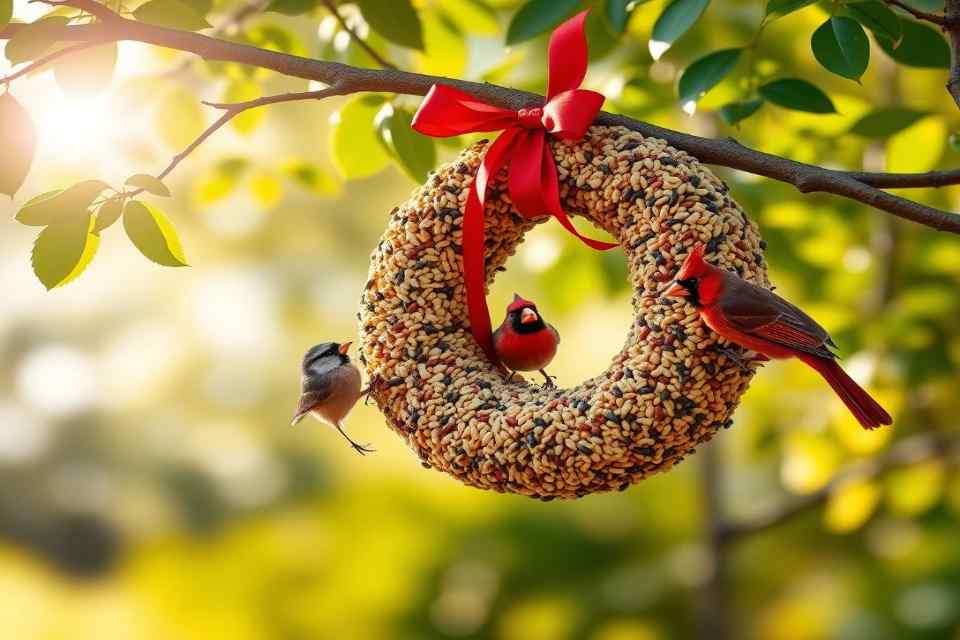
Hang it about 5-6 feet off the ground on a tree branch or shepherd’s hook. Birds feel safer when they have nearby cover, like bushes or trees, to dart into if a predator shows up. Don’t hang it directly against your house windows unless you want a front-row seat to bird drama (or window strikes, which are sad).
Sun vs. shade? Shade is better. Direct sunlight can melt binders and speed up spoilage. Plus, seed lasts longer when it’s not baking in the sun all day.
How Long a Bird Seed Wreath Lasts (In Different Weather Conditions)
Okay, real talk: these don’t last forever.
In freezing temps, a well-made wreath can last 2-3 weeks or until birds eat it all. Cold weather preserves it beautifully.
In mild or humid conditions, you’re looking at maybe a week before it starts breaking down. Moisture is the enemy.
In rain, all bets are off. If it gets soaked, it’ll either fall apart or develop mold within days. Bring it inside or toss it if it gets drenched.
Replace it immediately if you see any mold, white, black, or green fuzz means it’s done. Moldy seed can make birds sick.
How to Store Extra Wreaths
Made a bunch? Smart move.
Short-term (up to a week): Keep them at room temperature in an airtight container. Make sure they’re completely dry first.
Long-term: Freeze them. Wrap each wreath in plastic wrap or parchment, then store in a freezer bag. They’ll keep for months. To use, thaw at room temperature for a few hours. Don’t rush it or they might crack.
Avoid storing them anywhere humid, moisture equals mold.
Bird Species That Love Bird Seed Wreaths
Who’s going to show up to this party? Pretty much everyone.
Chickadees are usually the first to arrive, they’re brave and curious. Cardinals love sunflower seeds and will perch on the wreath itself if it’s sturdy enough. Finches, sparrows, and juncos will happily peck away at smaller seeds.
If you’ve added mealworms or suet, expect woodpeckers and nuthatches. They’re the acrobats of the bird world and ridiculously fun to watch.
Different seasons bring different species, so the birds eating your winter wreath might not be the same crew enjoying it in spring.
Safety Tips (Very Important)
Let’s talk about what can go wrong, because it’s better to know upfront.
Keep wreaths away from heat sources. If you hang them near a heat lamp or in direct sun on a hot day, they’ll melt or spoil fast.
Remove moldy wreaths immediately. I can’t stress this enough. Moldy seed can cause respiratory issues in birds.
Watch for predators. If your wreath attracts birds, it might also attract cats or hawks. Hang it where birds have an escape route.
Squirrels and raccoons will destroy your wreath if they can reach it. Accept this or hang it on a baffle. FYI, I’ve lost multiple wreaths to squirrels who looked me dead in the eye while demolishing my hard work.
Keep wreaths away from pets. If your dog or cat can reach it, they probably will.
Common Mistakes to Avoid
I’ve made these mistakes so you don’t have to.
Not using enough binder: Your wreath will crumble. Don’t be stingy with gelatin or suet.
Adding too much fruit: Fruit holds moisture, which leads to mold. A handful is plenty.
Hanging in direct sunlight: It’ll spoil faster and potentially melt.
Leaving it out too long: Even the best wreath has a shelf life. If birds aren’t eating it and it’s been out for weeks, replace it.
Using the wrong mold: If it’s sticking every time, the mold is the problem, not you.
Troubleshooting Guide
Wreath cracked when you unmolded it? It was too cold or you removed it too forcefully. Let it warm up slightly before unmolding.
Birds aren’t eating it? Give them time, sometimes it takes a few days for birds to notice something new. Also, make sure you’re using quality seed they actually like.
Mix won’t hold together? Add more binder. Seriously, that’s almost always the issue.
Texture is off? Too sticky means too much liquid. Too dry means not enough. Adjust and try again.
Simple Bird Seed Wreath Variations
Once you’ve mastered the basic recipe, get creative.
Holiday wreath: Add dried cranberries and a small pine cone pressed into the top. Instant festive vibes.
Winter high-fat version: Use the suet recipe with extra lard. Birds need those calories when it’s freezing.
Minimalist seed-only wreath: Just seed and gelatin. Clean, simple, effective.
Kid-friendly option: Let kids press the mixture into cookie cutters to make small ornament-shaped treats. It’s messy, but they’ll love it.
Bird Seed Wreath vs Traditional Bird Feeder (Which Is Better?)
Honestly? Both have their place.
Mess: Feeders can be messy with seed scattered everywhere. Wreaths are tidier since birds eat directly from them.
Types of birds: Feeders attract a wider variety depending on design. Wreaths mostly attract perching birds and clingers.
Weather durability: Good feeders last years. Wreaths are temporary and need replacing.
Cost: A single feeder is pricier upfront but lasts longer. Wreaths are cheap to make but need frequent replacement.
Ease of use: Feeders need regular cleaning and refilling. Wreaths are one-and-done until they’re gone.
IMO, use both. Feeders for year-round feeding, wreaths for seasonal fun and variety.
FAQs (Because I Know You’re Wondering)
Why is my bird seed wreath falling apart?
Not enough binder, or you didn’t press it firmly enough. Remix with more gelatin or suet.
How do you keep a bird seed wreath from molding?
Hang it in a shaded, dry spot. Remove it if it gets soaked. Replace it every 1-2 weeks.
Can you use peanut butter?
Yes, but use natural, unsalted peanut butter. Avoid anything with added sugar or salt.
Do birds really eat these?
Absolutely. Just give them a day or two to discover it.
Is gelatin safe for birds?
Yes, unflavored gelatin is completely safe. Birds digest it without issues.
Do bird seed wreaths attract pests?
They can attract squirrels and raccoons. Hang them on a baffle if that’s a concern.
How long does a bird seed wreath last outside?
In cold weather, 2-3 weeks. In warm or humid conditions, about a week.
Can I make a wreath without cooking anything?
Yes. Use the peanut butter method or the no-heat gelatin method, just dissolve gelatin in warm water, no stovetop needed.
Can I use honey as a binder?
No. Honey can harbor bacteria that’s harmful to birds. Stick with gelatin, suet, or peanut butter.
Printable Recipe Card
Basic Bird Seed Wreath Recipe
Ingredients:
- 4 cups birdseed
- 3 packets unflavored gelatin
- 3/4 cup warm water
- 2 tablespoons corn syrup
Steps:
- Dissolve gelatin in warm water, add corn syrup
- Mix in birdseed until coated
- Press firmly into mold
- Add hanging loop
- Refrigerate overnight
- Remove carefully and hang outside
Time: 15 minutes prep, 8+ hours setting
Storage: Freeze extras wrapped in plastic for up to 3 months
So there you have it, everything I’ve learned from making way too many bird seed wreaths. Will your first one be perfect? Probably not. Mine sure wasn’t. But by your third try, you’ll be making wreaths that look great and actually survive long enough for birds to enjoy them.
Now go make something the chickadees will gossip about. 🙂