
So, you’ve finally decided to welcome some feathered visitors into your backyard? First off: excellent choice. You’re about to open up a front-row seat to one of nature’s most chill (and occasionally chaotic) shows. But before you run off and buy the first cute feeder you see on Amazon, let’s talk. Because not all bird feeders are created equal, and yes, there are some that even the birds won’t touch. Brutal, right?
If you’ve ever wondered how to choose the right bird feeder, you’re in the right place. I’ve been at this backyard birding thing for years now. I’ve tried it all: the squirrel-proof ones that aren’t actually squirrel-proof, the DIY disasters, and the fancy feeders that somehow only attract pigeons. So trust me when I say, finding the right bird feeder can make or break your whole backyard vibe.
Why Picking the Right Feeder Actually Matters
Let’s be real: a bird feeder is more than a backyard decoration. It’s an open invite to your local bird population. The right one brings cardinals, finches, chickadees, and nuthatches swooping in like it’s a free buffet. The wrong one? It gets ignored or emptied out by squirrels within the hour.
And if you’re just starting out and Googled something like “easy bird feeders for beginners” (been there), this is especially for you. A good feeder sets the stage for everything: what kinds of birds you’ll see, how messy your yard gets, and how often you need to refill the thing.
Hopper, Tube & Tray Feeders Explained
Ever walk into a hardware store and just stare blankly at the bird feeder aisle? Same. Here’s a breakdown so you don’t have to guess:
Hopper Feeders

These look like little birdhouses and have a central bin that dispenses seed as it’s eaten.
Good for: Cardinals, grosbeaks, sparrows, finches
Pros:
- Hold a decent amount of seed
- Protected from rain/snow
- Attract a wide variety of birds
Cons:
- Harder to clean
- Sometimes bulky or pricey
👉 Want a reliable crowd-pleaser? Check out top-rated hopper feeders on Amazon and get your backyard buzzing with birdlife.
Tube Feeders
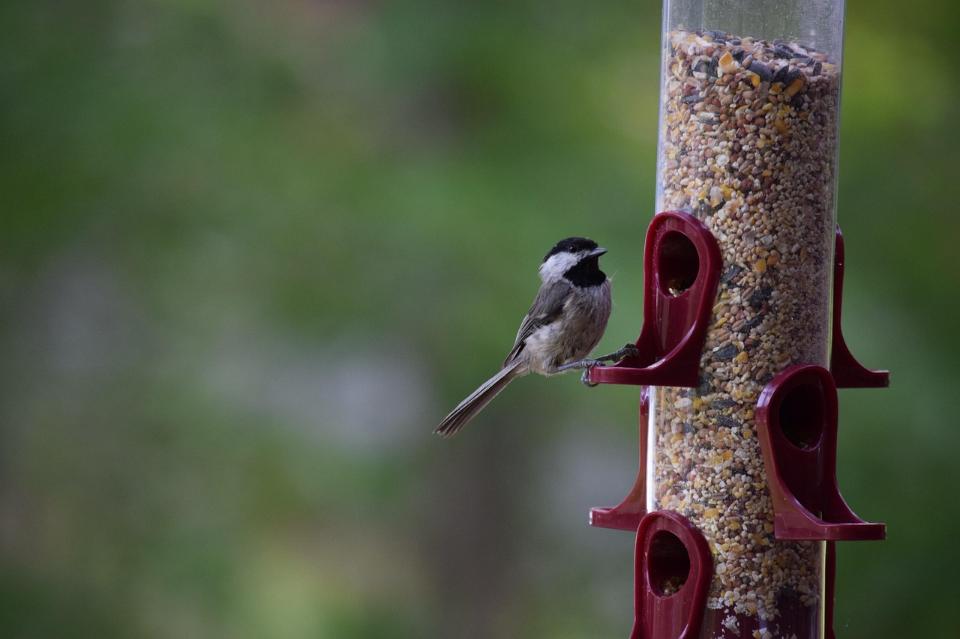
These are the tall, cylindrical ones you’ve probably seen before.
Good for: Chickadees, finches, nuthatches
Pros:
- Great for smaller birds
- Easy to hang on poles or trees
- Works well with sunflower chips or thistle
Cons:
- Can clog in wet weather
- Not ideal for larger birds
👉 Looking to charm small songbirds? Browse the best tube feeders on Amazon, they’re perfect for thistle and sunflower seed blends.
Tray or Platform Feeders

Flat and open. Like an all-you-can-eat buffet.
Good for: Pretty much everyone, including mourning doves, jays, and even squirrels (ugh)
Pros:
- Super easy to clean
- Attracts tons of birds
- Can toss in fruit, seed, mealworms, whatever
Cons:
- No protection from rain
- Seed gets messy fast
👉 Want maximum variety with minimal fuss? Find simple and sturdy tray feeders on Amazon that birds (and you) will love.
Suet Feeders

These are wire cages that hold suet cakes (high-fat blocks).
Good for: Woodpeckers, chickadees, wrens, nuthatches
Pros:
- Perfect for winter months
- Loved by insect-eaters
Cons:
- Gross to handle in summer (melty suet is a vibe, just not a good one)
👉 Ready to attract woodpeckers like a pro? Check out top suet feeders on Amazon that make cold-weather feeding super easy.
Match the Feeder to the Birds You Want
This is where it gets fun. Want to see bright red Northern Cardinals chilling in your yard? Go with a hopper feeder and fill it with black oil sunflower seeds. Dreaming of goldfinches? You’ll want a tube feeder with nyjer seed.
Here’s a quick cheat sheet:
| **Bird Type | Feeder | Seed Type** |
|---|---|---|
| Cardinals | Hopper, Tray | Black oil sunflower, safflower |
| Goldfinches | Tube (small ports) | Nyjer (thistle) |
| Woodpeckers | Suet Feeder | Suet cakes, peanuts |
| Sparrows | Hopper, Tray | Mixed seed, cracked corn |
| Chickadees | Tube, Suet | Sunflower seeds, suet |
FYI: Don’t stress if your feeder doesn’t pull in rare warblers on day one. Learning how to attract backyard birds is part patience, part trial-and-error.
Location, Location, Location
Where you hang that feeder matters just as much as which one you choose. Here’s the deal:
- Keep it visible: Birds need to see it before they’ll use it. Don’t bury it in the back corner.
- Avoid heavy traffic areas: You know what birds hate? Kids running around screaming. Shocking, right?
- Close to cover, not too close: Bushes = safety. But if they’re too close, cats can hide and pounce. Not ideal.
- Distance from windows: Birds can’t see glass. Either put the feeder within 3 feet of the window or more than 10 feet away. That way, if they do spook, they don’t fly into it at full speed. :/
Choosing the Best Bird Seed for New Feeders
Let’s talk food. Because your feeder might be a 10/10, but if you’re using trash seed, the birds won’t show up. Period.
Best Seeds for Starters
- Black oil sunflower seeds: Hands-down the best all-around. Almost every backyard bird loves it.
- Nyjer (thistle): Goldfinches are obsessed. Need a special feeder, though.
- Safflower: Great for cardinals. Bonus: squirrels usually hate it.
- Peanuts: Attract woodpeckers, jays, and titmice. Use shelled and unsalted.
- Mixed seed: Be picky. The cheap stuff is full of filler like milo and wheat, which most birds toss out.
Avoid: Seed mixes with lots of red milo, cracked corn (unless you’re feeding doves), or anything labeled “wild bird food” that feels like it came from a pet store clearance bin.
Keep It Clean (Seriously)
Listen, no one loves cleaning bird feeders. But dirty feeders = sick birds. It’s kind of like leaving a buffet out for days and hoping no one gets food poisoning.
Here’s what to do:
- Clean your feeder at least once every two weeks (weekly in summer)
- Use hot water and a 10% bleach solution
- Scrub thoroughly, rinse well, and let it dry completely before refilling
IMO, if you’re too lazy to clean a feeder, you probably shouldn’t have one. (Sorry, not sorry.)
Add-Ons Worth Considering
Want to level up your setup? A few extras can help:
- Squirrel baffles: These dome things go above or below the feeder. Total lifesaver.
- Seed trays: Catch spilled seed and reduce mess
- Hooks and poles: Give you more control over placement
- Bird baths: Clean water is just as important as food
Ever notice how some yards become bird hotels and others… don’t? It’s usually the little things.
Common Mistakes (Yep, I’ve Made Them All)
Here are a few goofs you’ll want to avoid:
- Using old or moldy seed: Toss it. Always.
- Hanging feeders on flimsy branches: Wind + weight = disaster
- Neglecting feeder height: Too low = squirrels. Too high = hard to refill.
- Filling the feeder and disappearing: Birds need time to discover your setup, but they also like consistency. If you ghost them for weeks, don’t be surprised when they stop coming.
Personal Pick: What I Use and Why
Right now, my MVP is a hopper feeder with a wide roof and decent drainage. It’s weather-resistant and holds black oil sunflower seeds. I’ve got it mounted on a pole with a squirrel baffle, and honestly, it’s been rock solid for years.
I also keep a small tube feeder nearby with nyjer for the finches. And yep, I rotate in a suet feeder once the temps drop. This setup brings in woodpeckers, cardinals, finches, nuthatches, and even the occasional red-bellied woodpecker.
Did it take some tinkering? You bet. But now? It’s basically a bird rave out there.
Final Thoughts: You Got This
Choosing the right bird feeder doesn’t have to be overwhelming. Stick to the basics, keep it clean, and pick a feeder that fits the kind of birds you want to attract.
If you’re new, start small. Grab one solid feeder, use the best bird seed for new feeders, and learn as you go. Don’t fall into the trap of buying 10 feeders before you even know what birds live near you (been there, regretted that).
Backyard birdwatching is one of the simplest ways to connect with nature. And yeah, you might catch yourself saying stuff like “Oh look, the nuthatches are back!” while your neighbor wonders when you became an 80-year-old retiree. But hey, their loss. 🙂
Happy birding!