
The dodo waddles through history as the poster child for extinction, but this flightless bird was far more fascinating than the bumbling cartoon character we imagine. I stumbled down a research rabbit hole about these creatures last month and emerged with my mind completely blown by how wrong our assumptions have been. If you think you already know the facts about the dodo bird, you might be surprised.
Dodo birds weren’t stupid, slow, or fat. They were perfectly adapted island survivors who met their match in humans and the menagerie of invasive species we brought along. Ready to have your preconceptions shattered?
Dodo Bird (Overview)
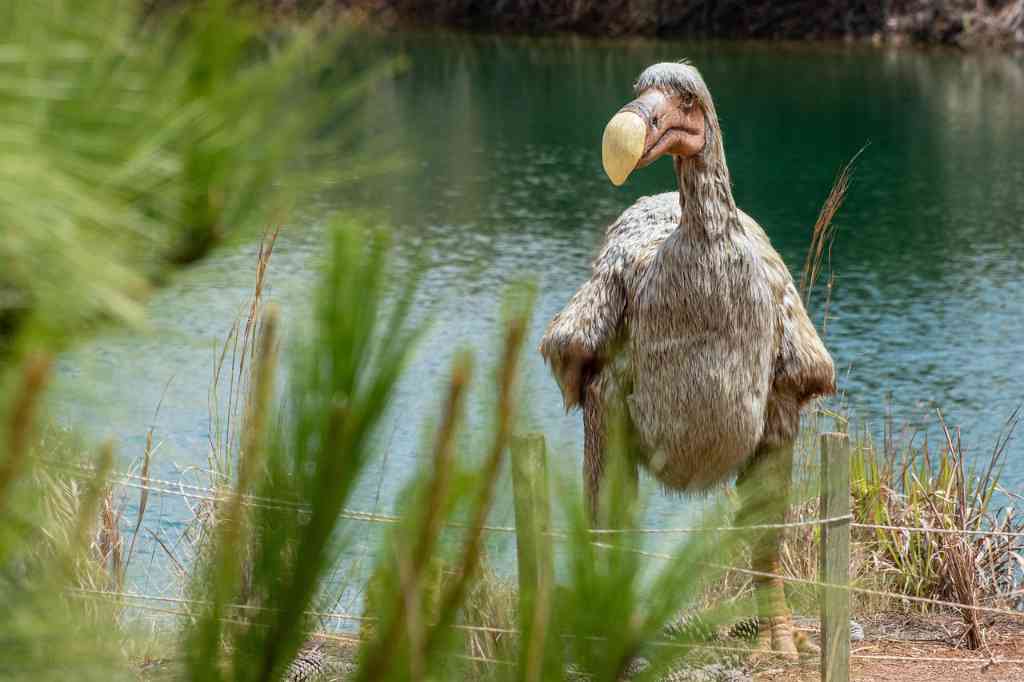
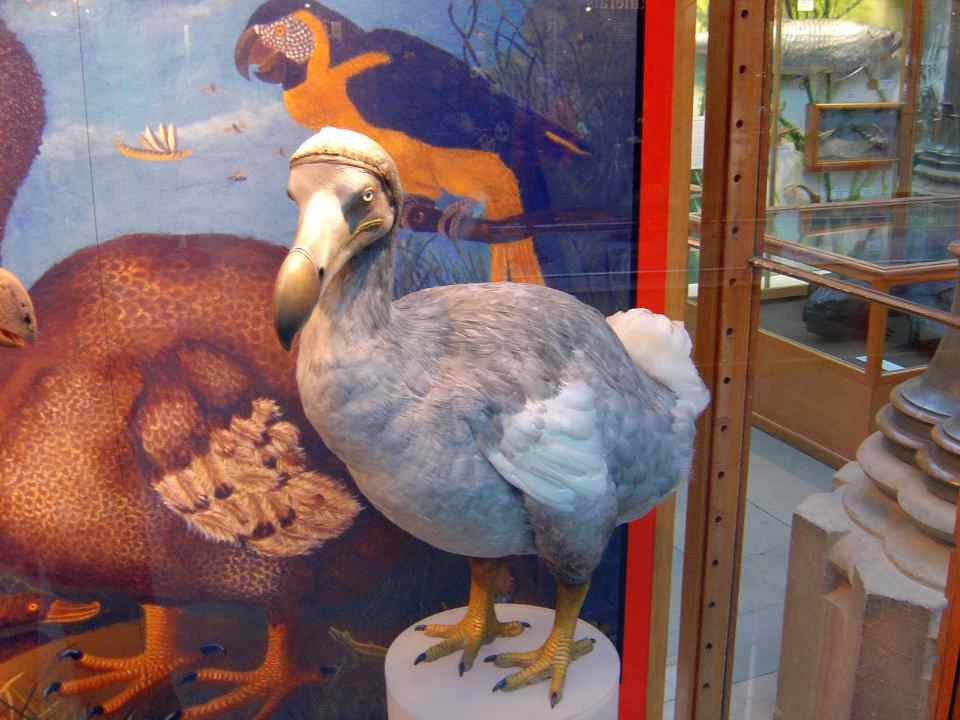
- Identification: The Dodo Bird is a big and clumsy creature, that is approximately 3 feet tall, with brownish-gray downy feathers, a big gray featherless head, and a black bill with a reddish tip. They also have yellow feet and tufted white plume tail feathers.
- Length: 3.3 ft. (1 meter)
- Weight: 23-39 pounds
- Wingspan: 2.0 ft.
- Order: Columbiformes
- Family: Columbidae
- Sub Family: Raphinae
- Genus: Raphus
- Scientific Name: Raphus cucullatus
- Population: Extinct 1681 est.
- Range: Mainly Mauritius, and other islands nearby like Reunion Island and Rodrigues Island.
- Habitat: Coastal areas or dense forests.
- Diet: Fruits, seeds, berries, leaves, and invertebrates.
Physical Characteristics That Made Dodos Unique
The Raphus cucullatus looked nothing like the plump, awkward bird depicted in children’s books. Recent scientific reconstructions reveal a sleek, muscular animal built for island life.
Size and Build Facts
1. Adult dodos stood about 3 feet tall and weighed between 20-40 pounds, roughly the size of a large turkey. Early accounts describing “giant” birds came from sailors who hadn’t seen land animals in months.
2. Their wings weren’t useless stubs but functional appendages used for balance, display, and thermoregulation. Think of them as feathered arms rather than failed flight equipment.
3. Dodos had incredibly strong leg muscles that powered their primary mode of transportation. They could run surprisingly fast when motivated, reaching speeds up to 15 mph.
4. The iconic curved beak measured up to 9 inches long and served as a multi-tool for cracking seeds, stripping fruit, and processing tough plant material.
Distinctive Features
5. Male and female dodos showed significant sexual dimorphism. Males were larger with more pronounced beaks and brighter plumage than females.
6. Their feathers were actually gray-brown with yellowish tints, not the pure gray often depicted in illustrations. Contemporary accounts describe them as having a somewhat iridescent quality.
7. Dodos possessed a unique tail structure featuring a tuft of curly feathers that they could fan out for display purposes.
8. Their feet were bright yellow or orange with powerful claws adapted for scratching through forest debris and gripping uneven terrain.
Ever wonder why museum dodo skeletons look so different from popular depictions? Most early “reconstructions” were based on guesswork rather than actual specimens.
Habitat and Behavior Revelations
Mauritius island provided the perfect environment for dodo evolution, but their specialized adaptations became fatal weaknesses when humans arrived.
Island Paradise Adaptations
9. Dodos lived in the coastal forests of Mauritius for over a million years before human contact. They weren’t found in the mountainous interior or open plains.
10. These birds were primarily ground-dwelling but could climb into low trees and bushes when necessary, using their wings for balance.
11. Dodos built their nests directly on the ground using sticks, leaves, and grass. This strategy worked perfectly until introduced predators arrived.
12. They were social birds that lived in small flocks of 10-20 individuals, communicating through a variety of calls and physical displays.
Daily Life and Diet
13. Dodos were frugivores who played crucial ecological roles as seed dispersers for large-fruited trees on Mauritius.
14. They could swallow fruits up to 2 inches in diameter whole, thanks to their flexible throat structure and lack of teeth.
15. Seasonal fruit availability dictated dodo movements across the island, creating predictable migration patterns.
16. These birds consumed stones to aid digestion, storing up to a pound of rocks in their muscular gizzards to grind tough plant material.
17. Dodos required very little fresh water because they obtained most of their hydration from juicy fruits and morning dew.
FYI, the phrase “dodo bird” is actually redundant. “Dodo” already means bird in the extinct language that gave these creatures their name.
Reproduction and Life Cycle Mysteries
Dodo breeding patterns remained mysterious until recent fossil discoveries provided crucial insights into their reproductive strategies.
Nesting and Eggs
18. Dodos laid single large eggs weighing about 1.5 pounds, roughly six times larger than chicken eggs.
19. Both parents took turns incubating the egg for approximately 49 days, one of the longest incubation periods among birds their size.
20. Dodo chicks were born helpless and required intensive parental care for their first 6-8 months of life.
21. Young dodos reached sexual maturity at 2-3 years old, which contributed to their vulnerability when breeding populations declined rapidly.
Family Structure
22. Mated pairs likely stayed together for multiple breeding seasons, forming strong pair bonds that increased offspring survival rates.
23. Dodos probably bred only during Mauritius’s dry season (May through October) when food resources were most abundant.
24. Extended family groups helped protect and feed young birds, creating complex social structures within dodo communities.
The Truth About Dodo Intelligence
Dodo intelligence has been grossly underestimated by popular culture. Recent analysis suggests these birds were quite clever within their ecological niche.
Problem-Solving Abilities
25. Dodos demonstrated tool use by manipulating sticks and stones to access food sources and build more effective nests.
26. They showed remarkable memory for seasonal food locations, returning to productive fruit trees year after year across their territory.
27. Dodos exhibited complex social behaviors including cooperative feeding, predator warning systems, and hierarchical flock structures.
28. These birds adapted their behavior when humans first arrived, initially showing curiosity rather than fear toward the strange newcomers.
The Real Story of Dodo Extinction
Dodo extinction wasn’t caused by hunting alone. The complete ecosystem collapse of Mauritius created an impossible survival scenario.
Timeline of Destruction
29. The last confirmed dodo sighting occurred in 1681, just 174 years after Portuguese sailors first documented the species in 1507.
30. Introduced species including pigs, rats, cats, and monkeys destroyed dodo nests, competed for food, and altered the forest ecosystem beyond recognition.
Human Impact Reality
Sailors didn’t actually hunt dodos extensively because the meat was reportedly tough and unpalatable. The birds earned the nickname “walghvogel” (disgusting bird) from Dutch settlers who found them nearly inedible.
Habitat destruction through deforestation and agriculture eliminated the coastal forests where dodos thrived. Humans converted over 90% of Mauritius’s native forest within 200 years of colonization.
Invasive species introduction created an ecological catastrophe that native species couldn’t survive. Rats ate dodo eggs, pigs trampled nests, and introduced plants crowded out native food sources.
Lessons from the Dodo’s Demise
The dodo extinction story serves as a cautionary tale about human impact on isolated ecosystems. These birds weren’t evolutionary failures but highly successful species that couldn’t adapt fast enough to unprecedented changes.
Modern conservation efforts on Mauritius work to restore native forests and protect remaining endemic species. Scientists use dodo research to understand island ecosystem vulnerabilities and develop better protection strategies.
Genetic studies of dodo remains continue, revealing new information about their relationships to other birds and their evolutionary history. Recent discoveries show dodos were closely related to the Nicobar pigeon, not to pigeons as previously thought.
The dodo’s legacy extends far beyond extinction symbolism. These remarkable birds represent the incredible diversity that evolution creates in isolated environments, and the devastating speed with which human activity can destroy millions of years of adaptation.
Next time someone uses “dodo” as an insult, remember these birds thrived for over a million years in their island paradise. They weren’t stupid; they were specialists who met generalists with devastating consequences 🙂