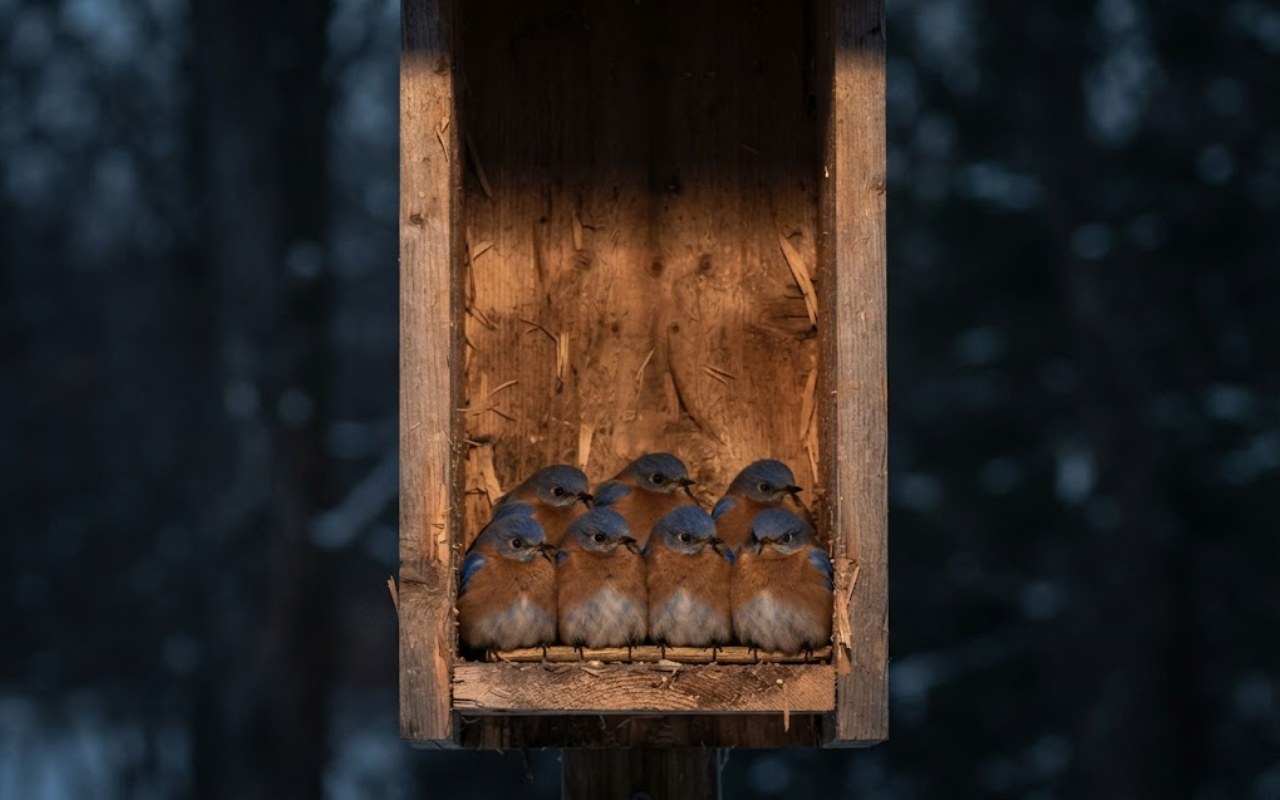
A real-world internal close-up photo showing a dense row of twelve bluebirds huddling shoulder-to-shoulder on a perch inside a wooden roost box to stay warm in winter.

How Many Birds Fit in a Roost Box to Stay Warm?

Determining how many birds fit in a roost box to stay warm depends on species body mass, interior box volume, and the severity of overnight winter temperatures. Smaller songbirds routinely pack together into tight communal clusters to share metabolic body heat, cutting their individual thermal loss by more than half during freezing weather. Field researchers […]
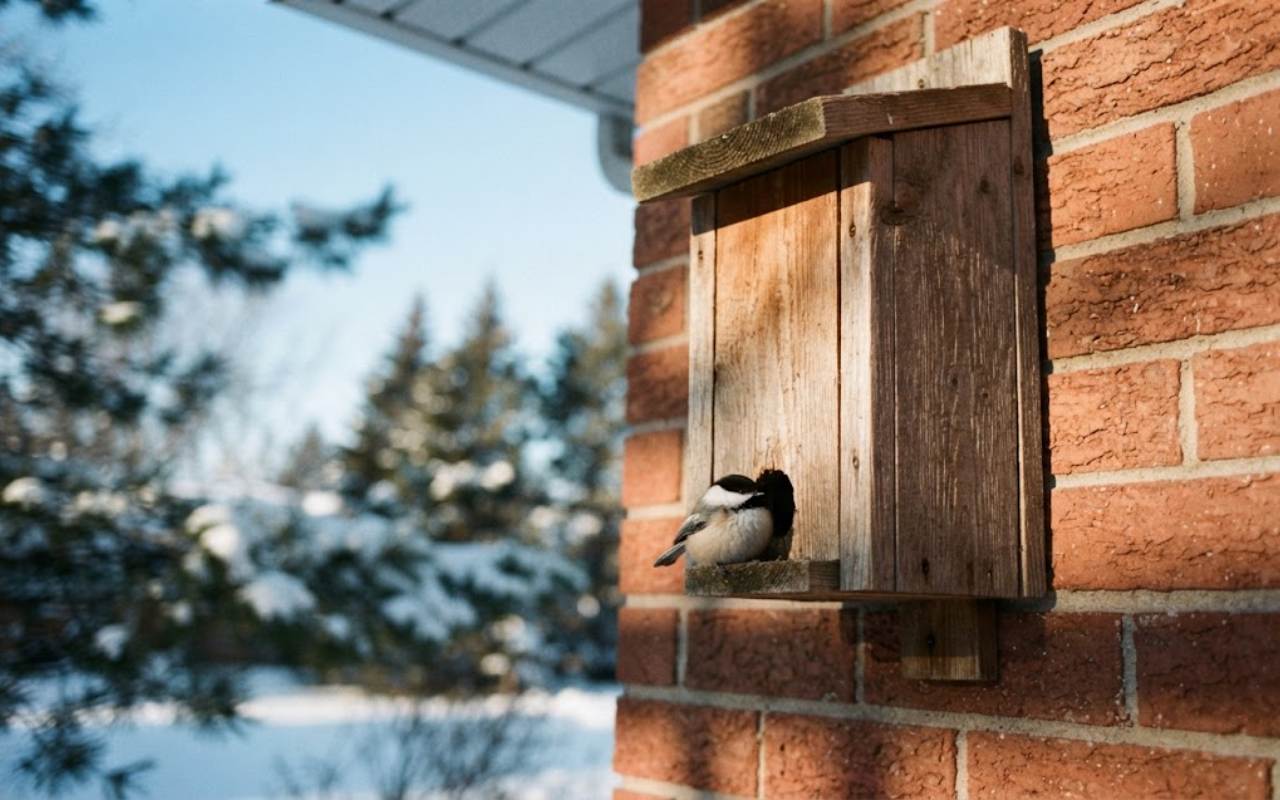
A real-world, unedited backyard photo showing a cedar winter roosting box mounted high on a south-facing brick house wall with a chickadee perched at the bottom entry portal on a sunny winter day.

Where to Mount Winter Roosting Boxes for Maximum Heat Retention

Understanding where to mount winter roosting boxes is one of the most critical decisions you can make to protect songbirds during extended freezes. Small birds like chickadees, titmice, and bluebirds can lose substantial body mass overnight just trying to maintain their core body temperature of roughly 105 degrees Fahrenheit. A poorly placed box exposes roosting […]

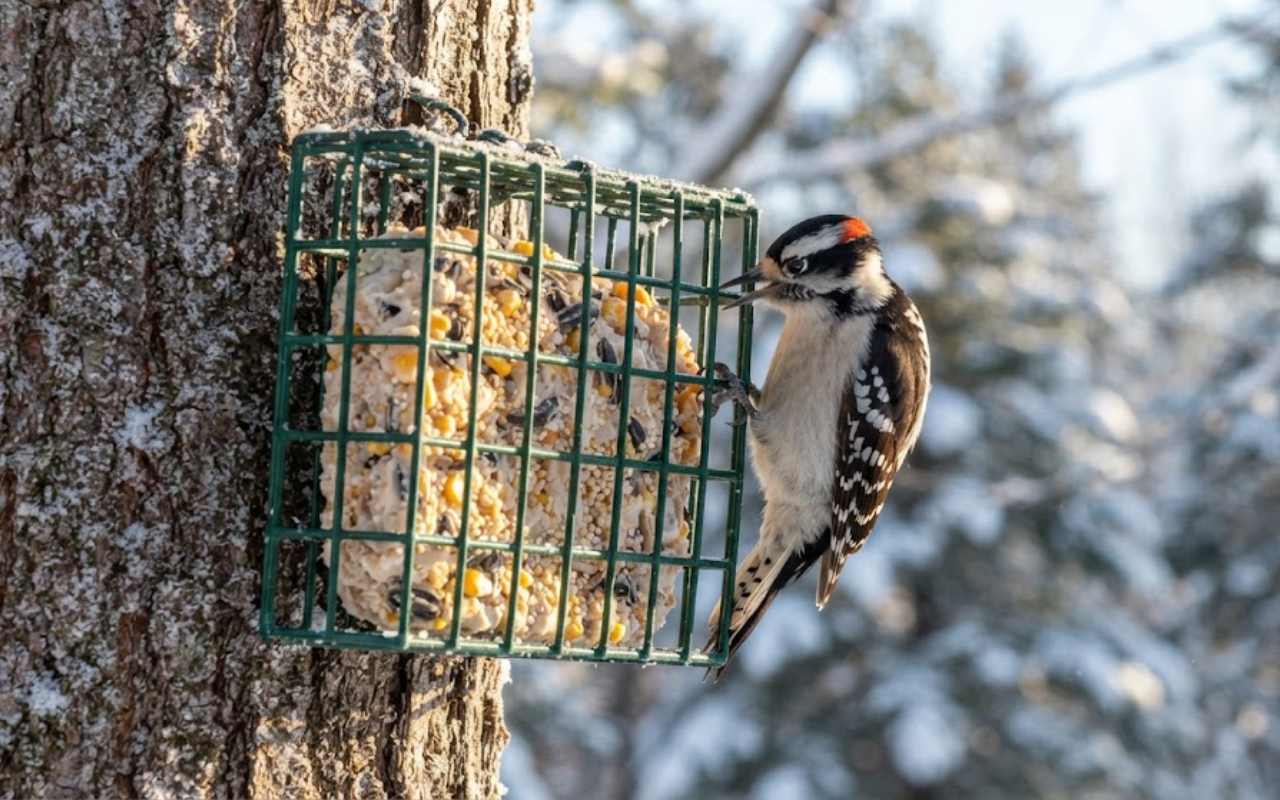
A Downy Woodpecker feeds from a sunlit wire suet cage mounted to a tree trunk in winter, demonstrating how to stop suet from freezing hard using solar placement.

Shaded vs Sunny Bird Feeder Placement for Cold Weather Comfort

Choosing between shaded vs sunny bird feeder placement and learning how to stop suet from freezing are among the most critical structural decisions you can make for your backyard flock when winter temperatures drop. While spring and summer bird feeding strategies favor heavy shade to keep sensitive specialty seeds from spoiling, sub-zero winter freezes flip […]

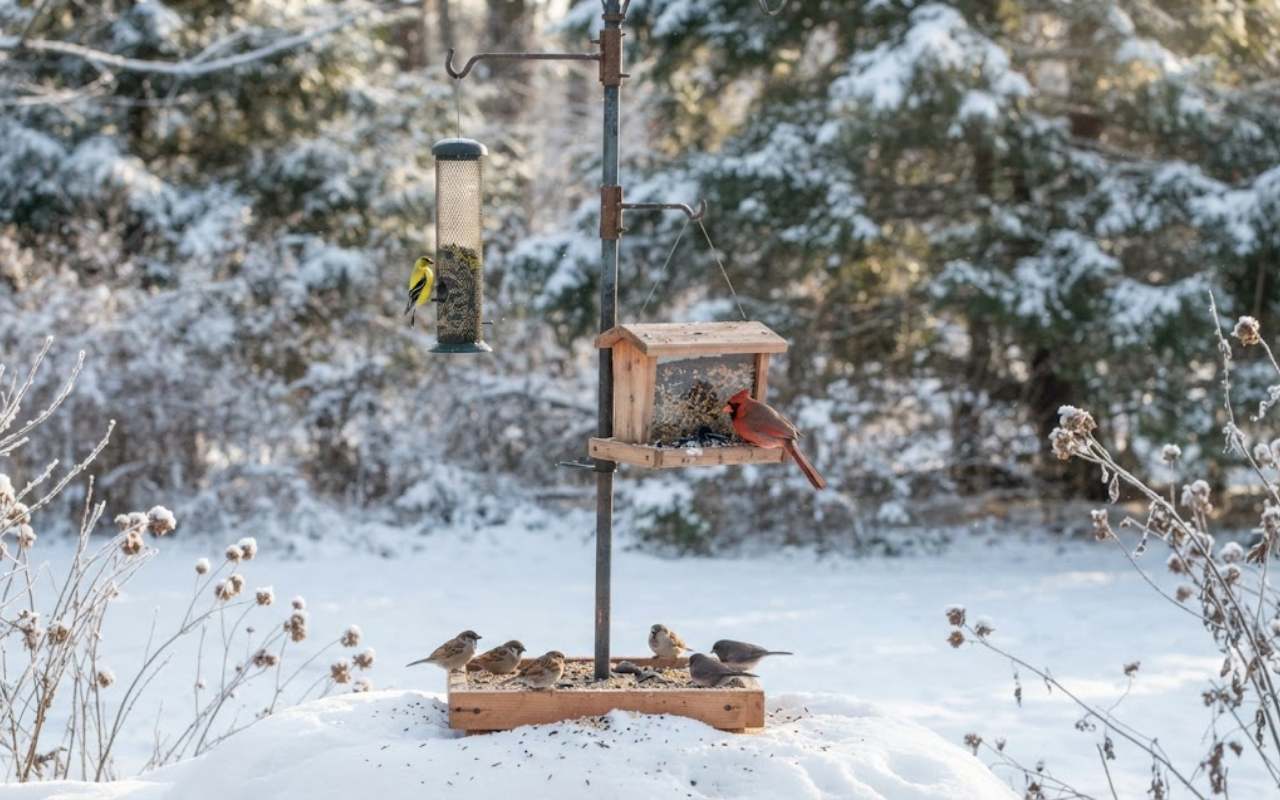
A raw, unedited backyard photo showing a multi-tier bird feeding station with goldfinches on a high sock, a cardinal on a middle hopper, and juncos on a ground platform tray in winter snow.

Why Staggering Bird Feeders by Height Prevents Winter Territorial Fights

Setting up staggering bird feeders by height is the easiest way to disrupt aggressive displacement hierarchies across mixed winter flocks while maximizing foraging efficiency during freezing weather. Most backyard setups place every feeder at a uniform five-foot level, creating a localized choke point that forces smaller passerines to expend irreplaceable calories in evasive flight. Separating […]

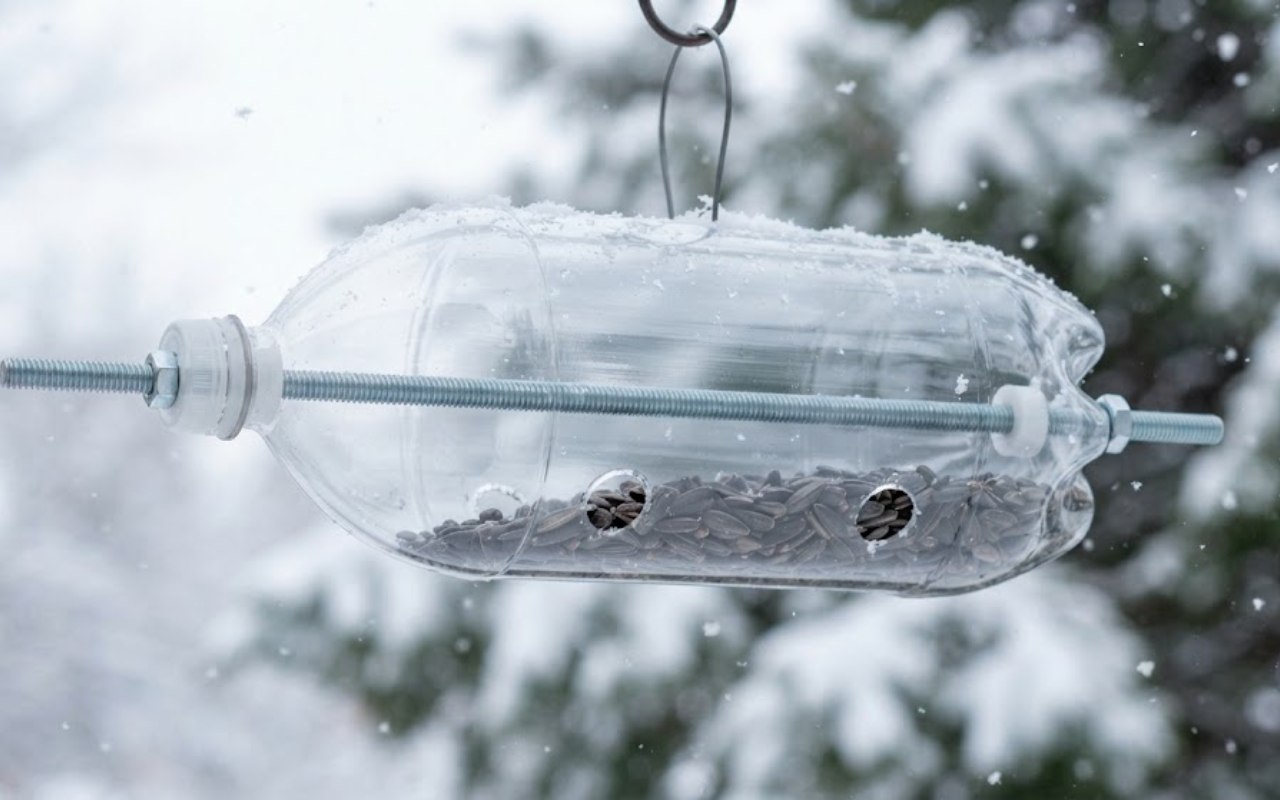
A close-up of a DIY weatherproof winter bird feeder made from a clear plastic soda bottle mounted horizontally on a metal threaded rod axle with nylon bushings, showing sunflower seeds inside during a winter snowstorm.

Build an Easy, Weatherproof DIY Winter Bird Feeder from a Soda Bottle

Freezing rain instantly bonds to static metal or rigid plastic substrates below 32 degrees Fahrenheit, causing commercial acrylic feeders to crack under sudden ice expansion. Assembling a flexible DIY winter bird feeder from a recycled soda bottle solves this issue completely. When mounted on a free-spinning horizontal axle, the continuous shifting movement introduces mechanical shear […]

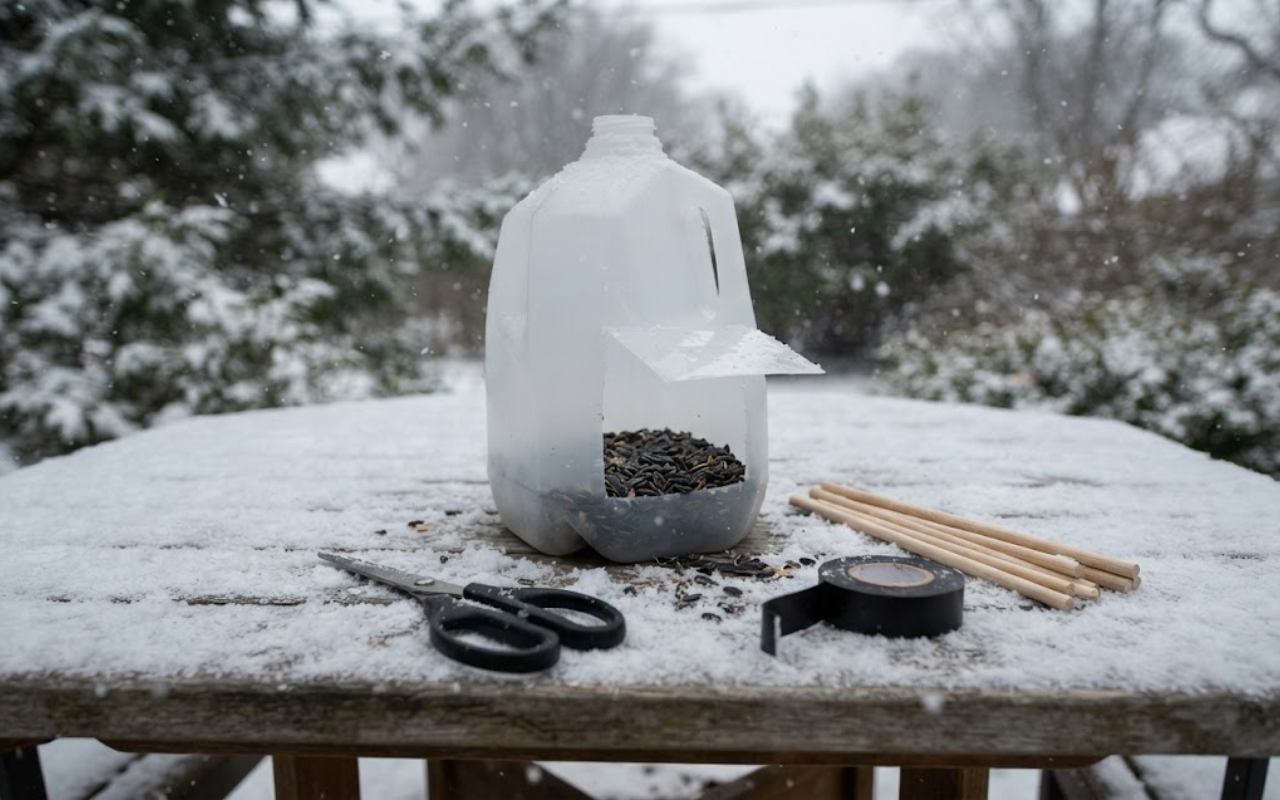
A real-world, unedited DIY photo showing a translucent plastic milk jug converted into a bird feeder with a cut awning on a snowy wood table alongside scissors and tape.

Easy DIY Recycled Jug Winter Feeder for Emergency Snowstorms

Building 3-minute DIY recycled jug winter feeders for emergency snowstorms gives songbirds an immediate food source when sudden blizzards bury natural foraging grounds. A standard clean plastic gallon jug, utility knife, and spare cordage can be converted into a functional feeding port before heavy precipitation starts. During sudden sub-freezing cold snaps, small passerines like chickadees […]

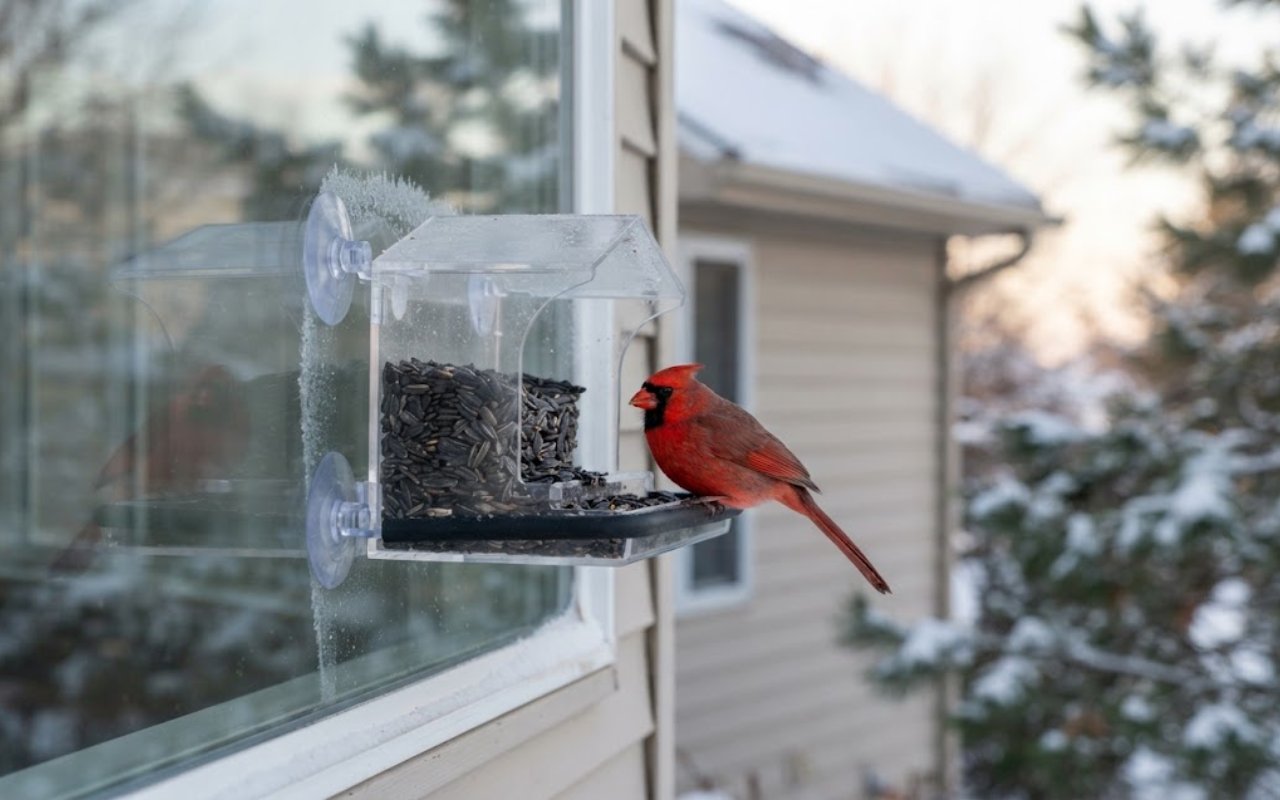
A raw, unedited backyard photo showing a red cardinal eating from a suction-cup bird feeder mounted directly onto a home's window glass on a frosty morning.

Safe Distance Between Feeders and Windows in Winter to Protect Birds

Finding the safe distance between feeders and windows in winter requires balancing avian deceleration limits against structural strike hazards. Cold weather magnifies strike mortality because small songbirds flush aggressively under hawk pressure and burn critical fat stores when disoriented by window reflections. Standard advice frequently recommends generic spacing without factoring in winter glass glare, sudden […]

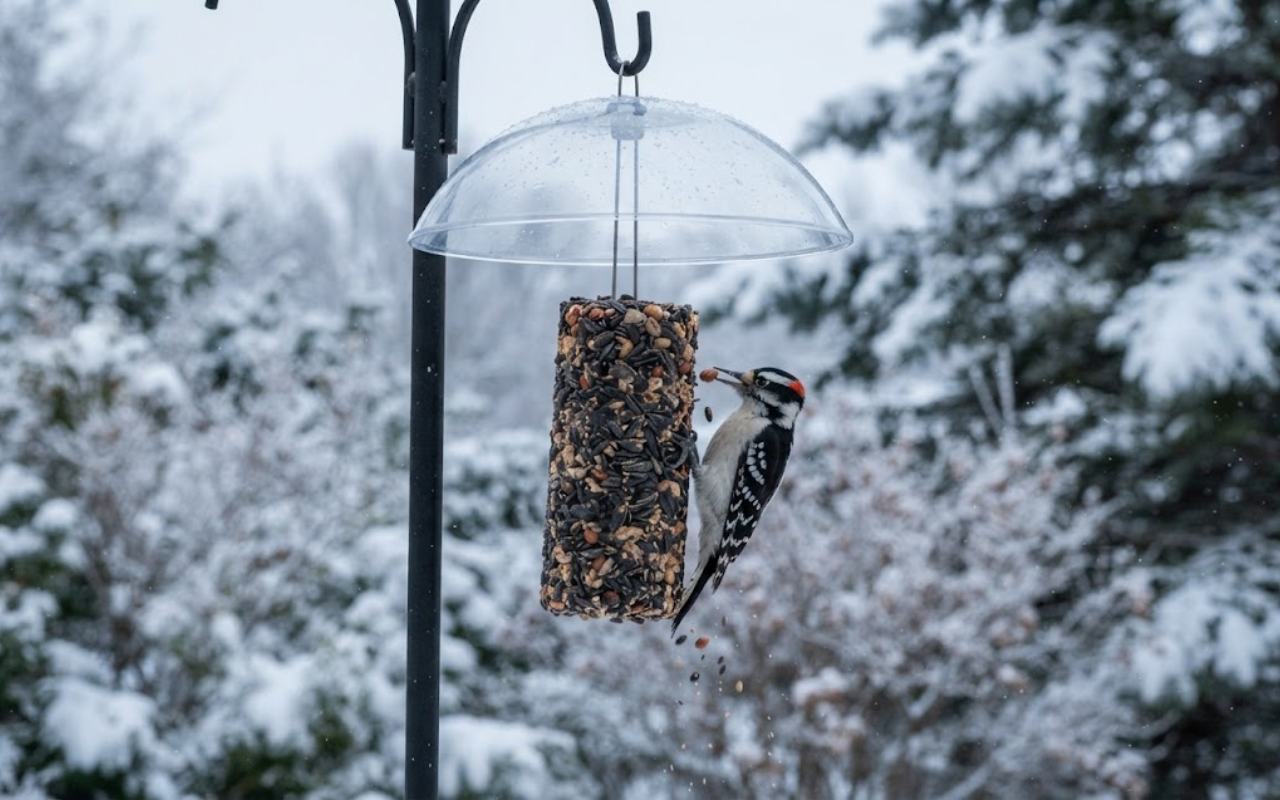
A raw, unedited backyard photo of a Hairy Woodpecker eating from a compressed seed cylinder block protected by a wide overhead clear weather dome shield on a freezing morning.

How to Use Cylinder Seed Feeders in Winter: A Complete Guide

High-density cylinder seed feeders solve the problem of loose grain blowing away or getting buried under deep snow during freezing storms. Backyard birders frequently struggle with loose seed hopper models that clog with damp snow or dump expensive sunflower hearts onto frozen soil. Solid cylinders bind calorie-rich grains, nuts, and fats into tight blocks that […]

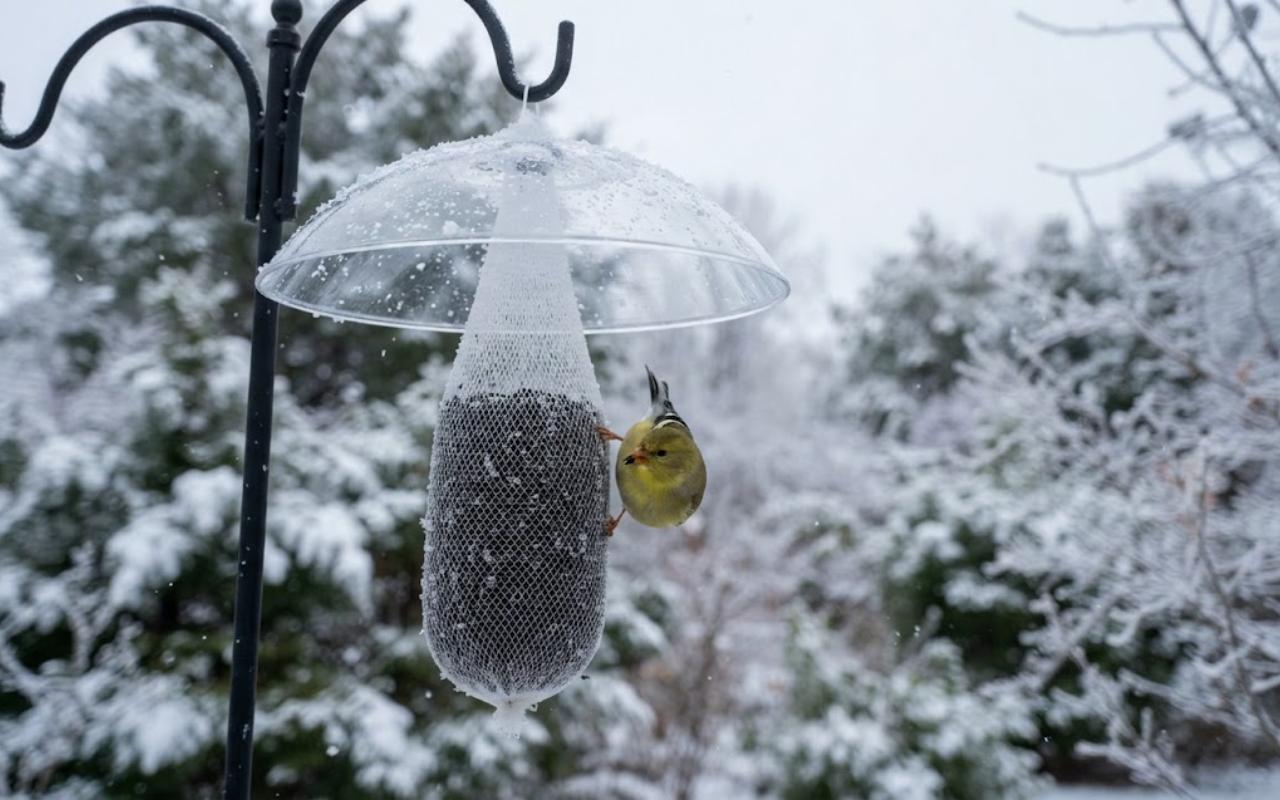
A real-world winter bird identification photo showing a drab yellow American Goldfinch clinging to a white mesh thistle sock feeder underneath a clear protective weather dome baffle during a snowstorm.

Thistle Socks in Winter Weather: How to Keep Them from Freezing

Backyard birders who struggle to prevent thistle socks from freezing during wet winter cold snaps know how quickly driving sleet ruins expensive nyjer seed. When moisture penetrates the porous mesh weave, the high-oil seed binds together, turning the feeder into an impenetrable block that goldfinches cannot penetrate. Mastering the use of thistle socks in winter […]

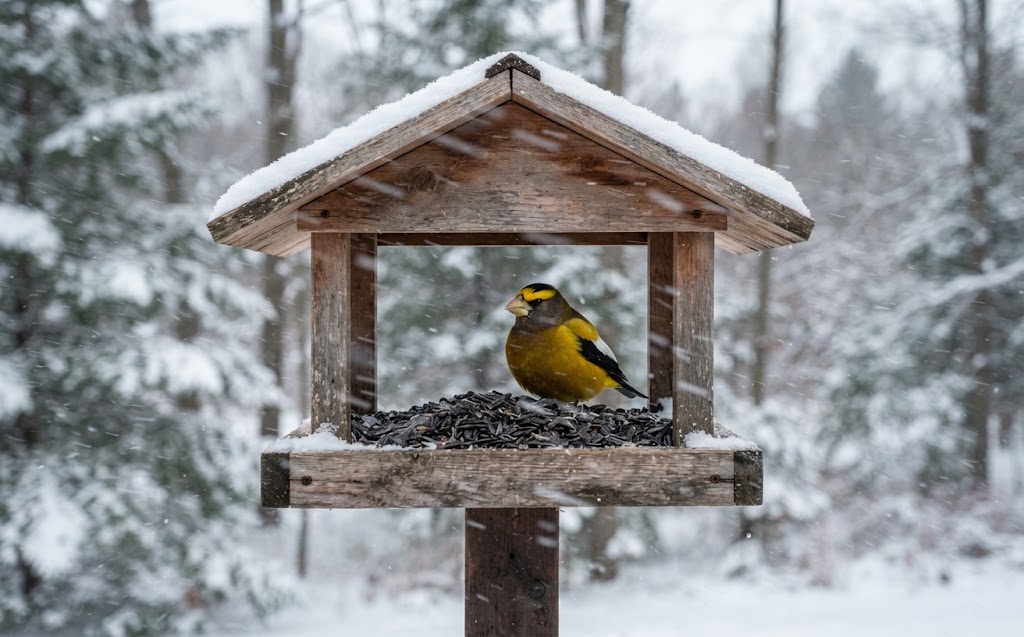
A raw, unedited backyard photo of a chunky Evening Grosbeak perched inside an open-sided cedar fly-through bird feeder during a heavy winter snowstorm.

Are Fly-Through Bird Feeders Good for Winter Storm Conditions?

Setting up fly-through bird feeders before a major winter blast gives backyard birds fast calories, but open platform designs present serious weather challenges. When freezing precipitation arrives on gusty winds, open designs often leave seed vulnerable to moisture, slush, and deep snowdrifts. Field observations show that while larger birds love the open flight path, an […]